
Lieferung heute & morgen

Qualitätsgarantie

Willkommens-Angebote freischalten: KOSTENLOSE Lieferung | Bis zu 80 % RABATT | Kostenlose 30-Tage-JoyPlus-Testphase
App herunterladen
A playpen provides a protected space where babies and toddlers can safely explore the world, giving parents a few hands-free moments. However, the market can be confusing, and not every model lives up to its promises. Certain design flaws or overlooked features can cause an expensive playpen to become impractical after just a few months or even pose a safety risk. This guide will help you avoid common pitfalls and make an informed decision.
Many parents focus on design but overlook crucial functional aspects. Pay attention to these three points to avoid a poor purchase:
To make the right choice, you should focus on objective criteria. These three aspects are crucial for safety and practical use.
The European standard EN 12227 is a key safety certification for playpens. It sets requirements for stability, materials, and construction. These include:
A wooden playpen is a popular choice, but quality varies. Solid wood, such as beech, is generally more robust and durable than plywood or MDF. Look for a smooth, splinter-free finish on all surfaces. The paint should be explicitly declared as saliva-resistant and child-safe. High-quality craftsmanship not only ensures safety but also extends the product's lifespan.
A height-adjustable playpen adapts to your child's development and saves your back. Three levels are standard: a high position for newborns, a middle one for babies who can sit up, and a low one for toddlers who are standing. A playpen with wheels significantly increases flexibility in daily life, allowing the play area to be moved effortlessly from the living room to the kitchen. Ensure the wheels are lockable to guarantee a secure stance.
Instead of naming a single "best" product, we're highlighting models tailored to specific needs and living situations.

Why This Fits Their Persona: Ideal for homes where space needs to be used efficiently. This model combines a full-sized play area with a smart folding function for space-saving storage.
Avoids the "bulky obstacle" trap. Thanks to its folding mechanism, it can be reduced to a depth of just 10 cm when not in use and stored easily.
2-level height-adjustable base and integrated wheels for mobility. The combination of functionality and compactness is the key advantage here.

Why This Fits Their Persona: For parents seeking a functional piece of furniture that blends harmoniously into a modern living environment. The hexagonal shape is a visual highlight and offers a generous play area.
This model refutes the notion that a playpen must be purely utilitarian. It combines safety (EN 12227) and functionality with an appealing geometric design.
3-level height-adjustable and equipped with six locking casters, this **hexagonal playpen** offers maximum flexibility and mobility around the house.
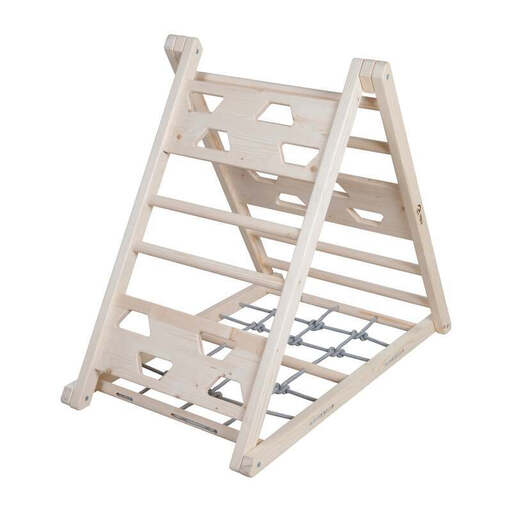
Why This Fits Their Persona: An alternative or supplement to the classic playpen for parents who focus on active motor skill development. Inspired by Pikler pedagogy, it encourages independent climbing and exploration.
Bypasses the concern some parents have about "parking" a child in a playpen. This **Pikler Triangle** is an active play structure that encourages movement and develops coordination.
Promotes balance, motor skills, and self-confidence. The sturdy solid wood construction can support up to 50 kg, making it a long-lasting investment.
Other options like a wooden play gym or soft foam building blocks can also create a safe and stimulating play environment, especially for the very young or as a supplement to a playpen.
We have compiled a complete, up-to-date list of products that fully meet these strict selection criteria and UK/EU safety regulations.
A playpen can be used from birth, especially with the base set to its highest position, where it serves as a safe spot to lay your baby down. It becomes most useful once the baby starts becoming mobile (around 4-6 months). Use typically ends when the child weighs about 15 kg or begins to climb out of the playpen, which is usually around 24 months of age.
The size should depend on the available space in your home and your child's need for movement. Standard dimensions are often 75x100 cm or 100x100 cm. Measure the intended space before buying. A larger model offers more play area but also requires more room. A foldable model can be a good compromise.
Yes, as long as the wheels have locking brakes. This feature is crucial for securely anchoring the playpen once it's in position. Always engage the brakes before placing your child in the playpen. This prevents it from rolling away unintentionally and ensures a stable base.