
Lieferung heute & morgen

Qualitätsgarantie

Willkommens-Angebote freischalten: KOSTENLOSE Lieferung | Bis zu 80 % RABATT | Kostenlose 30-Tage-JoyPlus-Testphase
App herunterladen
A playpen offers your pet a safe space to play and explore, whether indoors or in the garden. However, the selection can be overwhelming, and not every model lives up to its promises. Before you make a decision, it's helpful to know the most common pitfalls that can lead to disappointment and unnecessary expense.
Many pet owners only realise after purchase that their new enclosure is impractical or even unsafe for daily use. Pay special attention to these three points:
To avoid buyer's remorse, you should base your decision on objective criteria. The following three parameters are crucial for the functionality and durability of a playpen.
The material determines the playpen's stability and lifespan. For outdoor use, a high-quality surface finish is essential.
outdoor rabbit hutch that is permanently exposed to the elements.mobile pet fence made of mesh material should be crafted from HDPE (High-Density Polyethylene). This material is UV-resistant and does not rot, ensuring long-term use in the garden.A good playpen should adapt to your needs, not the other way around. A modular system composed of individual panels offers the most flexibility.
puppy pen can have a different shape in the living room than on the patio.Your pet's safety is the highest priority. Inspect these details closely:
small animal enclosure or a puppy playpen for very small breeds, the space between the bars should not exceed a few centimetres to prevent them from getting stuck or escaping.Instead of making a one-size-fits-all recommendation, we've matched products to different user profiles.
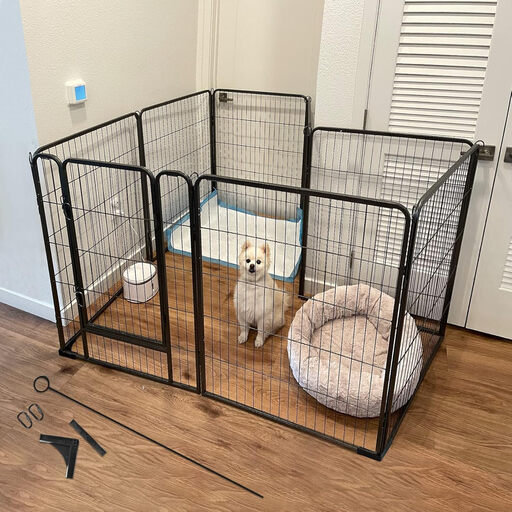
Why This Fits Their Persona: This user profile needs an especially tall and sturdy playpen to prevent energetic puppies or medium-sized dogs from jumping over it. It's intended for use both indoors and in the garden.
The height of 100 cm counteracts the problem of a playpen being too low. The rust-resistant metal construction and stabilising ground anchors address the pitfalls of instability and poor weather resistance.
The generous height provides security for jump-prone animals. The modular design allows for flexible adjustment of its shape and size.

Why This Fits Their Persona: This user profile needs a flexible, large-area, and easily movable solution to section off areas in the garden, provide a run for chickens, or protect vegetable patches from animals.
The UV-resistant HDPE material is explicitly designed for permanent outdoor use, avoiding the pitfall of poor weather resistance. The tight mesh size of 1.5 x 1.5 cm is safe for small animals.
Offers extensive coverage with a length of 20 metres. The complete set, including poles, pegs, and ropes, allows for quick and mobile installation.
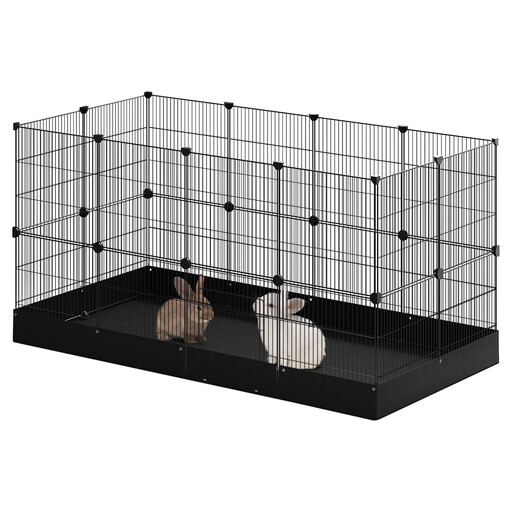
Why This Fits Their Persona: Ideal for owners of guinea pigs, hamsters, or dwarf rabbits who need a safe and customisable play area in the living room or on a balcony. Protecting the floor is a key consideration.
The very narrow bar spacing of 1.5 cm reliably prevents very small animals from escaping or getting stuck. The included Oxford fabric floor mat protects sensitive floors from dirt and scratches.
The DIY plug-in system allows for high adaptability to the space. The combination of narrow bars and floor protection is specifically tailored to the needs of small pets indoors.
Explore our full range, tailored to various needs and animal types, to find the perfect solution for your home.
The ideal height depends on the animal's species, age, and individual temperament. For calm, small-breed puppies or guinea pigs, 60 to 80 cm may be sufficient. For animals that love to jump, like rabbits, or for active dog breeds that grow quickly, a height of 100 cm or more provides extra security and prevents escape attempts.
Yes, you can. When buying, look for models that are already equipped with non-slip protective caps or foam pads on their feet. These prevent scratches on sensitive floors and ensure the playpen doesn't slide when your pet is active inside. Alternatively, a suitable floor mat can be a good solution.
For a stable footing on grass or soil, you should use the included ground anchors (also called stakes). These are inserted through the connection points of the individual panels and anchored deep into the ground. Ensure the surface is as level as possible to maximise stability. For lightweight net fences, additional guy ropes can help stabilise the structure in windy conditions.