
Lieferung heute & morgen

Qualitätsgarantie

Willkommens-Angebote freischalten: KOSTENLOSE Lieferung | Bis zu 80 % RABATT | Kostenlose 30-Tage-JoyPlus-Testphase
App herunterladen
A climbing tower in the playroom can be a valuable addition to encourage a child's natural urge to move and to develop their motor skills. However, the market can be overwhelming, and not every product lives up to its promises. Before you make a decision, it's crucial to understand the common pitfalls that can lead to disappointment and unnecessary expense.
The three most common problems when choosing are:
To avoid these problems, you should base your choice on objective criteria.
Instead of being swayed by marketing promises, focus on three fundamental parameters that determine safety, durability, and play value.
The foundation of any good indoor play structure is its material. A wooden climbing frame is often the preferred choice, but there are significant differences in quality. Look for solid wood (e.g., beech or birch), as it is generally more stable and durable than particle board or softwoods. Regardless of the wood type, two aspects are critical:
An indoor play tower must be completely tip-proof. Stability depends on the design. Models with an A-frame shape or a wide base offer excellent stability. Check the product specifications for the maximum load capacity. This value, given in kilograms, indicates how much weight the structure can safely support. A higher value suggests a more robust build and ensures the equipment can be used safely during more boisterous play or by several children at once.
To ensure a long lifespan, the play equipment should be able to grow with your child. A Montessori climbing frame is often distinguished by its versatility. Check if the system is modular and expandable. A climbing tower with a swing, slide, climbing ropes, or gymnastic rings offers varied activities and promotes different motor skills. Such multifunctional units remain engaging for years, justifying the purchase as a long-term motor skills toy for ages 2 and up.
Based on the criteria mentioned, we have identified a few products that are well-suited for different needs and living situations.
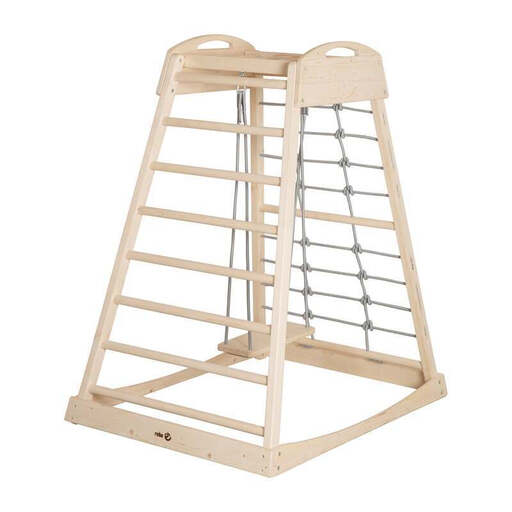
Why This Fits Their Persona: Ideal for families seeking an educationally valuable, durable, and safe play structure. The roba climbing tower promotes independent discovery and motor skill development in line with Montessori principles.
Its solid natural wood construction provides stability (supports up to 70 kg). The versatility offered by the swing, ropes, and rings prevents it from becoming uninteresting too quickly.
Promotes strength, coordination, and balance. The components, like the solid wood swing, are interchangeable, ensuring long-lasting engagement.
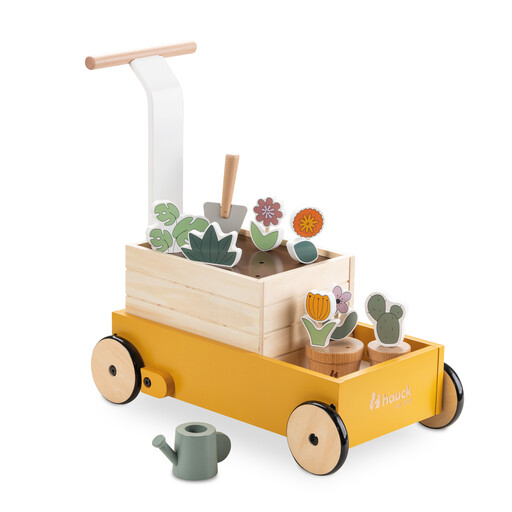
Why This Fits Their Persona: For families with limited space or younger children who need a first, safe mobility aid. This baby walker combines motor skill development with role-playing elements.
Instead of a large, unused tower, this model offers a focused function. The FSC-certified wood (according to the manufacturer) and adjustable brake system address key safety and quality concerns.
Supports a child's first steps while doubling as a toy transporter. The wheel speed is adjustable, enhancing safety across different developmental stages.
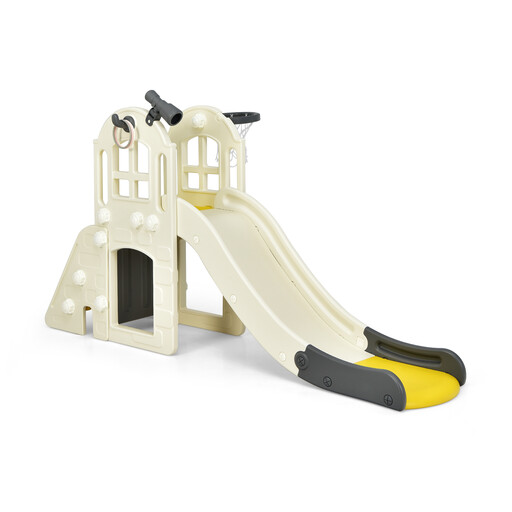
Why This Fits Their Persona: Suitable for parents looking for a versatile play structure for both indoor and outdoor use. This slide and basketball hoop combo offers a variety of physical activities.
By combining multiple activities (sliding, shooting hoops), it reduces the risk of limited use and boredom. The low-maintenance material is designed for use in various environments.
Flexible for both indoor and outdoor use. The combination of a slide and hoop promotes both gross motor skills and hand-eye coordination.
We have compiled a complete, up-to-date list of products that fully meet these strict selection criteria and stringent safety regulations.
Most manufacturers recommend their indoor climbing frames for children from around 24 months. At this age, basic motor skills like running and climbing are usually sufficiently developed. It is important that you always observe the manufacturer's specific age recommendation and supervise your child during use, especially in the beginning.
The space requirement varies greatly depending on the model. Measure the available space in the playroom accurately and compare it with the product dimensions (height x width x depth). Additionally, plan for a clear safety zone of at least 1 to 1.5 metres around the frame to prevent falls onto other furniture or walls.
That depends on the construction. Many freestanding models with a wide, A-frame base are designed to be stable without additional anchoring. However, for particularly active children or with narrower, taller models, a wall anchor can provide extra security. Always read the manufacturer's assembly and safety instructions carefully.