
Lieferung heute & morgen

Qualitätsgarantie

Willkommens-Angebote freischalten: KOSTENLOSE Lieferung | Bis zu 80 % RABATT | Kostenlose 30-Tage-JoyPlus-Testphase
App herunterladen
Children’s playsets should suit their age, the space available and your family’s everyday routine. In practice, however, eye-catching packaging, lots of accessories or a wide range of features don’t automatically make for a good purchase. What matters is clear information about safety, materials, size, accessories and how the set will actually be used.
Lights, sounds and moving parts may look appealing at first. However, some need batteries and can limit play to pressing buttons or following set sequences. Manual construction toys, sorting boxes and role-play sets are often more versatile.
So check:
A playset for ages 3+ isn’t automatically suitable for every three-year-old. Small figures, building blocks and accessories can pose a choking risk. Follow the manufacturer’s age recommendation and the safety information on the packaging.
Playsets containing small parts should generally not be used by children under three. Supervision is also a good idea with older children if the set includes lots of small accessories.
A playhouse, large car garage or outdoor play kitchen needs considerably more space than a small motor skills toy. Before buying, compare the product’s external dimensions with the space where you plan to put it. Garden toys also need to be stored, protected from the weather and checked regularly.
Check the age range specified by the manufacturer, any small-parts warnings and the intended use. For toys sold on the German market, clear details of the manufacturer or responsible person, along with the required labelling, are also relevant. The CE marking is a legally required conformity mark for certain product groups; it doesn’t replace checking the specific warnings.
If a playset uses batteries, parents should also check:
Wood, plastic and ABS building blocks each have different properties. FSC-certified wood indicates that the wood comes from appropriately certified sources, but it isn’t a general quality assessment of the entire product. For plastic toys, sturdy connections, rounded edges and easy-to-clean surfaces are practical considerations.
For outdoor toys for children, you should also check:
The dimensions determine whether a playset can be used in a child’s bedroom, on a balcony or in the garden. For larger products, remember to check doorways, stairs and the route you’ll use to move it. A detailed list of accessories helps avoid the disappointment of unpacking a set and finding fewer pieces than expected.
Imaginative role-play often comes from realistic basics such as a kitchen, shop, animals or vehicles. Electronic extras aren’t essential. If you’re looking for a gift for a child, consider their interests and what they already have at home.
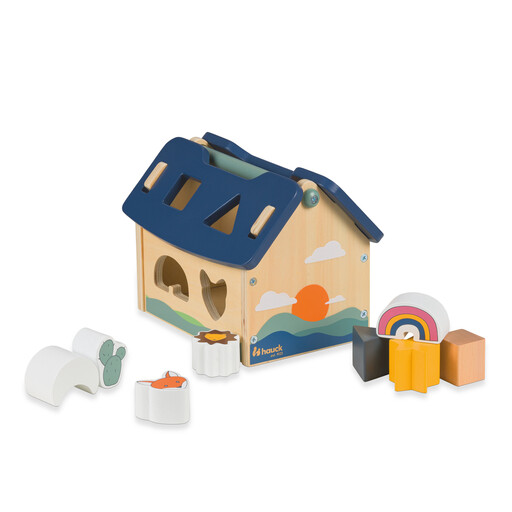
Why this product suits this profile: This manual sorting and stacking toy doesn’t need batteries and is compact to store. According to the manufacturer, it’s suitable from 12 months.
Play doesn’t depend on sound or light features. The roof also provides storage for the eight blocks.
FSC-certified wood according to the product details, a carry handle and removable pieces.
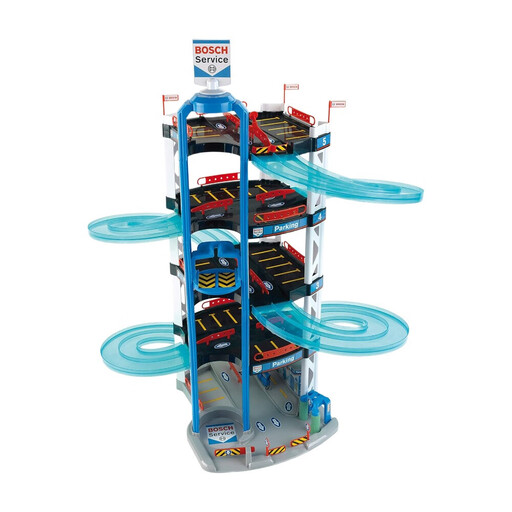
Why this product suits this profile: The five levels, lift, two ramps and two racing cars included offer several ways for children aged 3+ to play without electronics.
The main play features don’t need batteries. The product description also gives precise dimensions of 55 × 55 × 85 cm.
Five levels, a lift, service area and two vehicles; assembly required.

Why this product suits this profile: This outdoor play kitchen is listed as suitable for children aged 18 months and over. Its water container, washing-up bowl and accessories offer plenty of garden play.
The product description gives specific care instructions: empty the water after play, check the parts and store the set somewhere protected when it’s not in use.
Dimensions of 124 × 89 × 34 cm, wooden construction, plastic tub, water container with tap and accessories.
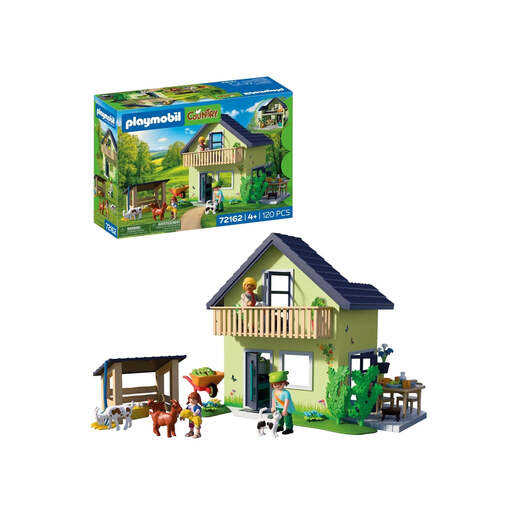
Why this product suits this profile: According to the product details, the farmhouse is designed for children aged 4 and over. Its living area, kitchen, animals, balcony and outdoor space create a setting for role-play.
The product details list 120 pieces and specify the areas included. This makes it easier to work out how much space you’ll need before buying.
Kitchen with oven, dining table, sleeping areas, goats, cat and stickers; no batteries required.
We’ve put together a complete, regularly updated list of products that meet these strict selection criteria and fully comply with the safety regulations in force in the EU.
Before playing for the first time, check all parts against the assembly instructions. With larger playsets, it’s a good idea to tighten the connections regularly. Damaged, loose or splintered parts should no longer be used for play.
A few simple routines can help your playset last longer:
It’s not possible to tell whether a toy with educational value is worthwhile from a marketing slogan alone. Open-ended ways to play, age-appropriate challenges and activities that suit the child’s interests are more meaningful indicators.
Age-appropriate sorting, stacking and simple role-play sets may be suitable for toddlers. The key things to consider are the manufacturer’s age recommendation, avoiding inaccessible small parts and adult supervision. According to the product details, the hauck sorting toy is suitable from 12 months; small-parts warnings should still be followed.
That depends on the design. Before buying, consider not only the product dimensions but also the space needed to move around, doorways and access to the spot where it will be set up. A large outdoor model such as the Roba mud kitchen also needs a suitable, level area and somewhere protected for storage.
As well as the purchase price, you may need to factor in replacement batteries and extra care. If you’re considering a battery-powered set, think about how often its features are likely to be used. Manual playsets have no running battery costs, while electronic versions may offer extra sound or lighting features.