
Lieferung heute & morgen

Qualitätsgarantie

Willkommens-Angebote freischalten: KOSTENLOSE Lieferung | Bis zu 80 % RABATT | Kostenlose 30-Tage-JoyPlus-Testphase
App herunterladen
A pleated blind no-drill clamp fix can be fitted without drilling holes in the wall or window frame. This is particularly handy for rented flats, but it can also be a quick solution for privacy, sun or blackout protection in owned homes and houses. To avoid a purchase that leads to a mistake and unnecessary readjustment, certain details should be checked more carefully than mere colour names or marketing promises.
The label 60 × 100 cm usually describes the width and height of the product. However, what matters is whether the width refers to the fabric, the entire construction or the required fitting area. With some pleated blinds, the fabric width is smaller than the total width.
So measure:
For several Dream-Seeker models, a product width of around 4 cm over the glass width is given as a guide. This information should be cross-checked with the specific product description, as window shape and fixing method vary.
A light-filtering pleated blind lets daylight through and can reduce visibility, but it does not create complete darkness. A privacy pleated blind or a model labelled Blackout is more suitable for bedrooms and children's rooms if less light is desired. However, side light gaps can still occur if the pleated blind is narrower than the glass area.
Pay attention to the specific product description:
A pleated blind for clamp fitting is attached to the window sash using adjustable brackets. This only works within the specified frame range. Adhesive brackets, on the other hand, require a clean, dry and as smooth a surface as possible. On rough, dusty or damp surfaces, adhesion can be compromised.
Before fitting, you should also check whether the window is regularly opened and tilted. For balcony and patio doors, sturdy brackets and operation without contact with the door handle are particularly important.
Frame thickness is a technical minimum parameter. For the models listed, suitable ranges are, for example, 10 to 23 mm or 13 to 23 mm. If the frame is thicker or narrower, the clamp bracket cannot sit securely.
For windows and doors with handles, the ordered width should not extend beyond protruding components. For tall doors, a height of 200 cm may be necessary. For smaller kitchen, bathroom or office windows, 100 to 140 cm is often sufficient, provided the measured window height matches.
Polyester is the most common material in the products listed. It can be easily cleaned with a soft, dry or slightly damp cloth. However, moisture resistance does not mean waterproof. For bathrooms and kitchens, the pleated blind should therefore not be permanently exposed to direct water or high moisture.
A white pleated blind looks visually understated and, depending on the fabric, lets more brightness into the room. An anthracite pleated blind or dark grey model can emphasise the window area more strongly. However, the colour alone does not determine the blackout level; the fabric construction and product description are decisive.
Depending on the model, height adjustment is done via a pull cord, handle or a combination of both. Check whether the operation suits the window. Cords and controls should be kept out of reach of children. Before use, you must check that clamps or adhesive brackets are securely fastened. A loose-fitting pleated blind can cause damage or injury.
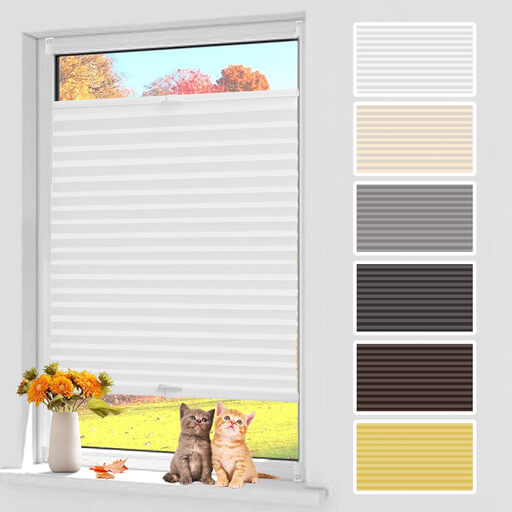
Why this product suits the profile: The size 60 × 100 cm is suitable for smaller standard windows, while the white colouring can be discreetly integrated into various rooms. The model is intended for windows and doors and is fitted without drilling.
The product data explicitly mentions clamp fix, tool-free fitting and a translucent light effect. This makes it easier to distinguish between light filtering and blackout before purchase.
Polyester fabric, 370 g product weight, light and glare control, and fitting without screws or tools.

Why this product suits the profile: The honeycomb structure, the metal frame and the stated suitability for frame thicknesses of 10 to 23 mm appeal to buyers who want to check fitting details and construction particularly carefully.
The description points out the permissible frame range, the limitations for roof windows and the correct positioning of the fixing cord.
100 % polyester, metal frame, top and bottom handles, and according to the product description, an opaque version.
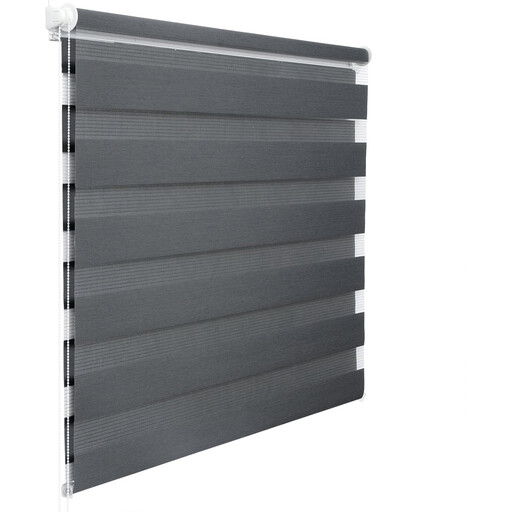
Why this product suits the profile: The duo roller blind combines transparent and opaque fabric strips. It is therefore suitable for rooms where the light effect needs to be flexibly adjusted throughout the day.
The product description states the suitable frame range of 13 to 23 mm and points out that the model is not intended for roof windows or wooden frames.
100 % polyester, chain pull can be fitted on the left or right, and stepless adjustment between light-filtering and opaque.
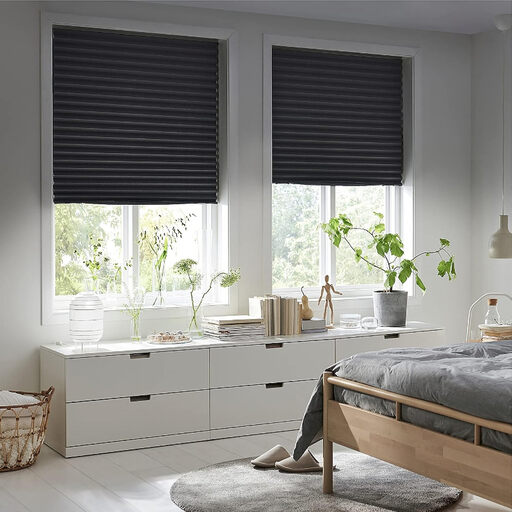
Why this product suits the profile: The width of 100 cm and the anthracite colouring suit larger window areas and modern living, working or dining spaces.
The version is described as light-filtering and not categorised as a blackout product. This helps with selection for rooms where daylight should be retained.
100 × 130 cm, anthracite polyester fabric and fitting via clamp or adhesive bracket without drilling.
We have put together a complete, regularly updated list of products that fully meet these strict selection criteria and the safety regulations in force in the EU.
First, measure the window width, window height and frame thickness. Then clean and dry the contact surfaces. Clamp the brackets firmly onto the top of the window sash or attach the provided adhesive brackets. The pleated blind must sit level and must not obstruct the window handle. Check the stability before first use.
The lifespan depends on the fabric, bracket, operation and sunlight exposure. Regular, careful adjustment and cleaning with a soft cloth can reduce material strain. Adhesive brackets should be checked at regular intervals. With moisture, rough surfaces or incorrect frame thickness, the fixing may weaken sooner.
A pleated blind itself does not require electricity. It is operated manually via a handle, cord or chain pull. Whether it affects the use of artificial lighting or air conditioning units depends on the orientation, fabric, window size and room. A general energy saving cannot be deduced from the fitting alone.