
Lieferung heute & morgen

Qualitätsgarantie

Willkommens-Angebote freischalten: KOSTENLOSE Lieferung | Bis zu 80 % RABATT | Kostenlose 30-Tage-JoyPlus-Testphase
App herunterladen
A pleated blind without drilling is ideal for rental properties, renovated rooms, and windows that need to be fitted without drill holes. Depending on the model, installation is carried out using clamp brackets, clamp-fix fittings or adhesive surfaces. This means you can quickly add privacy, sun protection or blackout to windows and doors.
However, inaccurate measurements and misleading product descriptions often lead to the wrong purchase. Three typical pitfalls are particularly important to watch out for:
A clamp-fix pleated blind is attached to the window or door frame using adjustable clamp brackets. This option is particularly practical if you don’t want to permanently alter the frame. Before buying, you should check:
Some models are designed for frame thicknesses of 10 to 23 mm, others for 13 to 23 mm or 16 to 22 mm. These specifications are not interchangeable. With an unsuitable frame, the pleated blind could slip or fail to secure properly.
Measure the width of the visible glass pane as well as the height of the entire window frame. For many internally mounted pleated blinds, an order width of around 2 to 4 cm wider than the glass width is recommended. This allows the privacy and sun protection to cover the glass area better.
However, the final choice depends on the specific fitting system. With a pleated blind using clamp brackets, the width must not extend beyond window handles or other protrusions. For doors and patio doors, you should also check that the door leaf’s movement area remains clear.
If you’re looking for a pleated blind for doors or a wider pleated roller blind for windows, you should therefore consider not just the glass area, but also the frame geometry and the opening angle.
A privacy pleated blind can reduce visibility without completely darkening the room. Light-filtering fabrics still let daylight in and are suitable for living rooms, kitchens or offices, among other spaces.
For bedrooms or rooms with direct sunlight, a model with blackout pleated blind may be more appropriate. Bear in mind that fabric alone doesn’t automatically block every side light source. Achieving a room that is as dark as possible also depends on the mounting position, fabric width and any existing gaps.
A thermal pleated blind or a roller blind with a coated backing can, according to the product description, help reduce light ingress and heat gain. The actual effect depends on factors such as window size, glazing, orientation and installation. Such claims should therefore be understood as product features, not guaranteed energy savings.
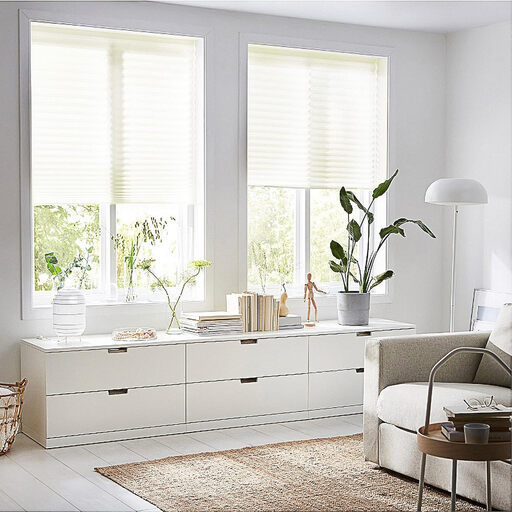
Why this product fits the profile: The compact size is ideal for smaller windows in living spaces, kitchens, offices or children’s rooms. The clamp-fix mounting requires no drill.
The mounting method and the size of 60 × 120 cm are clearly stated. The fabric is light-filtering and therefore not equivalent to complete blackout.
Woven polyester, adjustable position and cleaning with a damp cloth; not intended for roof windows.

Why this product fits the profile: The honeycomb structure, two operating handles and adjustable clamp-fix fittings appeal to buyers who want to combine light control with a defined mounting choice.
The compatible frame thickness of 10–23 mm is specified. The width must not cover handles or protrusions, which prevents installation issues.
100 % polyester, metal frame, clamp-fix mounting and damp cleaning; according to the product description, intended for privacy, sun and light protection.

Why this product fits the profile: This roller blind is suitable for bedrooms, living rooms, offices and bathrooms when you want a privacy coating and operation without a pull cord.
The required frame thickness of 16–22 mm and the information about the narrower fabric width make it easier to check measurements before buying.
Handle operation without a cord, polyester fabric with coated backing and two mounting options: clamp-fix or drilling.
We’ve put together a complete, regularly updated list of products that fully meet these strict selection criteria and the safety regulations in force in the EU.
Before fitting, make sure the frame or adhesive surfaces are free of dust, grease and moisture. With clamp brackets, check after installation that all fittings are secure. For adhesive models, the surface must be smooth and even. A quick functional test will ensure that the window handle, cord or operating handle is not obstructed.
For cleaning the products mentioned, a soft, damp cloth is usually sufficient. Abrasives, harsh cleaners and vigorous rubbing can damage the polyester fabric or coatings. Cords and moving parts must be kept out of reach of small children.
Durability depends on the mounting method, frame, usage and care. Clamp-fix fittings can be readjusted, while adhesive surfaces particularly rely on a clean, smooth surface. Regular checks will prevent a fitting from coming loose unnoticed.
Many models are described as suitable for windows and doors. However, the door frame thickness, freedom of movement and the position of the handle are crucial. For balcony or patio doors, the roller blind should not rub against the frame or wall when opened.
A light-filtering fabric reduces direct brightness and visibility, but lets daylight into the room. A privacy or blackout fabric shields the room more strongly. For the darkest possible effect, you must also consider the width, mounting position and side light gaps.