
Lieferung heute & morgen

Qualitätsgarantie

Willkommens-Angebote freischalten: KOSTENLOSE Lieferung | Bis zu 80 % RABATT | Kostenlose 30-Tage-JoyPlus-Testphase
App herunterladen
A pleated blind without drilling can quickly add privacy or sun protection to rented homes, offices and living spaces without leaving drill holes in the window frame. However, easy installation does not automatically mean it is the right solution. Inaccurate measurements, misunderstandings about light transmission and unsuitable fixings often lead to disappointing purchases.
The following criteria will help you compare a blind without drilling, a clip-on roller blind or a pleated roller blind without drilling objectively.
With many clip-on pleated blinds, the stated measurement refers to the entire product, including the brackets. The actual fabric width may therefore be smaller. To ensure sufficient coverage, it is often recommended that you measure the width of the window pane and add around 3 to 4 cm. The specific manufacturer’s information remains decisive.
A light-filtering pleated blind or a pleated blind with sun protection filters daylight and reduces visibility from outside. However, a dimming material will still allow some brightness into the room. Descriptions such as “opaque” or “Blackout” should also be checked against the product details. Some models are described as blackout blinds but, according to the description, still allow diffuse light through.
For a bedroom where you want to minimise incoming light, a designated blackout pleated blind with a coated reverse side is more suitable than a semi-transparent pleated roller blind.
Clip-on fittings require a suitable rebate on the window frame. Depending on the product, the permitted frame thicknesses may be 13 to 23 mm, 16 to 22 mm or 10 to 23 mm, for example. Wooden windows, roof windows, sliding windows and sloping windows are expressly excluded for several models. Before buying, you should therefore check:
Measure the window pane width at several points, as well as the height of the entire window frame. With doors, balcony doors and patio doors, the movement area is particularly important. The pleated blind must not block the handle and should not touch the frame or wall when the door is opened.
Some models can be shortened to a limited extent. According to the product details, the WOLTU pleated blind with an aluminium profile can be adjusted by up to 10 cm, namely 5 cm on each side. This does not apply to every made-to-measure or standard-size pleated blind. Other products must expressly not be cut to size.
Light colours such as white, beige or light grey have a discreet visual effect and usually allow more brightness through. Anthracite and darker shades can shield the room more effectively, but they are not automatically fully blackout.
Polyester is widely used in the products mentioned. It can usually be cleaned with a soft cloth or soft brush. Moisture-resistant materials are practical in kitchens and bathrooms; however, “moisture-resistant” does not mean waterproof. Direct contact with water and persistently high humidity should be avoided unless the manufacturer states otherwise.
For products with cords or chains, the controls must be secured out of children’s reach. Check that the installation is stable before using the blind for the first time.
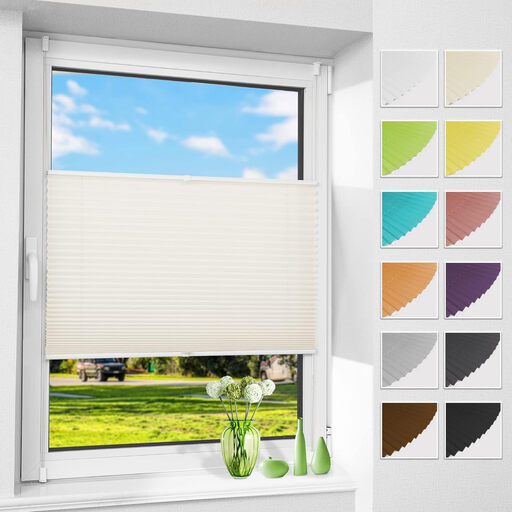
Why this product suits this profile: The clip-on brackets are designed for frame thicknesses of 10 to 23 mm. The beige, light-filtering pleated blind is suitable for living spaces, kitchens and bathrooms.
The product details expressly describe a light-filtering version rather than a fully blackout design. This makes it easier to assess the level of light protection realistically.
Adjustable brackets, polyester that can be wiped clean with a damp cloth, and infinitely adjustable operation using the handles.

Why this product suits this profile: This version combines clip-on installation, a coated reverse side and operation without a freely hanging pull cord.
The details distinguish between the product width and the narrower fabric width. They also specify the required frame thickness of 16 to 22 mm.
200-g/m² polyester, aluminium profiles, a surface that can be wiped clean with a damp cloth, and clip-on or drilled installation as alternatives.
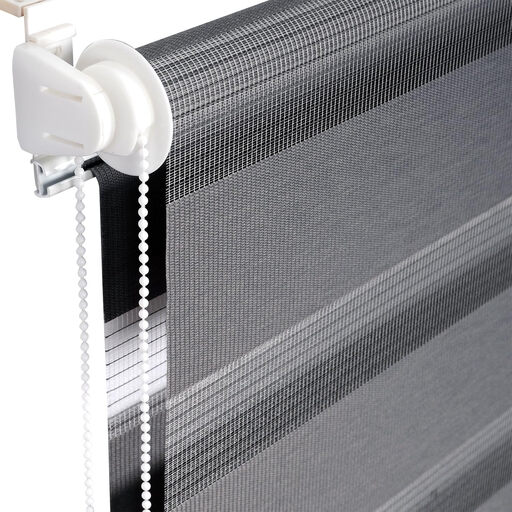
Why this product suits this profile: With alternating transparent and opaque stripes, this double roller blind lets you adjust incoming light and privacy in living spaces, work areas and humid rooms.
The light effect is not described as complete blackout. Instead, it is regulated by the two fabric layers and their position.
Clip-on or drilled installation, chain operation that can be fitted on the left or right, and cleaning with a soft brush or damp cloth.
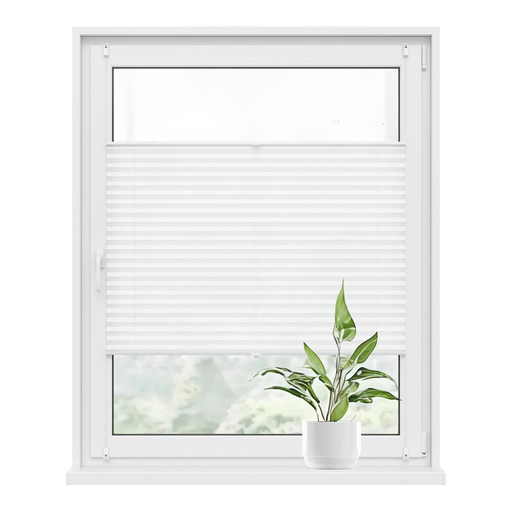
Why this product suits this profile: This model is designed for windows and doors and offers a dimming fabric, rather than a fully blackout one, for privacy and glare protection.
The product data expressly states the recommended frame rebate thickness of 1.5 to 2.3 cm, as well as the limited width adjustment.
100% polyester, 20-mm pleat width, adjustable clip-on brackets and drill plates also included.
We have put together a complete, regularly updated list of products that fully meet these strict selection criteria and the safety regulations applicable in the EU.
On smooth glass surfaces or tiles, suction-cup models can be an alternative. According to the product details, they are generally unsuitable for textured, rough or uneven surfaces.
Measure the width of the pane and, if specified by the supplier, add around 3 to 4 cm. The height is often determined across the entire window frame. Always check whether the stated measurement includes the brackets.
Its lifespan depends on the material, operation, exposure to sunlight and the stability of the brackets. Avoid pulling abruptly, excessive moisture and harsh cleaning products. With adhesive fittings, check regularly that they are still firmly attached.
Clip-on models are attached to the window frame and, with a suitable design, can be installed without permanent drill holes. Before installation, check the frame shape, seals and permitted thickness. For adhesive solutions, it is also advisable to check the landlord’s and manufacturer’s instructions.