
Lieferung heute & morgen

Qualitätsgarantie

Willkommens-Angebote freischalten: KOSTENLOSE Lieferung | Bis zu 80 % RABATT | Kostenlose 30-Tage-JoyPlus-Testphase
App herunterladen
A pleated blind without drilling is ideal for rented homes, frequent changes of address and anyone who wants to fit out windows or doors without leaving permanent holes. However, not every no-drill pleated blind will fit every window frame. Differences in frame thickness, fabric, fixing method and measurements all affect how securely it stays in place day to day.
Many listings give the overall width, including the brackets, while the fabric itself can be several centimetres narrower. If you measure only the visible glass, light may come in at the sides or the fabric may not cover the area you want.
For several Dream-Seeker models, the recommended guide is: order width = glass width plus around 4 cm. Even so, always check the specific product description to confirm how measurements are taken. For doors and full-height windows, you’ll also need to check the full frame height.
A fabric that blocks the view can protect your privacy, but it won’t necessarily darken the whole room. Light may still get through at the sides, through lighter-coloured fabric or if the blind isn’t fitted to close fully. A light-filtering pleated blind is a good choice for living rooms and workspaces where you want to keep some daylight. For bedrooms, consider a blackout pleated blind or a blackout roller blind without drilling.
Also check whether “blackout” refers to the manufacturer’s description of the fabric or how much light the blind blocks. The level of darkness also depends on the type of window, the position of the blind and the gaps at the sides.
A clip-on pleated blind is usually attached to the window sash, so the frame thickness needs to suit the brackets. According to the product description, the WOLTU blind’s clamp fitting is designed for frames 16 to 22 mm thick. Other models use adjustable clamp brackets or adhesive fixings.
No-drill and no-glue pleated blinds don’t all work in the same way: some are fitted using clamps only, while others combine clamp and adhesive fixings. Adhesive fixings may not be suitable for rough, uneven or very damp surfaces. Before buying, check that your window frame is smooth, sturdy enough and suitable for the fixing method.
Start by measuring:
A pleated blind for windows and doors needs to leave enough room for them to open and close. For balcony or patio doors, make sure the brackets won’t get in the way of handles or seals. Roof windows need to be checked separately, as the product details say that several of the models featured here aren’t suitable for sloping roof windows.
Here’s a practical guide to the terms:
Light-filtering fabric is often chosen for living rooms, kitchens and offices. A blind that blocks more light may be a better choice for bedrooms or children’s rooms. If product descriptions use conflicting terms, check the specific details about the fabric and fitting.
Flexible height adjustment lets you cover just the top or bottom part of the window. Handles and cords can differ in how they work, though. According to the product description, the WOLTU model is adjusted using a lower aluminium rail, with no loose operating cord. Keep small fitting parts out of children’s reach during installation. Whichever type of blind you choose, make sure it’s fitted securely.
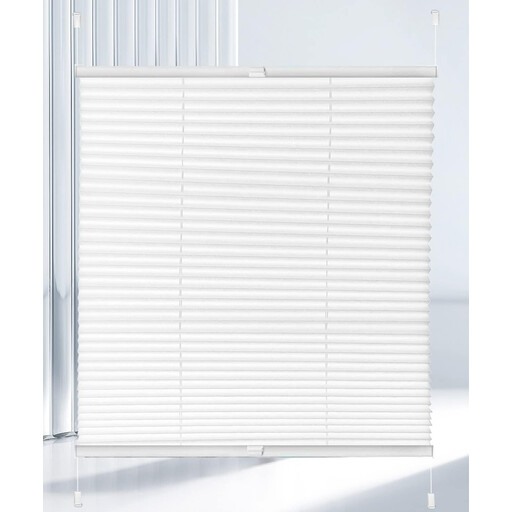
Why it’s a good fit: This white, light-filtering pleated blind is designed for living rooms, offices and bedrooms, and can be fitted to a window or door without drilling.
The product name clearly identifies it as a light-filtering blind, helping you avoid mistaking the fabric type for a promise of complete blackout.
Clamp fitting with no drilling, adjustable height and a size of 80 × 200 cm, according to the product details.

Why it’s a good fit: This model offers two fitting options, OEKO-TEX-certified polyester fabric according to the product details, and operation using the lower rail.
The required frame thickness of 16 to 22 mm is clearly stated. This makes it easier to check your measurements before buying and reduces the risk of choosing an unsuitable clamp fitting.
According to the product details, it has a silver-coated backing, 200 g/m² polyester fabric and cordless operation; the stated size is 80 × 150 cm.
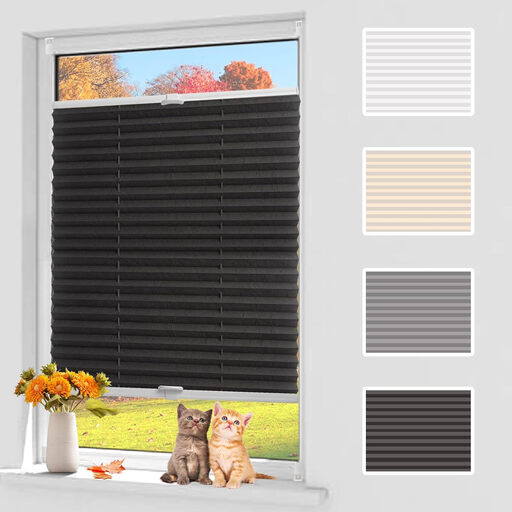
Why it’s a good fit: Its greater height and suitability for windows, doors and balcony doors make this model a good option for wide or tall glass surfaces.
The product description says the fabric blocks the view but doesn’t provide complete blackout. This helps you set realistic expectations about how much light it will block.
Adjustable clamp brackets, height adjustment using a handle, and a choice of other sizes and colours, according to the product details.
We’ve put together a complete, regularly updated list of products that meet these strict selection criteria and fully comply with the safety regulations in force in the EU.
If you’re using adhesive fixings, avoid putting them under heavy strain immediately after fitting. Always follow the instructions provided by the manufacturer of your particular product. For the models mentioned, a soft, slightly damp cloth is usually all you need for cleaning. Harsh cleaning products and abrasive sponges can damage the fabric or coating.
How long it lasts depends on the shape and material of the frame, how often you use it and whether it’s fitted correctly. Frequent adjustments or pulling hard can put strain on the brackets. Check that it’s secure, particularly after opening and closing the window for the first time.
Yes, clamp brackets are generally designed for temporary fitting. However, whether they leave marks depends on the specific design. If you’re using adhesive fixings, follow the manufacturer’s guidance on suitable surfaces and how to remove them later.
Manual pleated blinds and roller blinds don’t need electricity, so there are usually no running costs. You’ll only need to factor in cleaning, any replacement parts and, if you move, refitting the blind.