
Lieferung heute & morgen

Qualitätsgarantie

Willkommens-Angebote freischalten: KOSTENLOSE Lieferung | Bis zu 80 % RABATT | Kostenlose 30-Tage-JoyPlus-Testphase
App herunterladen
A pleated blind without drilling is a good choice for rented homes, rooms that are frequently rearranged and windows where you don’t want a permanent fixture. However, not every clamp-fit pleated blind will suit every window frame. Incorrect measurements, unsuitable surfaces or unclear information about light reduction can mean that the blind doesn’t fit properly or lets in too much light.
This buying guide explains what to check before you buy and which models may suit different living spaces.
A pleated blind can be fitted using clamp-fit brackets, adhesive brackets or a combination of the two. Clamp brackets attach to the opening window and need a compatible frame. Adhesive brackets stick directly to a smooth, clean surface. Their grip may be weaker on rough, dusty, damp or uneven surfaces.
Clean the window frame and let it dry completely before fitting the blind. If you live in a rented home, check the product details too: clamp brackets aren’t suitable for every window profile, while adhesive pads may leave residue when removed.
For many products, the stated measurement includes the brackets. For example, according to the product description, the fabric on the WOLTU clamp-fit blind is approximately 4 cm narrower than the stated product width. If you only measure the glass, you could end up with gaps at the sides that let in light.
For a pleated blind, it’s often recommended that you:
However, measurement advice varies by product. Choosing a made-to-measure pleated blind involves different considerations from choosing a standard 70 or 90 cm model.
A light-filtering pleated blind reduces visibility from outside and softens bright light, but still lets daylight into the room. A blackout blind made from opaque or coated fabric is a better choice for bedrooms, children’s rooms or media rooms if you want to keep out as much light as possible.
Even with a blackout blind, how dark the room gets depends on how it’s fitted. Gaps between the fabric and the window frame can let light in. For the best coverage, choose a blind that’s wide enough and check the fitting area carefully.
A no-drill window blind is only practical if its brackets are compatible with your window profile. Check the following:
According to the product details, the WOLTU no-drill blackout roller blind is designed for frame thicknesses of 16 to 22 mm. It’s operated using the bottom rail and is described as having no pull cord. The product description states that this model isn’t suitable for roof windows.
A light-filtering pleated blind can be a good choice for a living room, kitchen or home office. It provides privacy and reduces glare without completely darkening the room. For a bedroom, a blackout pleated blind or a no-drill thermal roller blind is a better option if controlling light is a priority.
Bear in mind that claims such as “100% blackout” may describe the fabric itself. The effect in the room also depends on the blind’s width, fitting position, window seals and any gaps at the sides. Light-blocking figures for curtains can vary too. For example, the WOLTU curtain is stated to block around 50 to 85% of light, depending on the colour.
Polyester fabrics can usually be cleaned with a soft, slightly damp cloth. Harsh cleaners, scouring products and excessive moisture can damage the fabric, coating or adhesive pads. For bathrooms and kitchens, check specifically whether the material is suitable for everyday exposure to moisture. “Moisture-resistant” doesn’t automatically mean waterproof.
Keep pull cords and moving parts out of reach of young children. Make sure brackets are securely fitted before use. Window coverings should also be kept away from naked flames and strong heat sources.
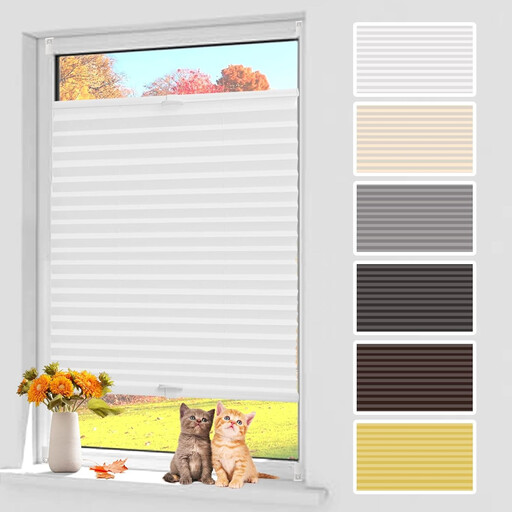
Why this product suits this buyer: The standard 70 × 120 cm size and adhesive fitting make it a straightforward option for first-time buyers, provided the window area and surface are suitable.
The product description says to clean the surface before fitting and warns that the adhesive may not work as well on rough or uneven surfaces.
White finish, polyester fabric, adhesive brackets, and stated blackout and privacy features.

Why this product suits this buyer: A good option if you want to check the fitting requirements, operation and material details carefully before buying.
The product information clearly specifies a frame thickness of 16–22 mm, includes clamp brackets and notes that the fabric is narrower than the overall blind.
Aluminium rails, polyester fabric with a silver backing, operation via the bottom rail and two fitting options.
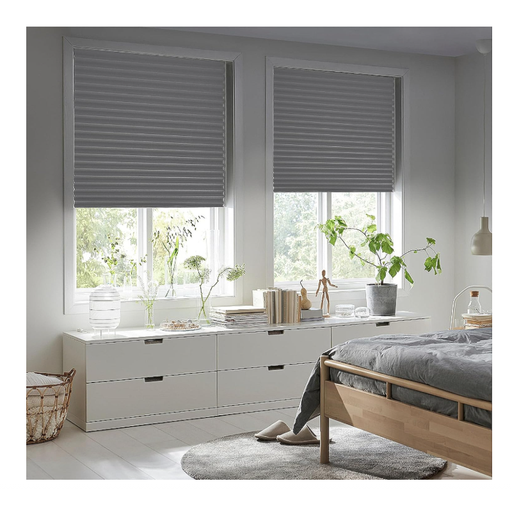
Why this product suits this buyer: This light-filtering model can be used in living rooms, home offices, kitchens or bathrooms when you want privacy while still letting in daylight.
The product description identifies the fabric as light-filtering, not fully blackout, so you know what to expect from its effect on light.
Clamp-fit installation, adjustable height, 90 × 120 cm size, light grey polyester fabric and four adhesive brackets included.
We’ve put together a complete, regularly updated list of products that meet these strict selection criteria and fully comply with the safety regulations in force in the EU.
For a pleated blind for windows and doors, make sure there’s enough room for it to move freely. On patio doors, a roller blind that sticks out too far may get in the way when the door opens. In rooms where moisture is present, check the specific material guidance rather than relying on a general claim such as “easy care”.
How long it lasts depends on the fabric, mechanism, fitting surface and how often you use it. A smooth, properly cleaned surface and regular checks of the brackets can help keep the blind secure. Avoid putting unnecessary strain on adhesive fittings.
Clamp-fit models can usually be removed from the window sash. How easily adhesive brackets can be removed without leaving residue depends on the adhesive, the surface and how you take them off. Read the manufacturer’s instructions before fitting.
When choosing a pleated blind for a living room or bedroom, it comes down to the effect you want. A light-filtering pleated blind offers privacy while letting in daylight. A blackout pleated blind or no-drill thermal roller blind is designed to reduce light more effectively. For the best coverage, choose a size that minimises gaps at the sides.