
Lieferung heute & morgen

Qualitätsgarantie

Willkommens-Angebote freischalten: KOSTENLOSE Lieferung | Bis zu 80 % RABATT | Kostenlose 30-Tage-JoyPlus-Testphase
App herunterladen
A pleated blind without drilling is suitable for rented homes, owner-occupied properties and temporary solutions when you want to fit out windows or doors without screws. Depending on the model, it can be installed using clamp brackets, adhesive fittings or suction cups. But a low price isn’t the only thing that matters: incorrect measurements, unsuitable surfaces and unclear information about light transmission often lead to the wrong purchase.
Terms such as blackout, room-darkening, opaque and light-filtering aren’t used consistently for pleated blinds. A room-darkening pleated blind can significantly reduce the amount of light entering a room, but it may not make it completely dark. Light can also come through at the sides if the blind is narrower than the glass.
So check the following:
A clamp-fit pleated blind is usually attached to the window sash. The frame thickness must therefore be suitable for the clamp bracket. Adhesive fittings need a smooth, clean and dry surface. Suction cups typically stick to glass or smooth tiles, but not to textured walls or rough frames.
For doors and window sashes that are opened frequently, it’s also important to make sure the blind doesn’t press against handles, seals or protruding parts. If it doesn’t fit properly, it may be harder to operate or put strain on the fittings.
The product dimensions 60 × 100 cm usually refer to width × height. However, some listings may reverse the order or use measurements inconsistently. Before buying, compare the product page with the illustration showing the technical specifications.
For many clamp-fit models, it’s recommended that you choose a width around 3 to 4 cm wider than the window glass. Other systems are measured against the full frame width. For a made-to-measure pleated blind, follow the supplier’s specific measuring instructions.
If you’re specifically looking for an adhesive option, you’ll find more styles in the pleated blinds with adhesive fittings category.
A polyester pleated blind is lightweight, comes in a wide range of colours and can usually be cleaned with a damp cloth. Light-filtering fabrics let daylight into the room while providing a degree of privacy. They’re a good choice for living rooms and home offices, for example.
A denser fabric can reduce glare and direct sunlight more effectively. For bedrooms, a model described as room-darkening may be a good option. However, check for wording such as “not completely dark”. For bathrooms and kitchens, it’s also important to know whether the fabric is merely moisture-resistant or actually waterproof. The products featured here are mostly described as moisture-resistant, not waterproof.
Models with top and bottom rails can be positioned flexibly. For versions with a cord or pull mechanism, follow the instructions for securing it. Make sure the fittings are secure before first use, and check them regularly. Keep pleated blinds and cords out of reach of young children and pets.
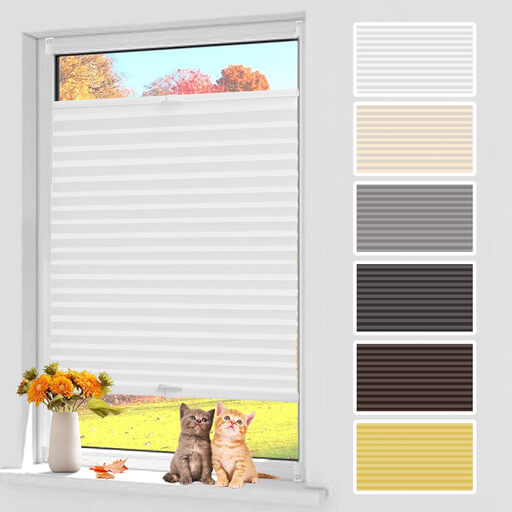
Why this product suits this profile: This compact model is designed for standard windows and doors, and combines clamp-fit or adhesive fittings with tool-free installation.
The product description clearly states the dimensions, material and fitting method. You’ll still need to check the frame width before buying.
Polyester fabric, white finish, 60 × 100 cm dimensions and light-filtering properties according to the product listing.

Why this product suits this profile: The honeycomb structure, metal frame and clamp-fit brackets will appeal to households looking for solid construction and flexible positioning.
The product details specify a suitable frame thickness of 10–23 mm and state that this model isn’t designed for roof windows.
100% polyester according to the product listing, top and bottom rails, and a honeycomb structure described as light-blocking.
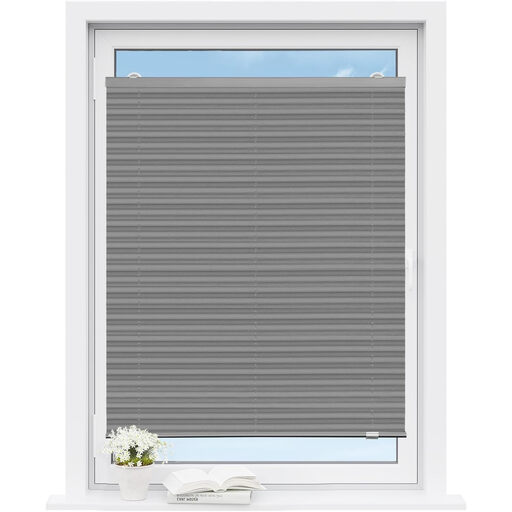
Why this product suits this profile: The reinforced suction cups make this a useful option for smooth glass or tiled surfaces, such as on certain doors, skylights or for temporary setups.
The product description limits use to smooth surfaces, helping you avoid trying to fit suction cups to textured or porous ones.
Adjustable width of 50–90 cm according to the description, polyester fabric and stated filtration of 70% of UV rays.
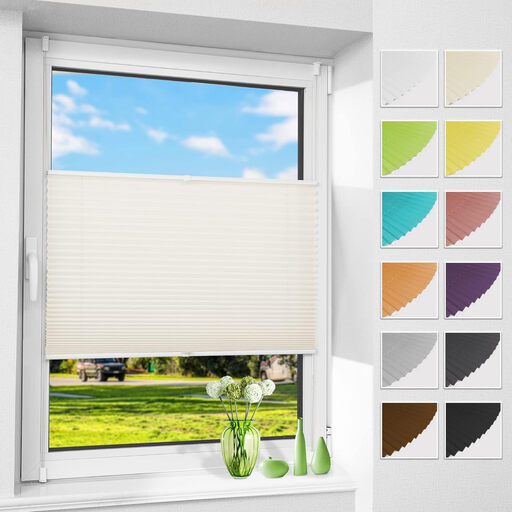
Why this product suits this profile: According to the description, the adjustable brackets are designed for frame thicknesses of 10–23 mm. This makes the model suitable for a range of rectangular tilt-and-turn windows.
The product details clearly state the limitations: it isn’t suitable for roof windows, wooden windows or sliding windows, or for very uneven surfaces.
100% polyester according to the description, an aluminium bar, clamp fitting and cleaning with a damp cloth.
We’ve put together a complete, regularly updated list of products that fully meet these strict selection criteria and the safety regulations applicable in the EU.
How long it lasts depends on the fitting method, frame, use and care. Clamp brackets can usually be removed and repositioned. Adhesive fittings need a surface that stays clean and dry. Check suction cups regularly to make sure they’re holding, especially on doors that are opened and closed frequently.
A clamp-fit pleated blind is a good choice if the frame thickness suits the bracket and there’s enough room on the window sash. Adhesive fittings are an alternative if the frame isn’t suitable for clamp brackets. However, they’re more affected by dust, grease, moisture and uneven surfaces.
Manually operated pleated blinds generally use little energy, as they don’t have a motor. The main costs are the initial purchase and, if needed, replacement brackets or a new fabric later on. When choosing a blind, the key considerations are therefore its size, fitting method, light transmission and intended location.