
Lieferung heute & morgen

Qualitätsgarantie

Willkommens-Angebote freischalten: KOSTENLOSE Lieferung | Bis zu 80 % RABATT | Kostenlose 30-Tage-JoyPlus-Testphase
App herunterladen
A pleated blind without drilling is ideal for rented homes, frequently changing room layouts and windows where you want to avoid permanent holes. But not every drill-free fitting method is suitable for every window frame. Terms such as “blackout”, “clamp-fit” and “strong hold” do not always describe the same technical feature.
To avoid unnecessary returns or an unstable fit, check three things before you buy: fitting method, light transmission and exact measurements.
A pleated blind with clamp brackets attaches to the opening window sash, using the frame as a support point. This is especially practical if there is enough room on the sash and the window can still be opened.
A stick-on pleated blind, by contrast, attaches to the frame or another suitable smooth surface using adhesive pads. The surface must be clean, dry and as flat as possible. Adhesion may be reduced on rough, uneven or heavily textured surfaces. Depending on the surface, removing the blind later may leave adhesive residue.
A clamp-fit pleated blind that also includes adhesive brackets offers several fitting options. Before ordering, check which type of bracket is actually suitable for your window frame.
A privacy blind prevents people from seeing in, but depending on the fabric, it may still let daylight through. A light-filtering blind softens sunlight and reduces glare, but it will not darken a room.
So check the specific product description as well as terms such as “blackout” or “light-blocking”. Many indoor pleated blinds leave gaps at the sides unless they fit right up to the edges of the glass. A light-blocking model may be a good choice for a bedroom; for a living room, kitchen or office, light-filtering fabric is often enough.
The width of the window glass is not necessarily the width you need for your pleated blind. For several Dream-seeker models, the recommended blind width is glass width plus 4 cm. The height should be based on the full window height, including the frame.
This guidance depends on the product, so check the relevant product page. For balcony and patio doors, also make sure there is enough room for the bracket around the handle and seal, and that it does not obstruct the direction in which the door opens.
A drill-free fitting is generally practical for rented homes. A clamp-fit system attaches to the frame without altering the wall. An adhesive fitting, on the other hand, needs a smooth, sturdy, grease-free surface.
Before fitting:
If you have children at home, keep pull cords and controls out of their reach. Follow the safety instructions supplied with the product.
The products listed are mainly made from polyester or woven polyester. The material name alone matters less than the light effect you want:
For rooms with high humidity, check the specific material details. Some models are described as moisture-resistant, but explicitly not waterproof.
Depending on the range, sizes run from narrower options for smaller windows to wider versions for windows and doors. Common colours include white, beige, light grey and anthracite. Light fabrics usually make a room look more open, while anthracite creates stronger contrast with the window frame.
For a coordinated look, consider the colour of your windows, walls and existing curtains. If you have several windows side by side, it is also worth choosing the same product range and light-filtering level.
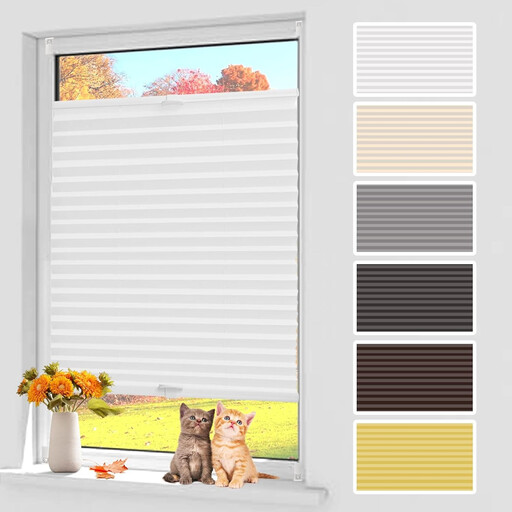
Why this product suits this profile: The 65 × 100 cm size is suitable for smaller standard windows. The white finish works well with a variety of interior styles.
The product description specifically mentions clamp-fit and adhesive drill-free fitting. Even so, check the glass and frame measurements before you buy.
Compact size, white polyester fabric and designed for indoor windows and doors.
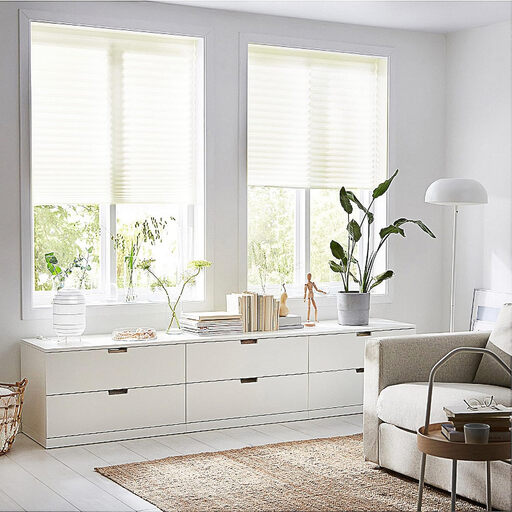
Why this product suits this profile: The 200 cm height is designed for taller windows or doors. The beige, light-filtering fabric lets soft daylight into the room.
The description distinguishes light filtering from complete darkness. This makes it easier to choose the right effect for a living room, office or bedroom.
75 × 200 cm size, light-filtering polyester fabric and clamp-fit or adhesive fitting without drilling.
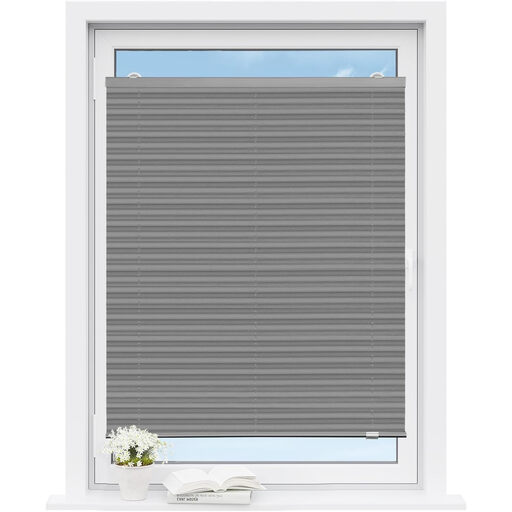
Why this product suits this profile: The suction cups are designed for smooth surfaces such as glass or tiles, making them practical for temporary use.
It is specified for smooth surfaces only, helping prevent the system from being used on rough walls or textured frames where it may not hold securely.
Suction cups, grey semi-transparent fabric and a 50 × 130 cm size; according to the product details, it is suitable for glass and tiles.
We’ve put together a complete, regularly updated list of products that meet these strict selection criteria and fully comply with the safety regulations in force in the EU.
Durability depends mainly on fitting, operation and location. Move the blind slowly and avoid pulling it sideways. For the models listed, a gentle wipe with a damp cloth is all that is needed for cleaning. Harsh cleaning products, sharp objects and prolonged exposure to moisture can damage the polyester fabric or fittings.
With adhesive and suction-cup systems, regular visual checks are recommended. If a bracket comes loose, stop using the blind until it has been securely refitted.
That depends on the surface, fitting, weight and how often it is used. Clamp brackets sit on the window frame, while adhesive and suction-cup systems need a clean, suitable surface. It is a good idea to check the fittings regularly.
Start by measuring the glass width, frame width and full height. Some models recommend a width equal to the glass width plus 4 cm. Always check the measurements against the relevant product description.
A light-filtering blind reduces visibility from outside and softens sunlight, but still lets daylight into the room. If you need a darker environment, choose a model specifically described as light-blocking or as a privacy blind, and also take possible gaps at the sides into account.