
Lieferung heute & morgen

Qualitätsgarantie

Willkommens-Angebote freischalten: KOSTENLOSE Lieferung | Bis zu 80 % RABATT | Kostenlose 30-Tage-JoyPlus-Testphase
App herunterladen
A pleated blind without drilling is ideal for rented homes, renovated rooms and windows whose frames must not be damaged. However, the choice is wider than it may initially seem: no-drill clamp pleated blinds, suction-cup mounting, pleated blinds without drilling and double roller blinds without drilling differ considerably in terms of installation, light transmission and suitable window size.
If you focus only on colour or a low price, you will often end up buying twice. Three common pitfalls are particularly important:
With a blind with clamp brackets, the holder is usually attached to the upper window frame. Check the following before buying:
According to the product information, the WOLTU double roller blind without drilling is designed for frames with a thickness of 13–23 mm. For the Dream-seeker model measuring 85 × 120 cm, a range of 10–23 mm is specified. These measurements should be compared with your own window. Not all systems are suitable for roof windows or wooden frames.
With adhesive or suction-cup mounting, the surface must be clean, dry and free from grease. Textured or heavily soiled surfaces may impair adhesion.
Measure the width of the glass and the height of the entire window sash. The recommended measurements vary depending on the model:
Example: if the pane of glass is 76 cm wide, a model with an overall width of 80 cm may be suitable, provided the brackets and fabric width match the installation situation. With a pleated blind for a door, you should also take the movement area and the distance from the door handle into account.
The fabric properties determine privacy and light levels:
A light grey pleated blind has a discreet appearance in many interiors. The perceived colour may vary depending on the daylight and how it appears on your screen.
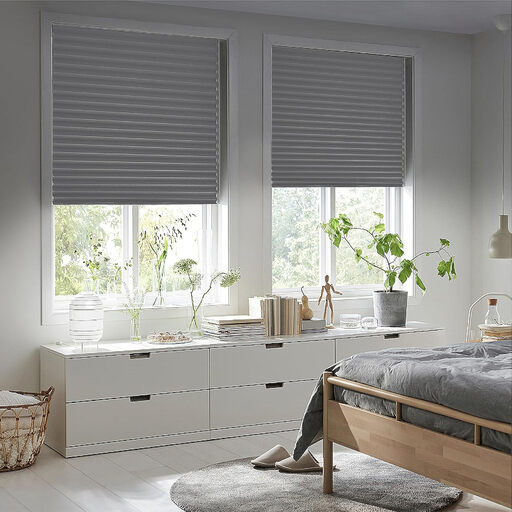
Why this product suits this profile: The compact format and clamp-fix mounting are suitable for smaller standard windows. The light-filtering fabric lets daylight into the room while helping to maintain privacy.
The product details specify a recommended width 2–4 cm greater than the glass width. This makes it easier to compare the order with your window measurements in advance.
65 × 100 cm, light grey polyester fabric, clamp-fix system and height-adjustable operation.
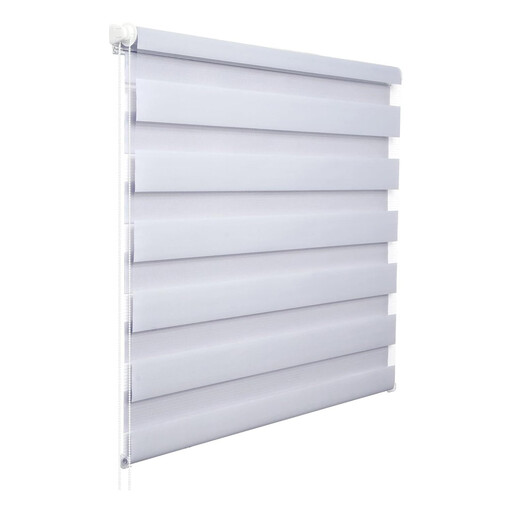
Why this product suits this profile: This duo blind is designed for households that want to regulate light and privacy levels flexibly throughout the day.
The frame thickness of 13–23 mm and the narrower fabric width are clearly specified. This helps you check for installation and coverage issues before buying.
Alternating transparent and denser strips, chain operation that can be fitted on the left or right, suitable for windows and doors.
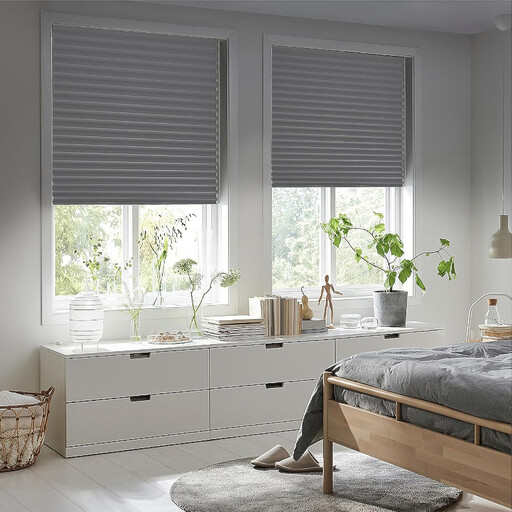
Why this product suits this profile: For bedrooms or windows exposed to strong sunlight, a model described as a blackout pleated blind is an obvious option, provided the measurements and frame are suitable.
The product description highlights clamp-fix mounting and advises checking the window frame. Before ordering, you should also consider the actual level of blackout at the intended location.
80 × 140 cm, light grey polyester fabric, no-drill installation and a design suitable for windows or doors.
We have put together a complete, regularly updated list of products that fully meet these strict selection criteria and the safety regulations applicable in the EU.
Before installation, clean the window frame with a suitable, non-greasy cloth. With clamp brackets, align the holders evenly and then check that they are firmly secured. Adhesive holders require a dry surface and should be left to adhere in accordance with the product instructions before being subjected to any load.
For many polyester fabrics, a soft cloth or gentle damp cleaning is sufficient. Abrasive products, harsh cleaners and prolonged contact with water can damage the fabric or coating. For roller blinds with a chain, keep the operating chain out of the reach of young children.
Its durability depends on the mounting type, frame, use and care. Clamp brackets can be fitted repeatedly when the frame thickness is suitable. Adhesive and suction-cup systems may lose adhesion due to dust, moisture or temperature fluctuations. Check the fixings regularly.
First measure the visible glass width and the height of the entire window sash. Depending on the product, an additional width of approximately 2–4 cm is recommended. Then check the frame thickness and compare it with the specified mounting range. For a pleated blind for a door, also take the handles and opening direction into account.
A pleated blind is made from folded fabric and is usually positioned using handles or cords. A double roller blind uses alternating fabric strips to provide flexible light control. A light-filtering pleated blind is suitable for soft daylight, while a duo blind offers more adjustment options between transparency and privacy.