
Lieferung heute & morgen

Qualitätsgarantie

Willkommens-Angebote freischalten: KOSTENLOSE Lieferung | Bis zu 80 % RABATT | Kostenlose 30-Tage-JoyPlus-Testphase
App herunterladen
A pleated blind without drilling can be a practical solution for rented homes, offices and living spaces. Depending on the model, it is fitted with clamp brackets or adhesive holders, so no holes need to be drilled in the window frame. However, not every clip-fit pleated blind is suitable for every window. Incorrect measurements, unsuitable frames or unclear information about light control often lead to unnecessary returns and additional costs.
Many buyers measure only the visible glass area. With many clip-fit models, however, the fabric width needs to be slightly greater than the glass width so that the privacy blind covers the window sufficiently. Some products recommend adding approximately 3 to 4 cm to the glass width. The required height, on the other hand, may refer to the entire opening window sash, including the frame.
Before ordering, you should therefore check:
A light-filtering pleated blind reduces visibility from outside and can soften sunlight, while still allowing daylight into the room. A blackout pleated blind made from an opaque fabric is better suited to bedrooms or rooms where light sensitivity is a concern. When fitted directly to the window sash, gaps at the sides may remain. The actual blackout effect therefore depends not only on the fabric, but also on the installation method and coverage.
For living rooms, kitchens or offices, a light-filtering window sun blind is often sufficient. In bedrooms or presentation rooms, an opaque window blind without drilling may be more suitable.
A clip-fit pleated blind is generally attached to the window frame. Adhesive holders, by contrast, only adhere to clean, dry and preferably smooth surfaces. Rough, uneven or heavily soiled frames can affect durability. Some models also offer screw fixing, while others are designed exclusively for adhesive or clamp holders.
You should also consider whether the blind is suitable for the room. Moisture-resistant polyester fabrics may be suitable for a bathroom pleated blind, but they are not automatically waterproof. Depending on the model, there may be restrictions for roof windows, wooden frames or sliding windows.
For a no-drill blind, compatibility with the fixing system is crucial. According to the product information, the WOLTU double roller blind is designed for window frames with a thickness of 13 to 23 mm. The Allesin model specifies an adjustable range of 10 to 23 mm. Before buying, the frame thickness should be measured at several points.
A no-drill clip-fit blind can swing when the window is tilted if the brackets are not positioned correctly. Systems with upper and lower guides or sturdy clamp brackets can limit this movement. The brackets must be secure after installation and checked regularly.
Pleated blinds are often operated using a handle, pull cord or side chain. Models with movable rails can be positioned from the top and bottom. This allows privacy to be limited to the desired area of the window while daylight enters through the upper section.
A double roller blind with alternating transparent and opaque stripes allows continuous adjustment from light-filtering to opaque. This can be useful in living and working spaces where the amount of light required changes throughout the day.
Polyester is the main material used in the products listed. It can generally be cleaned with a damp cloth or a soft brush. However, there are limitations when it comes into direct contact with water. A bathroom pleated blind should therefore not be used in the shower area or exposed to splashing water on a permanent basis.
For a bedroom pleated blind, the properties of the fabric and the gaps at the sides are particularly important. In kitchens and offices, easy cleaning, glare protection and privacy are the main considerations. Commercial users should also check whether the dimensions, operating mechanism and fixing system are designed for frequent use.
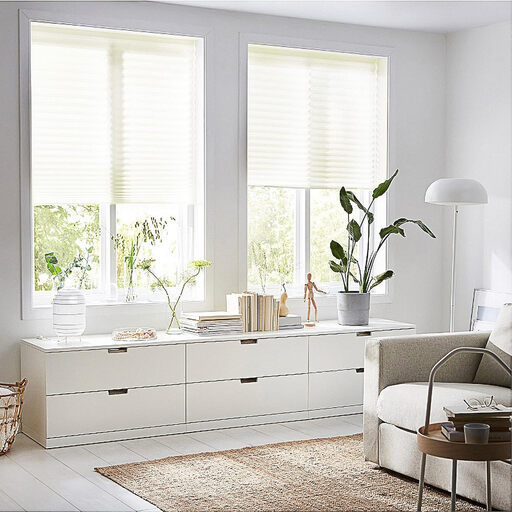
Why this product suits this profile: Measuring 60 × 120 cm, this light-filtering pleated blind is suitable for smaller rectangular windows and offers clip-fit installation without drilling.
The product details specify the required addition of approximately 4 cm to the glass width, as well as the restriction against use on sloping roof windows.
Moisture-resistant polyester, height-adjustable handle and cleaning with a damp cloth.
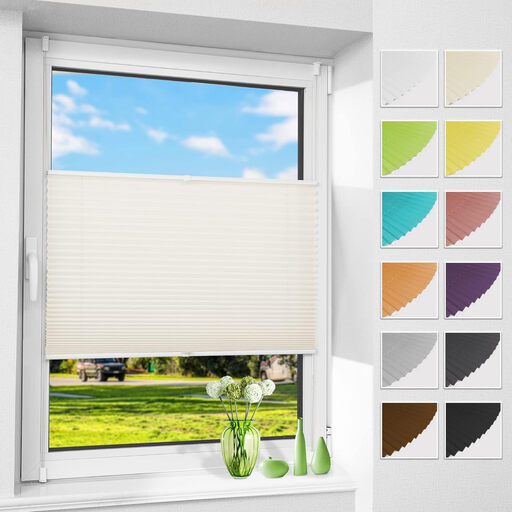
Why this product suits this profile: The system has adjustable brackets for frame thicknesses of 10 to 23 mm and can be attached to both the top and bottom of the window.
You can compare the frame thickness with the specified 10–23 mm range before ordering; this model is not suitable for wooden, sliding or roof windows.
Polyester with an aluminium rail, cloth cleaning and positioning using upper and lower handles.
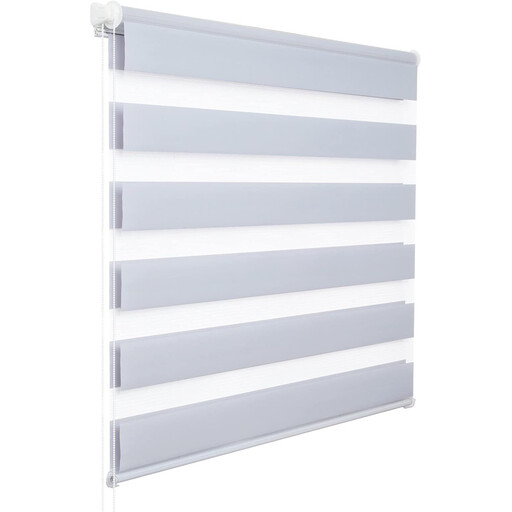
Why this product suits this profile: This double roller blind is designed for windows and doors and allows light levels to be adjusted using a side chain, which can be fitted on the right or left.
The stated suitable frame thickness of 13–23 mm helps prevent orders being placed without checking compatibility first. According to the product information, it is not designed for roof windows or wooden frames.
Alternating light-filtering and opaque stripes, polyester fabric and optional screw installation with the supplied accessories.

Why this product suits this profile: Measuring 75 × 200 cm, this pleated blind is described as an opaque option for bedrooms, living spaces and offices.
The product description highlights the need to clean the frame and states that the blind is unsuitable for rough or uneven surfaces.
Clip-fit installation without drilling, polyester fabric and height adjustment after fitting.
We have put together a complete, regularly updated list of products that fully meet these strict selection criteria and the safety regulations applicable in the EU.
A made-to-measure pleated blind can be useful if standard widths do not fit or several windows have different dimensions. In rented homes, you should also check whether the chosen installation method can genuinely be removed without leaving any residue.
Depending on the model, it is attached to the window frame with clamp brackets or fitted using adhesive holders. Clip-fit systems are only suitable if the frame thickness and window construction match the manufacturer’s specifications. The frame should be clean and dry before installation.
Durability depends on the material, frequency of use, the surface of the frame and correct installation. With adhesive fixings, adhesion can weaken due to dust, moisture or heat. The fixing points should therefore be checked regularly and replaced or refitted if they become visibly loose.
A manually operated pleated blind, double roller blind or no-drill window blind does not require electricity. Ongoing costs are therefore limited to cleaning and, where necessary, replacing holders or operating components. Solar-powered or motorised systems are a separate product category and must be assessed according to their individual power supply.