
Lieferung heute & morgen

Qualitätsgarantie

Willkommens-Angebote freischalten: KOSTENLOSE Lieferung | Bis zu 80 % RABATT | Kostenlose 30-Tage-JoyPlus-Testphase
App herunterladen
A pleated blind without drilling is particularly suitable for rented homes, frequent moves or windows whose frames you don’t want to damage permanently. However, the fitting method alone isn’t enough to guide your choice. Many disappointing purchases are caused by inaccurate measurements, a misunderstanding of how much light the fabric lets through, or unsuitable clamp brackets.
A common mistake is to assume that the visible glass area is the same width as the blind you need. For many models, the recommended width is around 3 to 4 cm wider than the glass, so the blind provides sufficient coverage. As a rule, the height should correspond to the full height of the window frame.
Before ordering, measure:
For balcony doors and large windows, also check that the blind won’t hit the handle or wall when the door or window is opened.
The terms opaque, light-filtering and blackout describe different properties. An opaque pleated blind can reduce unwanted views while still letting daylight through. A light-filtering blind diffuses incoming light and can reduce glare. A model described as blackout is designed to block more light.
Even a blackout pleated blind can leave gaps at the sides, top or bottom if it doesn’t fit precisely. So, for bedrooms, look beyond the blackout pleated blind label and check the width, fitting position and fabric construction too.
A clamp-fit pleated blind attaches to the window sash without the need for drilling. The frame must be the right thickness and shape. Clamp brackets may not be suitable for frames that are sharply angled, very narrow or unusually shaped.
Adhesive brackets are an alternative, but they need a clean, smooth, grease-free surface. Adhesion may be weaker on rough, porous or uneven surfaces. If you’re fitting a blind to a door that’s used frequently, check that the brackets stay firmly in place.
A clamp-fit pleated blind can usually be installed and removed without tools. This makes it a practical pleated blind for rented homes, as it won’t leave drill holes in the frame. Check the specified frame-thickness range. For example, the WOLTU clamp-fit roller blind in 80 × 150 cm is specified for frames measuring 16 to 22 mm thick.
Adhesive brackets are best suited to smooth indoor surfaces. Suction cups are designed for smooth glass or tiled surfaces, but can come loose because of temperature changes, dust or moisture. Many models are specifically not suitable for roof windows.
A light-filtering pleated blind can be a good choice for a living room or home office if you want to retain daylight. A privacy pleated blind reduces visibility from outside without completely darkening the room. For bedrooms or children’s rooms, consider fabrics that block more light.
In bathrooms and kitchens, check that the product description says the material is moisture-resistant or suitable for damp conditions. This doesn’t automatically mean it’s waterproof. Avoid direct, prolonged contact with water.
Models with grip rails can be adjusted from the top or bottom, so you can position the covered area as needed. If the product has a cord, keep cords and chains out of children’s reach and fit any safety devices supplied, following the instructions.
For the products featured here, a soft, slightly damp cloth is usually all you need for cleaning. Harsh cleaning products, scouring agents and vigorous rubbing can damage the fabric, coating or pleats.
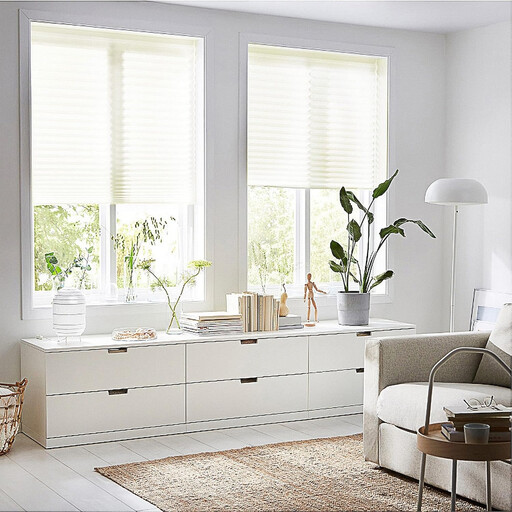
Why it suits this profile: The 75 × 100 cm size is designed for smaller standard windows. According to the product description, it can be fitted without drilling using clamp brackets and adhesive fixings.
The recommended measurement—glass width plus around 4 cm—helps prevent the blind from being too narrow to provide adequate coverage. The fabric is described as opaque or light-reducing.
Available in beige, height-adjustable and designed for indoor windows and doors.

Why it suits this profile: The polyester honeycomb fabric and adjustable clamp-fit frame will appeal if you’re looking for a particular fabric construction, easy operation and clearly specified frame measurements.
The supplier specifies a suitable frame-thickness range of 10 to 23 mm. This lets you check before buying whether the blind should be suitable for your window.
Honeycomb fabric, top and bottom grip rails, and a wipe-clean surface, according to the product description.

Why it suits this profile: This model is suited to bedrooms, living areas or offices where you want to reduce incoming light and visibility from outside more significantly.
The product details state both the required frame thickness of 16 to 22 mm and the recommended extra width beyond the glass area. This makes it easier to check whether it will fit before buying.
Grip-operated, with no loose chain, and made with coated polyester fabric for blackout and privacy, according to the product description.
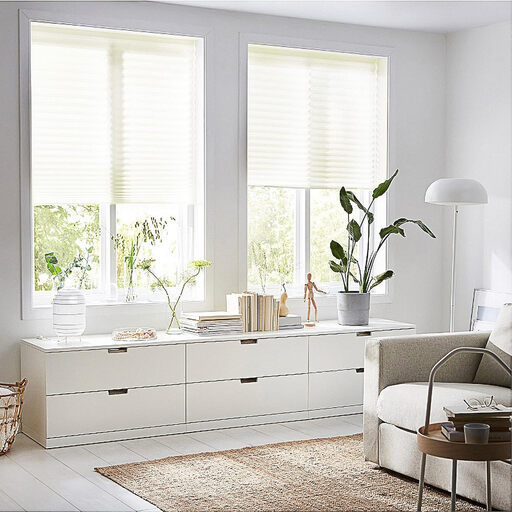
Why it suits this profile: The light-filtering fabric is a good fit for rooms where you want both privacy and natural daylight.
Light filtering isn’t the same as complete blackout. If you want to keep a room bright, you can choose a fabric with this specific property.
90 × 120 cm, adjustable height, clamp-fit installation, and light grey or beige options depending on the version.
We’ve put together a complete, regularly updated list of products that meet these strict selection criteria and fully comply with the safety regulations in force in the EU.
With a clamp-fit model, the brackets attach to the top and bottom of the window frame. The frame must be within the thickness range specified by the manufacturer. Adhesive fixings should be applied to a clean, dry and smooth surface. Before using the blind, check that it’s secure and that the window can still be opened easily.
Its lifespan depends on the fabric, brackets, exposure to sunlight, how often it’s used and how it’s cleaned. There’s no reliable way to give a single lifespan that applies to every blind. Regularly checking the clamp or adhesive brackets, adjusting the blind gently and cleaning it with a soft cloth can help reduce wear.
Many models are described as suitable for both windows and doors, including balcony and patio doors. The key factors are the dimensions, frame thickness, door handle and the stability of the fitting. Check the brackets particularly regularly on doors that are opened and closed often.