
Lieferung heute & morgen

Qualitätsgarantie

Willkommens-Angebote freischalten: KOSTENLOSE Lieferung | Bis zu 80 % RABATT | Kostenlose 30-Tage-JoyPlus-Testphase
App herunterladen
A pleated blind without drilling is ideal for rented homes, frequently changing living arrangements and windows where you want to avoid permanent holes. But not every clip-on pleated blind will fit every window frame. Buying the wrong product often comes down to unclear measurements, misjudging how much light the fabric lets through or choosing unsuitable brackets.
This guide explains what to look for when choosing a clip-on pleated blind, a pleated roller blind without drilling or a roller blind without drilling for windows and doors.
For many roller blinds and pleated blinds, the stated order width is not the same as the actual fabric width. Brackets and side parts can reduce the usable coverage. According to the product description, the fabric on the WOLTU double roller blind is about 4 to 5 cm narrower than the order width.
So be sure to measure:
Some models come with a recommended order width that is about 4 cm wider than the glass. However, this recommendation does not apply to every product. Always check the measurements for the specific model.
A light-filtering pleated blind softens daylight and can reduce visibility from outside. A privacy blind lets less through, but may still allow light into the room. A blackout pleated blind with a coated backing, on the other hand, is designed to block more light.
Even with a product described as “blackout”, light can get through at the sides or between the fabric and the window frame. For bedrooms or media rooms, check not just the fabric description but also the width, fitting position and how much of the frame the blind covers.
A pleated blind with clamp brackets is usually attached to the top of the window frame. The permitted frame thickness varies by model. According to the product description, the WOLTU blackout roller blind is designed for frames 16 to 22 mm thick. The WOLTU honeycomb pleated blind is suitable for frames 10 to 23 mm thick.
Not every model is suitable for:
A light-filtering pleated blind can be a good choice for living rooms, kitchens and offices. It reduces glare while still letting in soft daylight. For bathrooms or ground-floor windows, a privacy fabric is usually more practical.
A double roller blind has alternating sheer and opaque stripes. The chain lets you adjust the level of privacy in stages. This design is handy if you want to switch between more daylight and greater privacy at different times of day.
A classic clip-on pleated blind attaches to the window frame using adjustable clamp brackets. Some models combine clamp brackets with adhesive pads. Before fitting, make sure the frame is clean, dry and free from grease. Once it is in place, check that the blind hangs straight and moves without excessive resistance.
Suction-cup models need smooth, clean surfaces. They are designed for glass or smooth tiles, not rough walls. Dust, moisture or textured surfaces can affect how well they hold.
Models with handles or a bottom operating rail do not need a loose hanging pull cord. For products with a chain, fit the child safety device supplied, following the instructions. Keep small fitting parts out of children’s reach during installation.

Why it suits this profile: This compact pleated blind is suitable for standard windows in bedrooms, living rooms or offices, and fits without drilling using clamp or adhesive brackets.
The product description specifies a light-filtering design, making clear that it has a different effect on light from a fully room-darkening fabric.
Measures 60 × 120 cm, has an adjustable position and is made from wipe-clean polyester, according to the product details.

Why it suits this profile: This blind is aimed at shoppers looking to block more light in bedrooms and living rooms, with an operation method that avoids a hanging cord.
The product details specify both the suitable frame thickness of 16–22 mm and the narrower fabric width compared with the overall width.
Clip-on or screw fitting, operated using the bottom rail, with a coated backing according to the product description.

Why it suits this profile: This clip-on model is a good option if you want an adjustable privacy blind for a bedroom, bathroom or home office.
The product description states that this model is not suitable for roof windows and specifies a frame thickness range of 10–23 mm.
Honeycomb structure, top and bottom handles, and wipe-clean polyester according to the product details.
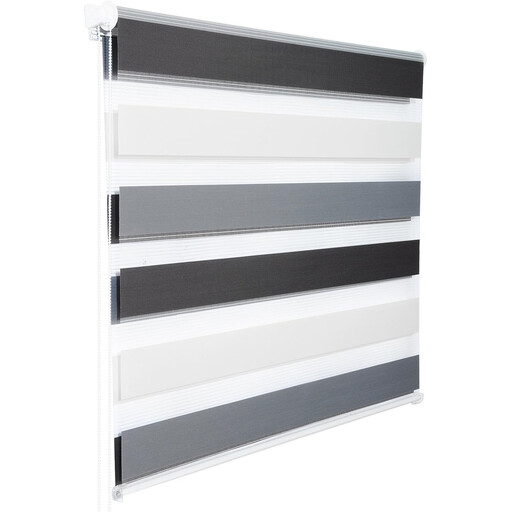
Why it suits this profile: This duo roller blind is designed for living rooms, kitchens, offices and doors where you want to adjust privacy using a chain.
The product details state that it is suitable for frames 13–23 mm thick and point out that the fabric is narrower than the order width.
Alternating sheer and opaque stripes, with clip-on or screw fitting.
We’ve put together a complete, regularly updated list of products that meet these strict selection criteria and fully comply with the safety regulations in force in the EU.
Before fitting, clean the window frame with a soft cloth. Position and secure the clamp brackets evenly, following the instructions. If you are using adhesive brackets, it is best to leave them to set for long enough before putting the blind under strain. Then check that the window or patio door can still open fully.
For the models mentioned, a damp cloth is usually all you need for cleaning. Harsh cleaning products, scouring pads and prolonged exposure to high levels of moisture can damage the fabric, coating or brackets. Several products have restrictions on use with roof windows, so read the usage guidance before buying.
A pleated blind without drilling is usually fitted to the window frame using adjustable clamp brackets. Depending on the model, adhesive pads or suction cups may also be used. The key is to make sure the frame thickness is suitable and the fitting surface is clean.
Its lifespan depends on the fabric quality, how often it is operated, how much sunlight it gets and whether it is fitted correctly. Operating it gently, securing it properly and cleaning it with a soft cloth can help it last longer. There is no single lifespan that applies to every model.
Many models are designed for windows and doors. Before buying, check the height, frame thickness and clearance around the door handle. On a patio door, fit the blind so it does not catch on the handle or wall when the door opens and closes.