
Lieferung heute & morgen

Qualitätsgarantie

Willkommens-Angebote freischalten: KOSTENLOSE Lieferung | Bis zu 80 % RABATT | Kostenlose 30-Tage-JoyPlus-Testphase
App herunterladen
A pleated blind without drilling is practical for rented homes, temporary living solutions and many standard windows. Depending on the model, it can be installed using clamp brackets, Klemmfix holders, adhesive holders or suction cups. This leaves the wall and window frame largely untouched.
Even so, it is worth checking the product specifications carefully. Otherwise, three common buying mistakes can quickly lead to an unsuitable internal blind:
Before buying, measure the width of the window pane, the height of the entire window sash and the thickness of the window frame. For several Dream-Seeker models, an ordering width approximately 4 cm wider than the glass width is recommended. With a glass width of 51 cm, this would mean choosing a 55 cm-wide pleated blind.
However, this is not a universal rule. With a Klemmfix pleated blind, the clamp brackets must fit the window frame. For example, the 85 cm-wide Dream-Seeker model is designed for frame thicknesses of 10 to 23 mm. A Woltu Klemmfix pleated blind also specifies a suitable frame range of 1.5 to 2.3 cm.
Also check:
For doors, balcony doors and patio doors, the stability of the holders should be checked particularly carefully. A pleated blind for doors is moved more frequently than a pleated blind fitted to a fixed window.
A pleated blind with clamp brackets is attached directly to the window sash. This option is often suitable for rented homes, provided that the frame thickness and design are compatible. Installation is normally reversible and requires no tools on the wall.
Adhesive holders can be a flexible alternative for smooth, dry frames. Before attaching them, the surface must be free from dust, grease and moisture. Check the adhesion regularly, particularly with larger pleated blinds.
Suction cups, as used with the Woltu Pleated Blind Without Drilling, are designed for smooth surfaces such as glass or tiles. The product description states an adjustable width of 50 to 90 cm and a height of 130 cm. This type of fixing is less predictable on textured, dusty or heavily heated surfaces.
A light-filtering pleated blind allows daylight into the room and can reduce glare and views in. This is often sufficient for kitchens, offices, living rooms or bathrooms. For workstations with screens, a light-coloured pleated blind can soften direct sunlight, but it is no substitute for planning the individual workspace.
If you want as little outside light as possible at night, look for terms such as opaque, dimming or Blackout. The exact fabric construction and the gaps at the sides affect the result. A honeycomb pleated blind may contain additional layers of material due to its design; however, this should not be taken as a blanket promise of lower heating costs or improved sound insulation.
The following applies to all variants: polyester is easy to care for, but is generally not intended for prolonged direct contact with water. In kitchens and bathrooms, the pleated blind should therefore not be exposed directly to splashing water. Cords and operating elements must be kept out of children’s reach; always follow the manufacturer’s relevant safety instructions.
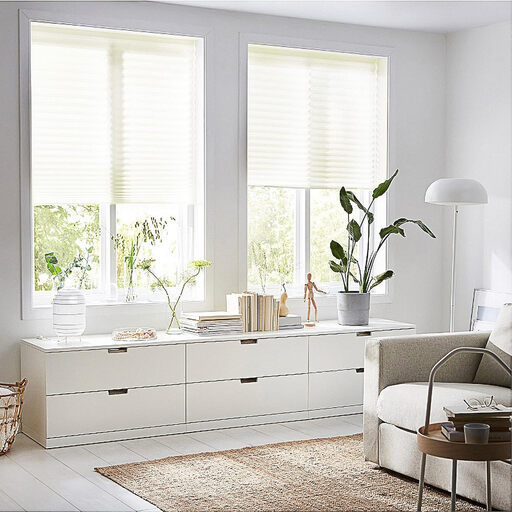
Why this product suits this profile: The beige pleated blind offers a popular standard size, Klemmfix installation without drilling and height-adjustable operation. It is suitable for rooms where privacy and softened daylight are important.
The product details clearly state the width, height, material and installation method. You must still check the glass width and frame thickness before buying.
Polyester fabric, adjustable positioning and colour options including beige, light grey, white and anthracite.

Why this product suits this profile: The honeycomb structure with opaque polyester is an appealing choice for bedrooms, living rooms and offices when light control and a closed appearance are more important than maximum light transmission.
This version is not designed as a light-filtering pleated blind. If you are looking for blackout performance, compare the stated fabric type and the 50 x 130 cm dimensions with your window.
Klemmfix holders for frames measuring 10 to 23 mm, upper and lower operating handles, and moisture-repellent polyester.
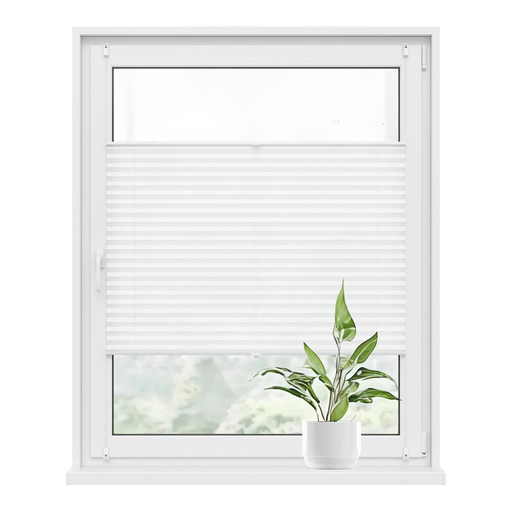
Why this product suits this profile: According to the product details, this model covers variable widths from 45 to 120 cm and heights of 130 or 220 cm. This makes it an interesting option for larger windows and doors, provided the frame allows for installation.
The product details explicitly state that this version dims the light but does not provide complete blackout. This helps you assess the expected level of light protection before buying.
Adjustable width, aluminium profile, 20 mm pleat width and clamp brackets for installation on a window or door.
Clean the frame before installation with a suitable, non-aggressive cleaning product and allow it to dry completely. Do not overtighten the clamp brackets. With adhesive holders, wait for the recommended curing time before applying any load.
A pleated blind can generally be dusted with a soft, dry or slightly damp cloth. Avoid abrasive cleaners, sharp objects and soaking the blind. For models with cords or tension systems, check the fixings regularly. If a holder comes loose, do not use the pleated blind again until it has been securely reattached.
We have put together a complete, regularly updated list of products that fully meet these strict selection criteria and the safety regulations applicable in the EU.
Depending on the design, installation is carried out using clamp brackets on the window frame, adhesive holders on a smooth surface or suction cups on the glass. The key factors are the frame thickness, surface condition and weight of the pleated blind. The installation instructions for the individual model take precedence.
It is not possible to give a general lifespan. This depends on how frequently it is operated, exposure to sunlight, moisture and the stability of the holders. Regular checks, gentle operation and cleaning without aggressive products can help extend its service life.
That depends on how much light you want in the room. A light-filtering pleated blind provides privacy and reduces glare, but still allows daylight in. For a darker room, choose a version specifically described as blackout or opaque, and check the measurements for the window sash and frame carefully.