
Lieferung heute & morgen

Qualitätsgarantie

Willkommens-Angebote freischalten: KOSTENLOSE Lieferung | Bis zu 80 % RABATT | Kostenlose 30-Tage-JoyPlus-Testphase
App herunterladen
A pleated blind without drilling is a good choice for rented homes, offices and any room where you don’t want to cause permanent damage to the window frame. However, fitting methods, fabric density and sizing can vary considerably. If you focus only on colour or price, you could end up ordering a blind that doesn’t fit, comes loose when you tilt the window or lets in more light than you expected.
Terms such as blackout pleated blind, “blackout” and “opaque” aren’t used consistently. A tightly woven fabric can improve privacy and reduce glare, while light may still come through at the sides or through the fabric itself. Some models specifically state that the fabric won’t completely block out the light.
For bedrooms, check the following:
A light-filtering pleated blind is often a good choice for a living room, kitchen or office if you want to keep the natural light. For greater light control, consider a denser fabric.
The size shown for a product often refers to the blind’s overall width, not just the width of the glass. For several Klemmfix models, the recommendation is to choose a blind about 4 cm wider than the window glass. The height should be measured against the whole window, including the frame.
For example, if the glass measures 86 cm across, a 90 cm-wide blind may be suitable. Before buying, also check that the clamp brackets are compatible with the thickness of your window frame.
A pleated blind with clamp brackets is usually attached to the window sash. This is practical for rented homes, but the frame must be suitable. Clamp brackets may not fit unusually narrow, very deep or rounded frames.
Alternatives:
Measure the glass width, frame width and clear height at several points. If the window has a handle, seal or frame that protrudes significantly, make sure there’s enough clearance. Many models are designed for rectangular tilt-and-turn windows. Depending on the product, they may not be suitable for roof windows, sliding windows or sloping windows.
A balcony door will often need a taller blind. For example, a 90 x 200 cm pleated blind may suit a tall door or large window, provided the width, frame and opening direction are right. For doors, also check that the blind won’t catch on the wall, handle or door handle when you open it.
Here’s a practical guide to the terminology:
A beige pleated blind offers a neutral look. Light-coloured fabrics often let more light into the room, while darker colours can feel more effective at reducing glare. The actual result depends on the weave, coating and fitting.
Polyester is common in the models featured here and can usually be cleaned with a soft, slightly damp cloth. Moisture-resistant doesn’t mean waterproof, so don’t leave the blind wet for long in bathrooms or kitchens. Before buying, check the care instructions and whether the blind is suitable for damp rooms.
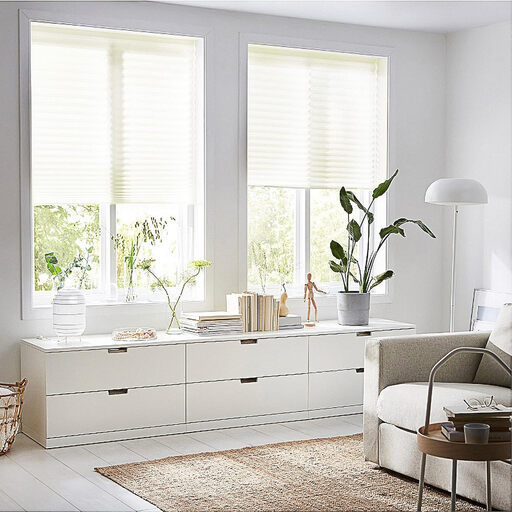
Why it suits this profile: This model combines a popular size with beige, light-filtering polyester fabric and a clamp fitting for window frames.
The product description recommends adding around 4 cm to the glass width and notes that the blind is suitable for straight-sided windows and doors.
Light-filtering fabric, adjustable height and a no-drill fitting. The fabric is moisture-resistant, but not waterproof.
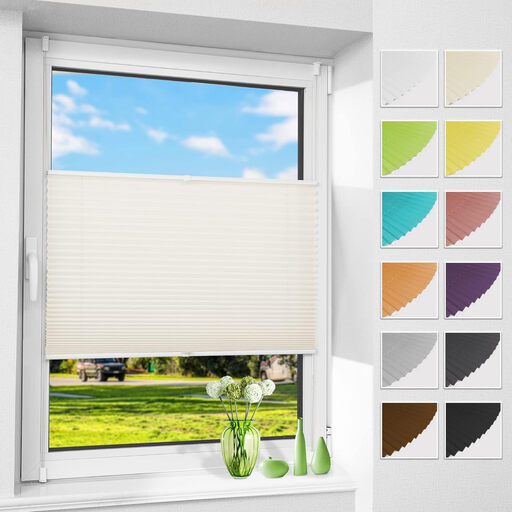
Why it suits this profile: According to the product details, the adjustable brackets fit frames 10 to 23 mm thick and are suitable for rectangular tilt-and-turn windows.
The compatible frame thickness is clearly specified. The product is also stated to be unsuitable for roof windows, wooden windows and sliding windows.
Aluminium rod, polyester fabric, wipe-clean with a damp cloth, and adjustable handles on the top and bottom rails.
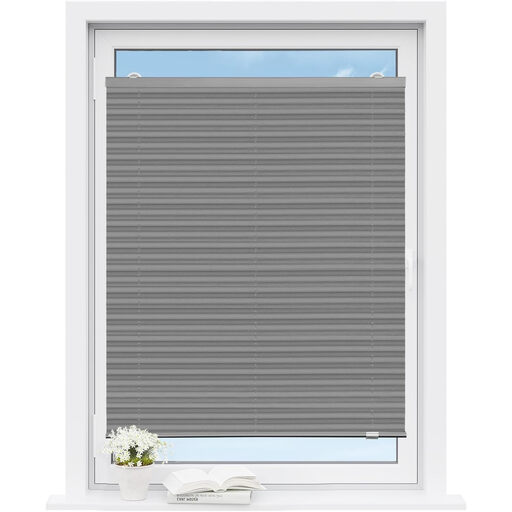
Why it suits this profile: The suction-cup fitting is designed for smooth glass or tiled surfaces. It may be a good option for temporary setups, roof glazing or balcony doors.
The product details specify that it should only be fitted to smooth surfaces. It isn’t designed for textured walls or uneven surfaces.
Adjustable width from 50 to 90 cm, 130 cm height, UV-filtering fabric and removable suction cups for flexible use.
We’ve put together a complete, regularly updated list of products that meet these strict selection criteria and the safety regulations in force across the EU.
If you have children, keep operating cords and loose parts out of their reach. Always follow the manufacturer’s instructions for use and cleaning.
How long it lasts depends on the frame, fitting, use and fabric weight. A clean frame that’s a good fit helps keep the blind securely in place. Check the clamp brackets regularly and avoid yanking the handles or cords.
Yes. Many Klemmfix models attach to the window sash without drilling. If you’re using adhesive brackets, check the instructions on removing them without leaving residue. Before ordering, check whether your landlord has any specific requirements for window frames or balcony doors.
An indoor pleated blind usually doesn’t need electricity. Ongoing costs are therefore mainly for cleaning, occasional replacement brackets or replacing the blind in future. The key factors are the purchase price, getting the right measurements and how securely the blind is fitted.