
Lieferung heute & morgen

Qualitätsgarantie

Willkommens-Angebote freischalten: KOSTENLOSE Lieferung | Bis zu 80 % RABATT | Kostenlose 30-Tage-JoyPlus-Testphase
App herunterladen
A pleated blind without drilling is ideal for rented homes, frequently changing living arrangements and windows whose frames must not be damaged. However, not every drill-free solution is suitable for every window. Unsuitable clip-on brackets, incorrectly measured widths or insufficient light protection can quickly make the product impractical.
This buying guide explains which details matter before purchasing a Klemmfix pleated blind, a pleated roller blind for windows or a roller blind for doors.
With many roller blinds and day-and-night blinds, the stated overall width is greater than the actual fabric width. Brackets and side components take up additional space. According to the product descriptions, the fabric on several WOLTU models is approximately 4 to 5 cm narrower than the overall width.
If you only measure the glass area and fail to allow for this difference, you may end up with inadequate privacy or sun protection. Always refer to the specifications for the individual product when choosing a suitable blind.
A light-filtering pleated blind filters daylight and can provide privacy, while still allowing brightness into the room. This is not always sufficient for bedrooms or children’s rooms. A privacy pleated blind, a blackout roller blind without drilling or a thermal pleated blind has a different purpose.
Terms such as “blackout”, “light-filtering” and “semi-transparent” should therefore not be treated as interchangeable. The specific material and function details are what matter.
Klemmfix systems are attached to the opening window sash. Different models are suitable for different frame thicknesses, for example 13 to 23 mm, 16 to 22 mm or 10 to 23 mm. Fitting may not be possible on wooden windows, roof windows, sloping windows or textured surfaces.
Before buying, check the following:
Measure the visible glass width and the height of the entire window sash. For a pleated blind for doors, also check that the controls and the passageway remain unobstructed. Some manufacturers recommend an order width approximately 4 cm wider than the glass width. Other models are based on the width of the entire window frame.
The product description should therefore take priority over any general rule of thumb. Also make sure that the pleated blind does not extend beyond the window handle.
Depending on the model, a window roller blind without drilling can be fitted in several ways:
Before fitting, the frame and glass should be clean, dry and free from grease. Check that the blind is securely attached before every use.
A privacy roller blind can reduce visibility into the room without making it significantly darker. A pleated blind with sun protection or a light-filtering model still allows daylight to enter. For the lowest possible brightness, consider opaque or specifically designated blackout fabrics.
Thermal and honeycomb pleated blinds have a multi-layer or honeycomb-style construction. According to the product description, the WOLTU honeycomb pleated blind features an opaque polyester fabric, a metal construction and Klemmfix fitting for frame thicknesses of 10 to 23 mm. Statements about thermal or acoustic performance should be understood as product features, not as guaranteed savings or complete noise insulation.
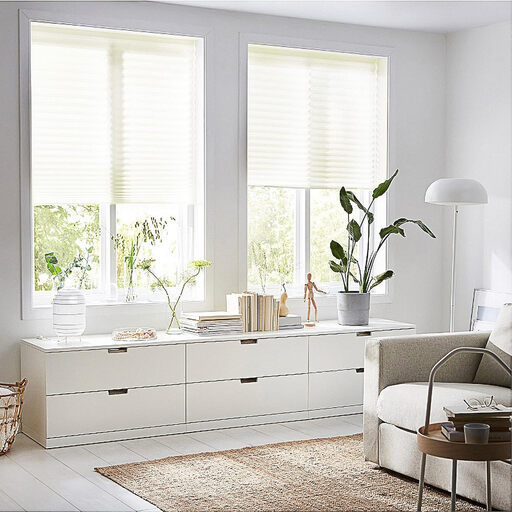
Why this product suits this profile: This model offers a 90 × 120 cm light-filtering surface and can be fitted using Klemmfix or adhesive brackets. It is therefore suitable for standard windows in living rooms, kitchens or offices.
The fitting method and dimensions are clearly stated. The fabric is light-filtering and is not marketed as providing complete blackout.
Clip-on and adhesive fitting, adjustable height and easy-care polyester fabric.

Why this product suits this profile: The day-and-night blind, with alternating transparent and opaque stripes, allows you to adjust daylight and privacy gradually.
The product description clearly distinguishes between light transmission and blackout performance through its two-layer stripe design.
100 per cent polyester, chain control that can be fitted on the left or right, and clip-on brackets for frames measuring 13 to 23 mm.

Why this product suits this profile: This opaque honeycomb pleated blind is designed for rooms where privacy and reduced light levels are important, such as bedrooms, bathrooms or home offices.
The permitted frame thickness of 10 to 23 mm and the exclusion of roof windows must be taken into account before buying.
Opaque polyester fabric, upper and lower control handles, and moisture-repellent properties according to the product description.
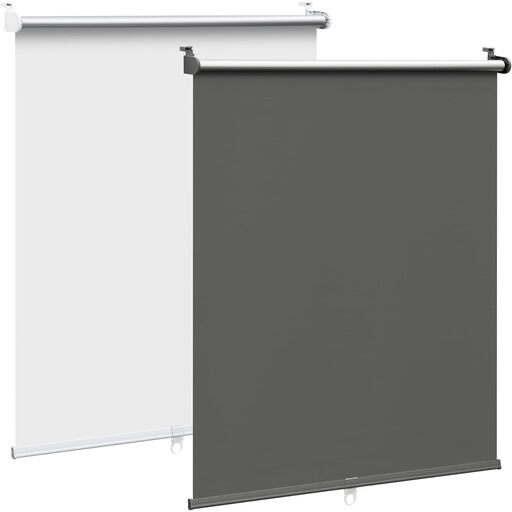
Why this product suits this profile: This cordless roller blind with handle operation is designed for windows and doors in bedrooms, offices, bathrooms or on balconies.
The description explicitly states the required frame thickness of 16 to 22 mm and points out that the fabric is approximately 4 cm narrower.
Cordless operation, silver-coated backing and blackout-designated fabric made from 200-g/m² polyester.
We have put together a complete, regularly updated list of products that fully meet these strict selection criteria and the safety regulations applicable in the EU.
Before fitting, clean all clip-on or adhesive surfaces. Suction cups require a smooth surface such as glass or tiles. After fitting, check that the pleated blind is secure and does not obstruct the window handle.
Polyester fabrics can generally be cleaned with a soft cloth, a soft brush or a slightly damp cloth. Harsh cleaning products, scouring pads and sharp objects can damage the surface or the pleated structure.
With models featuring a chain or pull cord, the controls must be kept out of children’s reach. Cordless versions reduce the associated pull and entanglement hazards, but do not replace the need to check that the blind has been fitted securely.
This depends on the fitting method, frame thickness and surface. Klemmfix brackets are attached to a suitable window frame. Suction cups require smooth surfaces. Check the relevant compatibility information before buying; many models are not designed for roof windows or wooden windows.
First measure the glass width and the height of the window sash. Then check whether the product width includes the brackets and how wide the fabric actually is. If you want greater protection from side light, a wider order width may be suitable, provided that the window handle and frame allow for it.
A light-filtering pleated blind filters daylight and, depending on the fabric, can provide privacy. A blackout roller blind without drilling, on the other hand, uses an opaque fabric that lets significantly less light into the room. When choosing, pay close attention to the specific details regarding transparency, coating and intended use.