
Lieferung heute & morgen

Qualitätsgarantie

Willkommens-Angebote freischalten: KOSTENLOSE Lieferung | Bis zu 80 % RABATT | Kostenlose 30-Tage-JoyPlus-Testphase
App herunterladen
Pleated blinds without drilling are a practical choice for rented homes, offices and households where you don’t want to damage window frames or walls. But the name alone tells you little about how a blind is fitted, how much privacy it offers or whether it’s suitable for a particular window. If you choose based only on colour and price, you could end up with a model that won’t stay in place on the frame, doesn’t cover enough of the window or slips when the window is tilted.
A clip-on pleated blind is attached to the window sash using clamp brackets. Other versions use adhesive brackets or suction cups. These systems aren’t suitable for every surface:
Before buying, check whether a pleated blind with clamp brackets, adhesive brackets or suction cups will suit your window.
A light-filtering pleated blind reduces direct visibility from outside while still letting daylight into the room. This is handy for kitchens, studies and living rooms. For bedrooms and children’s rooms, a more opaque window covering may be a better choice.
Check product descriptions carefully for terms such as ‘blackout’, ‘room darkening’ or ‘light-blocking’. An opaque fabric can reduce visibility without making the room completely dark. And a pleated blind with sun protection won’t necessarily block all the heat or brightness.
With standard models, the stated size is usually fixed. A made-to-measure pleated blind offers a more precise fit, but it isn’t the same as every budget clip-on model. Before ordering, you’ll need at least these measurements:
Several of the Dream-Seeker models featured here recommend a pleated blind width of around 4 cm more than the width of the glass. This is the relevant supplier’s recommendation, so check it against your planned fitting position.
When choosing a pleated blind for a window or door, it’s important to consider whether the window sash opens and tilts. Clamp brackets fit directly onto the frame, avoiding the need for drill holes. Position them evenly when fitting so the blind hangs straight.
A pleated blind for a patio door often needs extra height and secure guidance. Take particular care when choosing a pleated blind for a roof window: models designed for flat or vertical windows aren’t automatically suitable for sloping roof windows. The product information for several Dream-Seeker versions specifically states that they aren’t designed for sloping roof windows.
Most of the models listed are made from polyester fabric. Polyester can usually be cleaned with a soft, slightly damp cloth. However, that doesn’t mean the fabric is waterproof. For bathrooms and kitchens, check whether the supplier only describes the fabric as moisture-resistant.
Aluminium profiles can help with guidance and shape retention. One model is also listed as having a 20 mm pleat width. These technical details are more useful than general marketing claims because they make it easier to compare products directly.
Look for specific terms such as light-filtering, light-diffusing, opaque or room-darkening. The WOLTU model with suction cups is described in the product information as filtering 70% of UV radiation. This figure comes from the brand’s description and doesn’t mean the blind provides complete blackout.
A light-filtering fabric may be enough for everyday sun protection on an interior window. For a desk-based workspace or bedroom, also consider the direction the light comes from and whether there could be gaps at the sides.
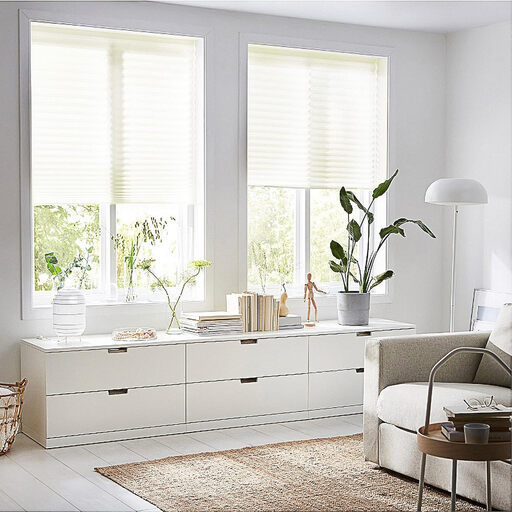
Why it suits this type of buyer: This model comes in a fixed size, with clip-on fitting and height-adjustable operation. It’s a straightforward option for anyone looking for a simple solution for a living room, kitchen or office.
The fitting method is clearly described as clip-on, with no drilling required. The product information also covers measurements and care, and notes that it isn’t suitable for sloping roof windows.
90 × 120 cm, beige polyester fabric and height-adjustable cord operation.
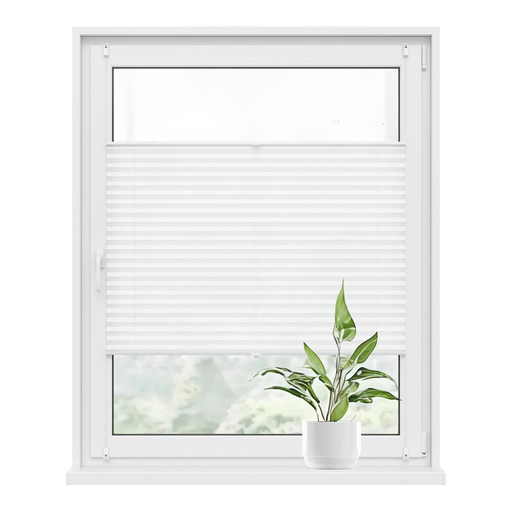
Why it suits this type of buyer: The adjustable width and information about the required frame thickness make it easier to check whether the blind will fit your windows and doors.
The product information specifies a frame rebate of 1.5 to 2.3 cm and explains the limits of the width adjustment. This lets you check the fit before you buy.
Polyester fabric, aluminium profile, 20 mm pleat width and clamp brackets for fitting without drill holes.
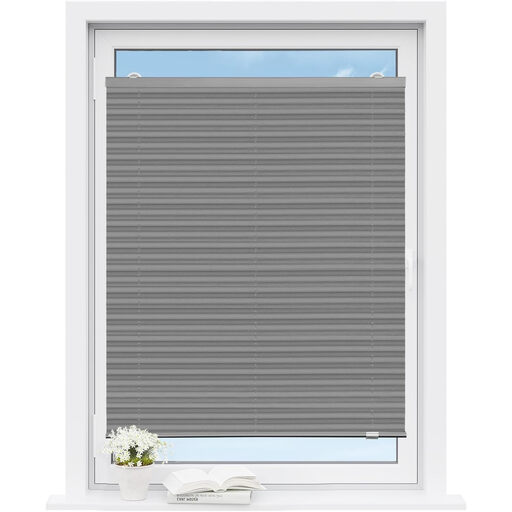
Why it suits this type of buyer: This model is designed for smooth surfaces such as glass or tiles, making it a useful option for temporary installations or windows in less common positions.
It’s only suitable for smooth surfaces. If you have textured walls or porous frames, you can rule out this option early on.
50 × 130 cm, width adjustable from 50 to 90 cm according to the product information, and grey light-filtering fabric.
We’ve put together a complete, regularly updated list of products that meet these strict selection criteria and fully comply with the safety regulations in force in the EU.
Depending on the model, it’s fitted using clamp brackets, adhesive brackets or suction cups. Clamp brackets hook onto the window sash, while adhesive brackets stick to a clean, dry surface. Suction cups need a smooth surface. Before fitting, check that your window frame, rebate depth and surface are compatible with the manufacturer’s specifications.
Its lifespan depends on the fabric, how it’s operated, how well it fits the frame and how it’s installed. Don’t tug sharply on the cord or handle when adjusting a blind that’s used regularly. Check clamp brackets and adhesive fixings periodically to make sure they’re still secure. If the blind is exposed to moisture, bear in mind that many polyester fabrics are only moisture-resistant, not waterproof.
Clip-on and suction-cup models are generally worth considering for rented homes, as product descriptions say they can be fitted without drilling and removed later. Whether removal leaves no marks will depend on the fitting system and the condition of the frame. If you’re using adhesive brackets, it’s best to remove them carefully and follow the manufacturer’s instructions. So a ‘pleated blind without drilling for a rented home’ is most suitable when the fitting method is specifically compatible with your existing window.