
Lieferung heute & morgen

Qualitätsgarantie

Willkommens-Angebote freischalten: KOSTENLOSE Lieferung | Bis zu 80 % RABATT | Kostenlose 30-Tage-JoyPlus-Testphase
App herunterladen
A pleated blind without drilling is ideal for rented homes, frequently changing room layouts and windows whose frames should not be permanently altered. Depending on the model, installation is carried out using clamp brackets, adhesive holders or suction cups. This means that a pleated privacy blind can usually be fitted without a drill and removed again when you move home.
However, unclear measurements and exaggerated claims about functionality often lead to unsuitable purchases. A pleated blind advertised as opaque may only filter light, an adhesive holder will not stick to every surface, and a clamp-fit pleated blind will not automatically fit every window frame.
The terms opaque pleated blind, pleated blind blackout and “Blackout” are not always used consistently by retailers. A light-filtering fabric reduces visibility from outside and harsh sunlight, but still allows daylight into the room. A model described as Blackout blocks more light. Even so, light gaps at the sides between the fabric and window frame may still be visible.
For bedrooms or children’s rooms, you should therefore pay attention to the specific product description, fabric type and dimensions. For living rooms, kitchens or offices, a light-filtering pleated blind may be more suitable if you want to keep the room bright.
With many roller blinds and pleated blinds, the stated overall width is greater than the actual fabric width. Brackets and profiles take up additional space at the sides. If you measure only the glass pane, you may order a pleated blind that is too narrow, allowing light or views in around the edges.
A pleated blind with clamp brackets is attached to the opening window sash. The frame thickness must therefore fall within the range specified by the manufacturer. Adhesive holders require a clean, dry and preferably smooth surface. Adhesion may be limited on rough, uneven or delicate surfaces.
Suction cups are designed for smooth glass surfaces and tiles, not textured walls. You should also check whether the model is approved for casement or tilt-and-turn windows, doors, balcony doors or roof windows.
First measure the glass width and the height of the entire window frame. For several products in the selection, the following provides a practical guide:
The information provided for the individual product takes priority. A model with fixed dimensions such as 65 × 120 cm or 80 × 140 cm is not automatically suitable for a similarly sized window.
A light-filtering or translucent pleated blind reduces glare while maintaining a bright atmosphere. This option is often suitable for living rooms, dining areas, kitchens and offices. An opaque fabric protects against prying eyes without necessarily providing complete blackout.
More strongly darkening fabrics may be suitable for bedrooms. The Blackout models described specify a high level of light blocking. Nevertheless, light gaps can appear at the sides if the coverage does not extend close enough to the window frame.
Clamp-fit models can be attached to the window sash without tools, making them an obvious privacy solution for rented homes. Before buying, you should check the permitted frame thickness. Adhesive models require a smooth surface; the frame must be cleaned and dried before installation.
The fabrics used for the products mentioned are mainly made from polyester and can generally be cleaned with a soft, damp cloth. Do not use abrasive cleaning products and avoid sharp objects.
For products with cords or chains, please note: secure operating elements out of the reach of children. The pleated blind must be securely installed so that it does not come loose during operation.
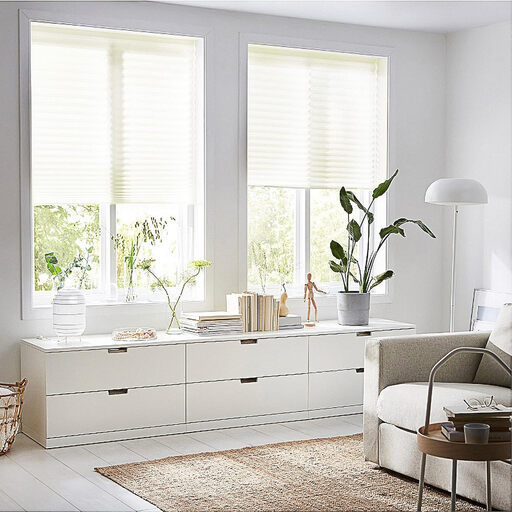
Why this product suits this profile: The fixed size, beige colour and adjustable clamp brackets offer a straightforward solution for windows in living rooms, kitchens or offices.
The product description points to a light-filtering, privacy-enhancing fabric rather than complete darkness. This makes its function clearer before purchase.
Tool-free clamp installation, height-adjustable operation and several available colours and sizes.
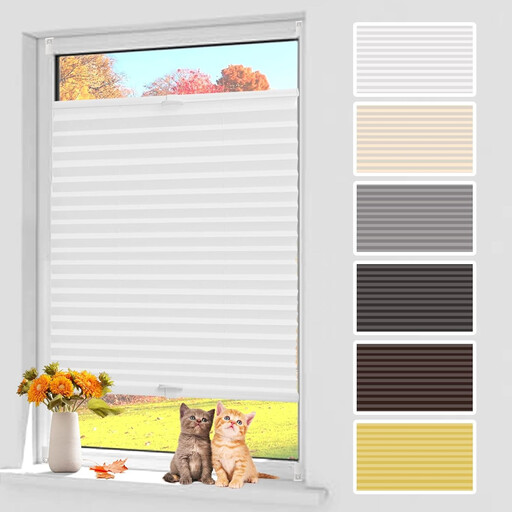
Why this product suits this profile: This model is designed for windows and doors and uses adhesive holders. Its white surface complements a range of interiors.
The product information explicitly states Blackout, while also highlighting the need for a smooth, clean surface.
Adhesive installation without drilling, polyester fabric, and the stated blackout and privacy functions.
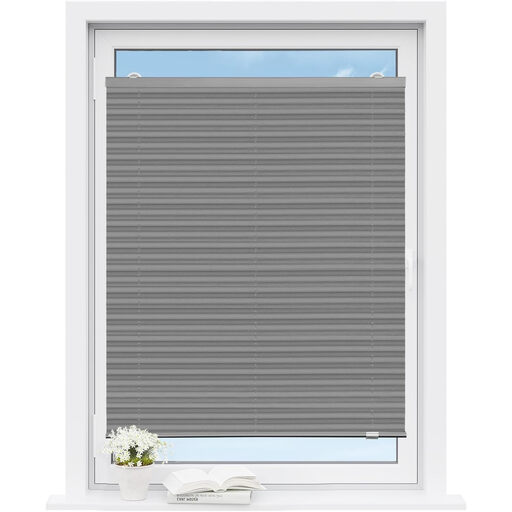
Why this product suits this profile: The suction-cup attachment is designed for smooth surfaces such as glass or tiles, making it an interesting option for balconies, standard windows or certain interior areas.
The intended surface is clearly stated: textured or rough surfaces are not specified as suitable for installation.
Light-filtering polyester fabric, removable attachment and suitability for smooth glass or tiled surfaces.

Why this product suits this profile: This model features clamp-fit installation, operation via the bottom handle and a coated backing for applications requiring strong light blocking.
The suitable frame thickness of 16–22 mm and the narrower fabric width compared with the overall width are explicitly stated.
Handle operation without a pull chain, polyester fabric with coated backing and clamp-fit installation without drilling.
We have put together a complete, regularly updated list of products that fully meet these strict selection criteria and the safety regulations applicable in the EU.
Depending on the design, it is installed using clamp brackets, adhesive holders or suction cups. Clamp brackets sit on the window sash and require a suitable frame thickness. Adhesive holders are applied to a clean, dry and smooth surface. Suction cups are particularly suitable for smooth glass or tiles.
Its lifespan depends on the fabric, mechanism, installation and operation. A correctly matching frame thickness and securely fitted brackets reduce the risk of slipping. Pull or press the handles evenly and clean the fabric only with a soft, damp cloth. With adhesive models, temperature, humidity and the condition of the surface can affect adhesion.
Some models are specifically designed for windows and doors. Before buying, compare the width, height, frame thickness and the door’s range of movement. Depending on the product, restrictions may apply to roof windows, sloping windows or wooden frames. Always check the specific manufacturer’s information before placing your order.