
Lieferung heute & morgen

Qualitätsgarantie

Willkommens-Angebote freischalten: KOSTENLOSE Lieferung | Bis zu 80 % RABATT | Kostenlose 30-Tage-JoyPlus-Testphase
App herunterladen
A pleated blind without drilling is a practical choice for rented homes, frequently changing living arrangements and delicate window frames. Depending on the model, it can be fitted using clamp brackets, Klemmfix holders or adhesive pads. This avoids drill holes in the wall and window frame.
Despite the straightforward installation, there are a few common buying mistakes. Choosing the right product depends not only on colour and price, but above all on measurements, mounting method and light transmission.
With many pleated blinds and roller blinds, the stated width also includes brackets or guide elements. This means the actual fabric area may be narrower. For reliable privacy and sun protection, check whether the stated measurement refers to the overall dimensions or the fabric width.
For some models, it is recommended that you choose an order width around 4 cm wider than the glass width. However, this does not apply universally to every window. Window handles, seals and projecting fittings must not be obstructed by the pleated blind.
A light-filtering pleated blind allows some daylight through and, depending on the fabric, reduces glare and outside visibility. It is suitable, for example, for living rooms, kitchens or offices.
A model described as a blackout pleated blind or Blackout is designed to block out more light. Even with these models, light gaps can appear at the sides if the pleated blind is narrower than the glass area. For bedrooms or rooms exposed to direct sunlight, you should therefore consider not only the product description, but also the coverage and mounting position.
A pleated blind with clamp brackets is attached to the opening window sash. The frame thickness must therefore match the relevant holder. For example, the WOLTU honeycomb pleated blind is specified for a frame range of 10 to 23 mm. Other models, such as a WOLTU roller blind, are designed for frame thicknesses of 16 to 22 mm.
Adhesive mounting, on the other hand, requires a smooth, clean and dry surface. Rough, uneven, damp or heavily soiled surfaces can affect adhesion. Before installation, read the manufacturer’s instructions and position the holders first without removing the protective film.
Measure the width and height at several points:
Common search sizes such as pleated blind 60x100 cm, pleated blind 70x120 cm or pleated blind 90x200 cm usually refer to width × height. For balcony or patio doors, a format such as 65x200 cm or 90x200 cm may be suitable. For unusual dimensions, a made-to-measure pleated blind is an alternative if standard sizes do not provide sufficient coverage.
Some of the models mentioned here are expressly not suitable for roof windows. For sloping windows, you must therefore choose a system designed for this purpose.
Polyester is the most commonly used material among the products listed. It can usually be cleaned with a soft, slightly damp cloth. Terms such as “water-repellent”, “moisture-resistant” and “not waterproof” should be distinguished, particularly when the blind is used in a bathroom or kitchen.
According to the product description, a thermal pleated blind or roller blind with a coated reverse side may block more light and influence heat entering the room. However, this should not be taken as a blanket claim about a specific room temperature or energy saving. The decisive factors are the window area, exposure to sunlight, mounting distance and room ventilation.
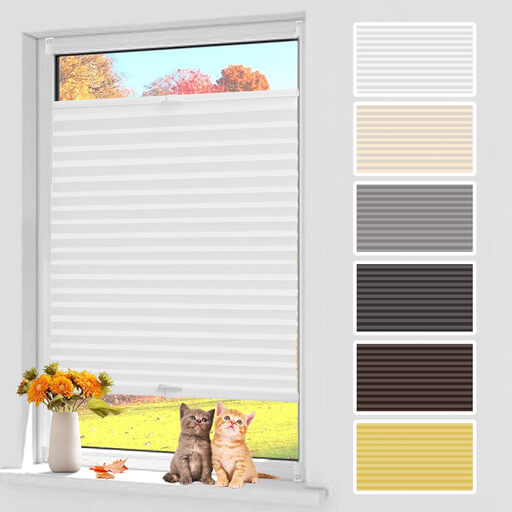
Why this product suits this shopper profile: The compact format is suitable for smaller standard windows. The Klemmfix mounting system is designed for installation without drilling or tools.
The dimensions are clearly stated as 60 × 100 cm. Even so, check before buying that the clamp holders are compatible with your frame.
White polyester design, adjustable light diffusion and a weight of around 370 g according to the product details.

Why this product suits this shopper profile: The honeycomb structure, metal frame and adjustable Klemmfix holders appeal to buyers who pay close attention to construction and operation.
The specified frame thickness of 10–23 mm clearly defines where it can be used. This allows you to check in advance whether your window profile is compatible.
Opaque polyester design, upper and lower handles, and Klemmfix installation without drilling according to the product description.
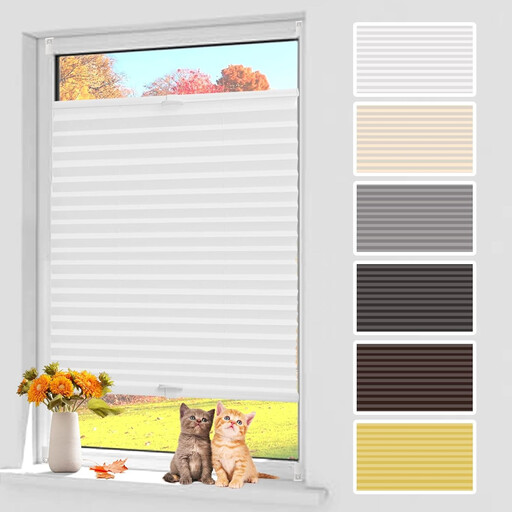
Why this product suits this shopper profile: The tall format is worth considering for larger windows or doors where privacy and stronger light blocking are important.
The product details specify use for windows and doors as well as adhesive mounting. For lasting, secure adhesion, a smooth, dry surface is required.
90 × 200 cm format, white polyester design and light blocking described as a blackout pleated blind.
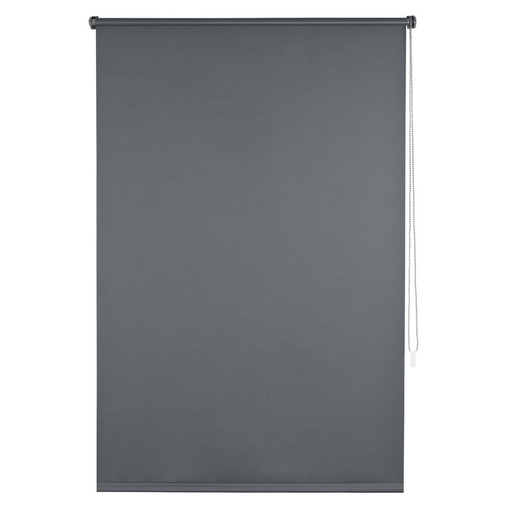
Why this product suits this shopper profile: The anthracite roller blind with Klemmfix accessories is suitable for anyone looking for a darker appearance and a coated blackout surface.
The fixing method is described as Clip-Fix and tool-free. Even so, check the frame geometry before buying to ensure that handles or seals will not cause interference.
Aluminium headrail, polyester blackout fabric and thermal coating according to the product description.
Before fitting the blind, clean the frame with a suitable lint-free cloth and allow it to dry completely. Clamp holders must sit straight and be firmly secured. For adhesive mounting, press the holder on as instructed and observe the stated waiting time.
For the polyester models listed, a soft, slightly damp cloth is usually all that is needed for care. Abrasive agents, harsh cleaners and stiff brushes can damage the fabric or coating.
Pull cords, chains and small parts must be kept out of children’s reach. For a corded model, make sure that the cord guide is securely attached. Cordless versions operated using a handle rail reduce loose operating elements, but do not replace general supervision in the home.
We have put together a complete, regularly updated list of products that fully meet these strict selection criteria and the safety regulations applicable in the EU.
Depending on the product, it is attached to the window sash using clamp brackets or fitted to the frame with adhesive holders. The right method depends on the frame thickness, surface, type of window and weight of the pleated blind. Before installation, check the supplied holders and the manufacturer’s specifications.
There is no fixed lifespan that applies in every case. It depends, among other things, on the installation, frequency of use, exposure to sunlight, humidity and care. Checking the holders regularly helps prevent a loose fixing from going unnoticed. Damaged or stretched components should be replaced.
A pleated blind without drilling does not require electricity and therefore has no energy costs during normal use. Ongoing expenses may only arise from cleaning, replacement parts or replacing the blind at a later date. For coated thermal or blackout models, the effect on the room climate depends on the structural conditions and should not be judged solely by a marketing term.