
Lieferung heute & morgen

Qualitätsgarantie

Willkommens-Angebote freischalten: KOSTENLOSE Lieferung | Bis zu 80 % RABATT | Kostenlose 30-Tage-JoyPlus-Testphase
App herunterladen
A pleated blind without drilling can quickly provide windows and doors with privacy and sun protection, without leaving drill holes in the frame or wall. This is particularly practical for rented homes. However, fitting methods, fabric properties and measurements can vary considerably. If you choose based solely on colour or price, you may end up with a pleated blind that does not fit, comes loose or darkens the room more than intended.
The term usually covers two systems:
Clamp brackets are generally reversible. Adhesive fittings may be removable without leaving residue, but this depends on the surface, temperature, load and adhesive. Rough, uneven, dusty or damp surfaces are unsuitable for many adhesive solutions.
A privacy pleated blind prevents people from seeing in, but depending on the fabric, it may still let daylight through. A model with pleated blind blackout or blackout fabric reduces light much more effectively. Complete darkness is still not guaranteed if light enters through gaps at the sides, top or bottom of the window.
For bedrooms or children’s rooms, the fabric description is therefore not the only relevant factor. Also check whether the pleated blind sits as close to the glass as possible and whether its dimensions cover the entire area you want to screen.
With some roller blinds and double roller blinds, the stated width includes the brackets. This means the fabric can be narrower. For example, the WOLTU Blackout Roller Blind points out that the fabric width may be approximately 4 cm less than the overall width. Before buying, you should therefore check the measurement diagram and fitting instructions for the product in question.
First measure the frame thickness at the point where the clamp brackets will sit. Some WOLTU models are designed for frame thicknesses of 13–23 mm, while others are suitable for 16–22 mm or 10–23 mm. Seals, window handles and protruding fittings must not obstruct installation.
A secure fit is particularly important for doors and window sashes that are opened frequently. Adhesive brackets require a clean, dry and smooth surface. Clean the surface before fitting and allow it to dry completely. With delicate surfaces, it is advisable to test the adhesive in an inconspicuous area first.
Focus on the actual function:
A light-coloured pleated blind reflects visible light more effectively than a dark model. For summer sun protection at the window, the coating, fabric construction and distance from the glass are also important.
Polyester is widely used in the products mentioned. It can usually be cleaned with a soft, slightly damp cloth. Strong cleaning products and abrasive sponges can damage coatings or the surface.
For kitchens and bathrooms, the product should explicitly state that the model is suitable for damp rooms. Moisture-resistant does not automatically mean waterproof. A thermal pleated blind or honeycomb pleated blind may offer additional insulating properties thanks to its multi-layer construction. However, claims about energy savings should not be accepted as universal, as the windows, room temperature and fitting method all affect performance.

Why this product suits this profile: The 70 × 120 cm size and white finish are suitable for smaller standard windows in rented homes. According to the product description, it is fitted using adhesive brackets without drilling.
The stated fitting method is clearly described as an adhesive or no-drill solution. The note about smooth, even surfaces helps you avoid unsuitable mounting surfaces.
Polyester fabric, white colour, 70 × 120 cm, suitable for use on windows and doors, plus blackout and privacy functions according to the supplier.

Why this product suits this profile: This model combines clamp-fix fitting with a handle-free operating concept. It is designed for window frames measuring 16–22 mm, making it suitable for buyers who want to check technical fit specifications before purchasing.
The frame thickness, approximate fabric width and incompatibility with roof windows are all taken into account in the specifications. This helps reduce the risk of ordering the wrong product for an unsuitable window shape.
200 g/m² polyester according to the product details, a silver-coated reverse side, clamp or drill fitting, and operation via a lower handle rail.

Why this product suits this profile: This honeycomb pleated blind is designed for smaller windows in bedrooms, living rooms or offices. The upper and lower handle rails allow the fabric to be positioned flexibly.
The intended frame thickness of 10–23 mm and exclusion of roof windows are clearly stated. This prevents a clamp-fix pleated blind from being used on an unsuitable construction.
Honeycomb structure, 100% polyester according to the product details, clamp-fix brackets, moisture resistance and a light-blocking finish according to the supplier.
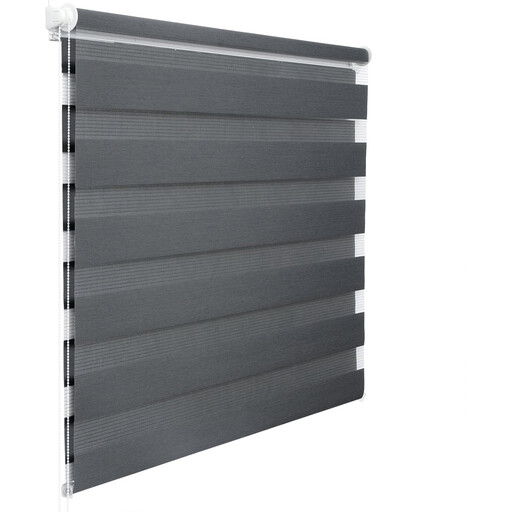
Why this product suits this profile: This double roller blind is suitable for living rooms, offices, kitchens and bathrooms when you want to switch between transparent and privacy fabric sections.
The compatible frame thickness of 13–23 mm is specified. The chain can also be fitted on the left or right, making it easier to plan the operating side.
Alternating transparent and privacy stripes, clamp or drill fitting, polyester fabric and cleaning with a damp cloth.
We have put together a complete, regularly updated list of products that fully meet these strict selection criteria and the safety regulations applicable in the EU.
Durability depends on the fitting method, surface, frame thickness and daily use. With the correct frame thickness, clamp-fix systems can be removed and refitted repeatedly. For adhesive brackets, the surface should be even and dry. Regularly checking the fixings is advisable, particularly on windows and doors that are opened frequently.
Measure the glass width and the height of the entire window frame. Some products recommend adding approximately 4 cm to the glass width to provide greater coverage. However, the specific measurement instructions for the model remain decisive. Also check whether the stated width includes the brackets.
This depends on the material and the manufacturer’s specifications. Polyester fabric may be suitable for indoor spaces with increased humidity, but it is not automatically waterproof. Models explicitly described as suitable for damp rooms are more likely to be appropriate. Avoid direct contact with water and surfaces that remain wet for long periods.