
Lieferung heute & morgen

Qualitätsgarantie

Willkommens-Angebote freischalten: KOSTENLOSE Lieferung | Bis zu 80 % RABATT | Kostenlose 30-Tage-JoyPlus-Testphase
App herunterladen
A pleated blind without drilling is ideal for rented homes, frequently changing living arrangements and windows whose frames should not be permanently damaged. However, not every clip-fit pleated blind is suitable for every window. Incorrect measurements, misjudged light transmission or unsuitable mounting surfaces can quickly cause the privacy blind to slip, prevent the window from opening properly or leave the room bright despite blackout claims.
Our selection shows which technical details are crucial before buying and which pleated blind or roller blind is suitable for windows and doors with different requirements.
With many clip-fit roller blinds and day-and-night blinds, the stated width includes the brackets. The actual fabric may be several centimetres narrower. According to the product details, the fabric width of the WOLTU day-and-night blind without drilling is around 4 to 5 cm narrower than the overall width.
To ensure sufficient coverage, you should therefore consider not only the glass pane but also the window frame. At the same time, the blind must not extend beyond the window handle.
A light-filtering pleated blind softens daylight and, depending on the fabric, reduces direct visibility from outside. However, it does not create complete darkness. For bedrooms, home cinemas or rooms exposed to strong sunlight, you need an opaque model or one specifically described as blackout.
A day-and-night blind, on the other hand, often combines transparent and opaque fabric stripes. This allows you to adjust the amount of light entering the room gradually, although small gaps at the sides may still occur depending on the installation method.
Clip-fit systems only work within a specific frame range. Several WOLTU models are suitable for frame thicknesses between 13 and 23 mm; according to the product description, the WOLTU thermal pleated blind is designed for 10 to 23 mm. Other models cover ranges from 16 to 22 mm.
You should therefore measure the rebate or frame thickness at several points. For various products, timber windows, roof windows, sliding windows and sloping surfaces are expressly excluded.
First measure:
For many light-filtering pleated blinds, a blind width around 3 to 4 cm wider than the glass pane is recommended. The precise specification for the individual product takes precedence. Versions with heights of 200 or 220 cm are available for doors and tall windows. However, a pleated blind that is too wide may hit the handle or obstruct the tilt function.
For living rooms, kitchens or offices, a privacy pleated blind that gently diffuses daylight is often sufficient. In these areas, a light grey or white light-filtering pleated blind can be used.
For bedrooms and children’s rooms, a blackout roller blind without drilling with coated fabric is more practical. According to the product description, WOLTU blackout roller blinds have a silver-coated reverse side and a cordless operating system. Complete blackout nevertheless depends on how precisely the blind fits, the side gaps and the installation position.
A thermal pleated blind or honeycomb structure can provide additional support for light control. Such features should be understood as product characteristics, not as a blanket promise of a particular room temperature or energy saving.
Pleated blinds with pull cords or chain controls should be installed so that the operating elements remain out of children’s reach. Some blinds are operated without cords using a handle on the bottom rail. This can be a practical alternative for children’s rooms or households with pets.
For cleaning, the products presented here are designed to be cleaned with a soft cloth, a soft brush or a slightly damp cloth. Harsh cleaning products, pulling too firmly and contact with sharp objects can damage the fabric and mechanism.
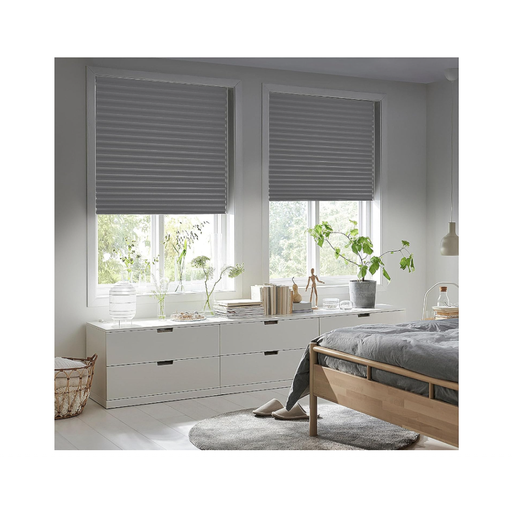
Why this product suits this profile: The light-filtering pleated blind offers a simple solution for smaller standard windows in living rooms, kitchens or offices. It can be installed using clip-fit brackets or adhesive holders.
The product details clearly state the dimensions, installation methods and light-filtering properties. It should therefore not be expected to provide complete blackout.
Polyester fabric, height-adjustable positioning and installation without drilling or using adhesive holders.

Why this product suits this profile: The honeycomb structure and adjustable clip-fit brackets appeal to buyers who value the construction of the material, adaptability and an opaque finish.
The stated frame range of 10 to 23 mm makes it easier to check compatibility before buying. According to the description, this model is not suitable for roof windows.
100% polyester, metal frame, top and bottom handles, plus product details stating moisture resistance.

Why this product suits this profile: This blind is aimed at bedrooms, offices or windows exposed to strong sunlight, where an opaque coating and cordless operation are important.
According to the product details, the fabric is around 4 cm narrower than the overall width. This difference must be taken into account when ordering and when considering the desired level of blackout.
Cordless operation, 200 g/m² polyester, clip-fit installation for frames from 16 to 22 mm and a silver-coated reverse side.
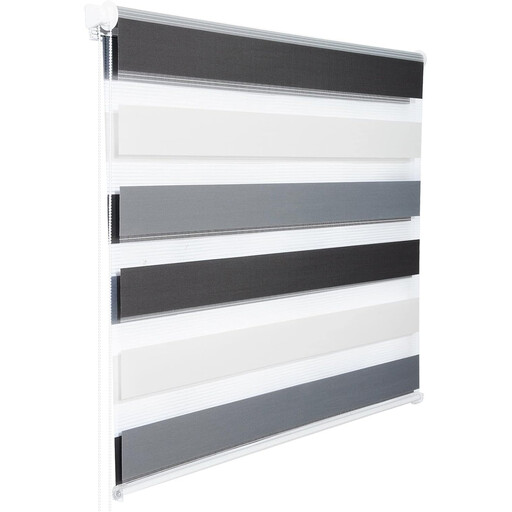
Why this product suits this profile: The combination of transparent and opaque stripes is ideal for rooms where privacy and variable light control need to be adjusted regularly.
The frame thickness of 13 to 23 mm and the note about the narrower fabric width must be checked carefully before buying. This model is not suitable for roof windows.
100% polyester, chain control that can be fitted on the left or right, and stepless adjustment between light-filtering and opaque.
We have put together a complete, regularly updated list of products that fully meet these strict selection criteria and the safety regulations applicable in the EU.
Its durability depends on the frame thickness, surface, weight and installation method. Clip-fit brackets require a suitable, stable frame. Adhesive holders should only be applied to clean, dry and smooth surfaces. Check the fixings regularly and avoid pulling firmly on cords or chains.
According to the product description, some polyester fabrics are suitable for damp rooms. However, this does not mean they are waterproof. Direct contact with water, persistently high humidity and inadequate ventilation can affect the material. For bathroom use, the product should therefore expressly be stated as suitable for damp rooms.
This depends on the size, fabric type, operating method and desired level of blackout. A simple light-filtering pleated blind often has a less complex construction. A day-and-night blind offers more versatile light control, while a blackout or thermal model may feature additional coatings and a different construction. The key is to pay only for the functions you actually need in the room in question.