
Lieferung heute & morgen

Qualitätsgarantie

Willkommens-Angebote freischalten: KOSTENLOSE Lieferung | Bis zu 80 % RABATT | Kostenlose 30-Tage-JoyPlus-Testphase
App herunterladen
A pleated blind without drilling is a practical choice for rented homes, renovated rooms and spaces where the décor changes frequently. Depending on the model, you can use clamp brackets, clamp-fit fixtures, adhesive strips or suction cups instead of wall plugs and screws. However, this doesn’t automatically prevent a poor purchase. Getting the measurements right, choosing a suitable surface for fitting and selecting the right level of light filtering are all essential.
A clamp-fit pleated blind attaches to the window sash and can usually be fitted without permanent drill holes, provided the frame is suitable. Adhesive fittings, on the other hand, require a clean, dry and smooth surface. Adhesion can weaken on rough, dusty or damp surfaces. If your paintwork is delicate, check beforehand whether the adhesive fixtures can be removed without leaving residue.
Suction cups are another option, but they work best on smooth, non-porous surfaces such as glass or glazed tiles. They’re not designed for textured walls or uneven frames.
Pleated blinds for windows and doors are usually measured as width × height. It’s common to measure only the visible glass area. However, with models that use clamp brackets, you also need to consider how much of the area you want to cover and whether there’s enough room for the brackets on the window sash.
For several Dream-seeker models, the suggested guide is to choose a blind width around 4 cm wider than the glass, with the height based on the full window height, including the frame. Other versions recommend adding 2 to 4 cm. Check the details for the specific product before ordering.
A light-filtering pleated blind softens daylight and can reduce glare and visibility from outside. However, it won’t make a room completely dark. For bedrooms or rooms with a computer workstation, a more opaque model or one described as blackout may be a better choice. Even with blackout fabric, light may come through at the sides if the blind is narrower than the glass.
Pleated blinds with clamp brackets are a popular choice for rented homes. They hook onto the window sash and are particularly suitable for standard tilt-and-turn windows, provided the frame has enough surface for the brackets to rest on. Before buying, check that the frame thickness is within the adjustment range of the brackets.
For doors, balcony doors and patio doors, also check that the blind won’t catch on the handle, wall or neighbouring door when opening and closing. Adhesive fittings need a surface free from grease and dust. Some of the options listed here are specifically unsuitable for roof windows with sloping panes.
Polyester is a common material in the products listed. It’s easy to care for and can usually be cleaned with a slightly damp cloth. Moisture-resistant doesn’t mean waterproof: in a bathroom, the blind shouldn’t be exposed to direct water or heavy moisture for prolonged periods.
As a guide:
A beige pleated blind has a subtle look and pairs well with warm wood tones. A light grey pleated blind suits modern, neutral interiors. An anthracite pleated blind creates stronger contrast and can stand out against light-coloured walls. For a consistent look, try to choose blinds from the same colour and fabric range for all the windows in a room.
Available sizes vary by product. Product details may list widths from 35 to 80 cm and heights of 100, 120, 140 and 200 cm, for example. For particularly wide windows or doors, check whether one blind will be sufficient or whether you’ll need more than one.
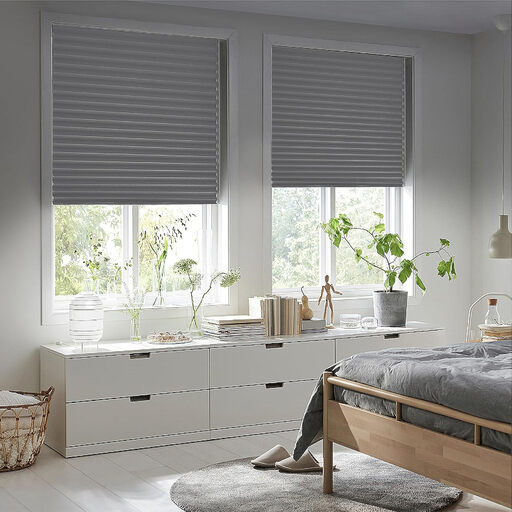
Why this product suits this use: Its compact size is suitable for narrower standard windows. The light grey, light-filtering fabric can be fitted without drilling using clamp-fit or adhesive fixtures.
The precise measurements make it easier to choose the right size. You should still measure the glass and frame width before ordering.
Polyester fabric, adjustable height and easy cleaning with a damp cloth.
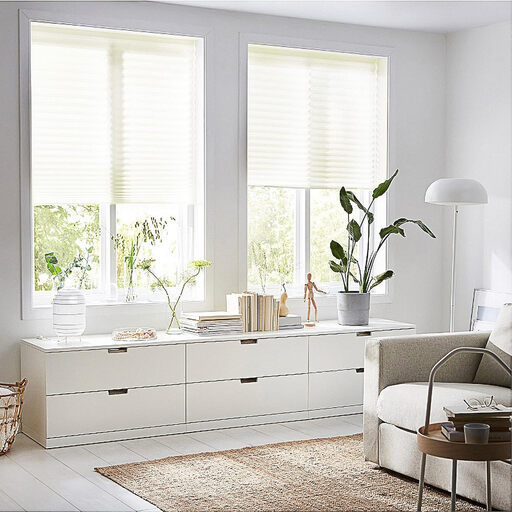
Why this product suits this use: Its 90 cm width and beige colour make it a good option for larger windows and calm, understated living spaces.
The product description states that the fabric is not waterproof and that the blind is unsuitable for sloping roof windows.
Clamp-fit installation, adjustable height, and stated privacy and glare-control benefits.
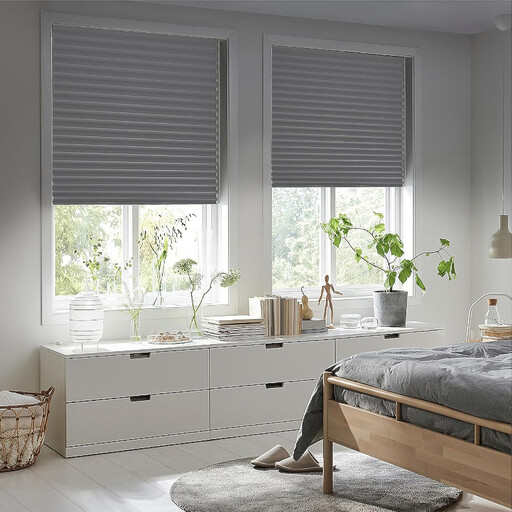
Why this product suits this use: Its 200 cm height makes it suitable for taller windows, balcony doors or patio doors, provided the frame and fitting method are compatible.
The specified height helps prevent the blind from being too short. The surface must be clean and dry before fitting.
Light-filtering fabric, no-drill installation and manual height adjustment.
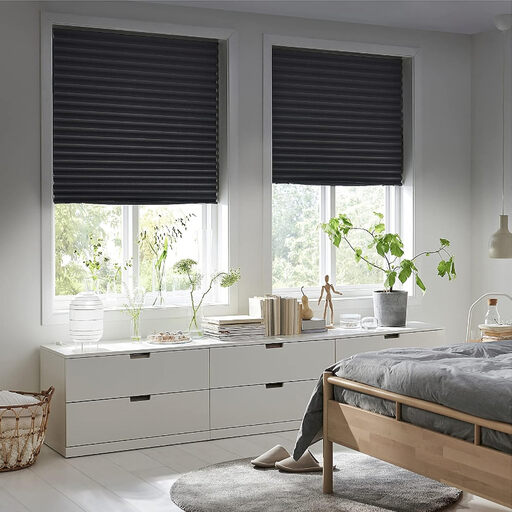
Why this product suits this use: Anthracite is a good choice for rooms where you want the privacy blind to make a feature and pair with light-coloured furniture.
The product details specifically state that adhesive fitting requires a smooth, clean surface and warn against rough surfaces.
75 × 100 cm, light-filtering polyester fabric and suitable for use on windows or doors.
We’ve put together a complete, regularly updated list of products that meet these strict selection criteria and fully comply with the safety regulations in force in the EU.
Yes. Clamp-fit models attach to the window sash and usually don’t require holes in the wall or window. Whether adhesive fixtures can be removed without leaving marks depends on the surface and the adhesive used. Before moving in or out, follow the fitting instructions for the specific product.
Its lifespan depends on the fabric, how it’s operated, the fitting surface and how often it’s used. A dry, clean surface for adhesive fittings and smooth, even operation help reduce the risk of fixtures coming loose. Moisture, direct contact with water or excessive pulling can shorten its lifespan. It’s a good idea to check the fixtures regularly.
A manual pleated blind doesn’t use electricity when operated. Ongoing costs are generally limited to cleaning, occasional replacement of adhesive or fitting parts, and eventually replacing the blind. The right size and a secure fitting matter more than energy consumption.