
Lieferung heute & morgen

Qualitätsgarantie

Willkommens-Angebote freischalten: KOSTENLOSE Lieferung | Bis zu 80 % RABATT | Kostenlose 30-Tage-JoyPlus-Testphase
App herunterladen
A pleated blind without drilling can be a practical way to improve privacy and keep out the sun in rented homes, owner-occupied properties and frequently used rooms. They’re usually fitted with clamp brackets, adhesive holders or suction cups, so there’s no need for a drill or wall plugs.
However, inaccurate measurements and unclear product descriptions can easily lead to the wrong purchase. Check these three common pitfalls before you buy:
First, measure the visible width of the glass and the height of the opening window sash. For several Klemmfix models, the recommended blind width is around 4 cm wider than the glass. For example, if the glass is 51 cm wide, a 55 cm-wide model may be suitable.
Other products are sized to fit the full width of the frame, so always check the measurements for the model you’re considering. Also check whether the window handle, seal or any other protruding parts could get in the way of the blind.
For a pleated blind for windows and doors, the height should cover the full area you want to screen. Taller sizes, such as 200 cm, are available for balcony and patio doors. A made-to-measure pleated blind is an option if standard sizes don’t fit, but the products featured here are available in a range of fixed widths and heights.
A Klemmfix pleated blind is fitted to the window sash using adjustable clamp brackets. This is often a suitable option for rented homes, provided the brackets fit the thickness of the frame. According to the product description, the Allesin model is designed for frames measuring 10 to 23 mm thick. The WOLTU model with clamp brackets is specified for a rebate depth of 1.5 to 2.3 cm.
A pleated blind without drilling or adhesive can be fitted using suction cups. This option is mainly intended for smooth glass or tiled surfaces. Suction may be limited on textured, dusty or uneven surfaces.
Adhesive holders need a clean, dry and preferably smooth surface. Before fitting them, clean the surface and allow it to dry completely. Once installed, check that the blind is secure before adjusting it regularly.
Polyester is a commonly used material in the models featured here. It can generally be cleaned with a lightly damp cloth. However, water-resistant doesn’t mean waterproof. So, avoid exposing a pleated blind in a bathroom or kitchen to direct water or prolonged heavy moisture.
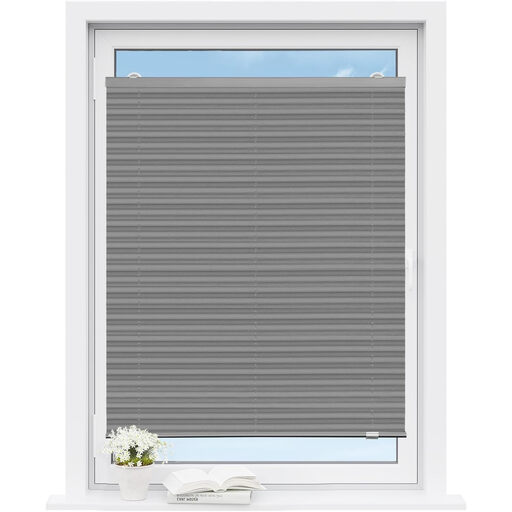
Why it suits this type of buyer: Its compact size is suitable for smaller standard windows. According to the product description, the Klemmfix fitting requires no drill or additional tools.
The stated width of 60 cm makes it easier to compare the blind with your window measurements. You’ll still need to check the frame width before ordering.
Polyester fabric, adjustable light control and easy cleaning with a soft cloth.

Why it suits this type of buyer: Its polyester honeycomb fabric and metal frame are designed to reduce incoming light. The model is specified for window and door frames measuring 10 to 23 mm thick.
The stated frame thickness makes it clear where the blind can be used, helping you avoid fitting clamp brackets to an unsuitable frame.
Honeycomb fabric, top and bottom handles, and a water-repellent material specification.
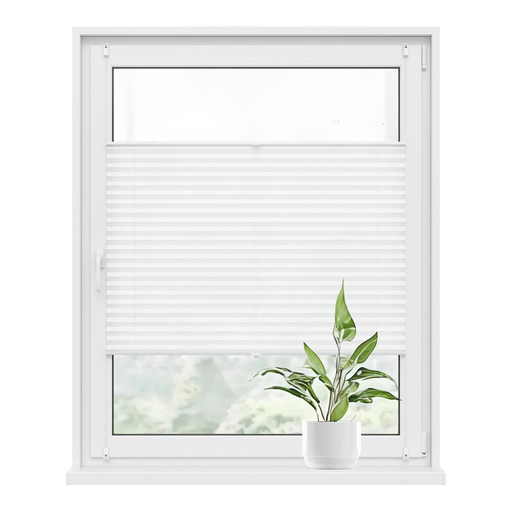
Why it suits this type of buyer: Designed for windows and doors, this model can be adjusted to a width of between 45 and 120 cm, according to the product description. It lets in daylight, but doesn’t provide complete blackout.
The description ‘dims the light, but doesn’t provide complete blackout’ sets realistic expectations for a light-filtering blind that offers privacy and reduces glare.
Adjustable width, four clamp brackets and extra mounting plates as an alternative fitting option.
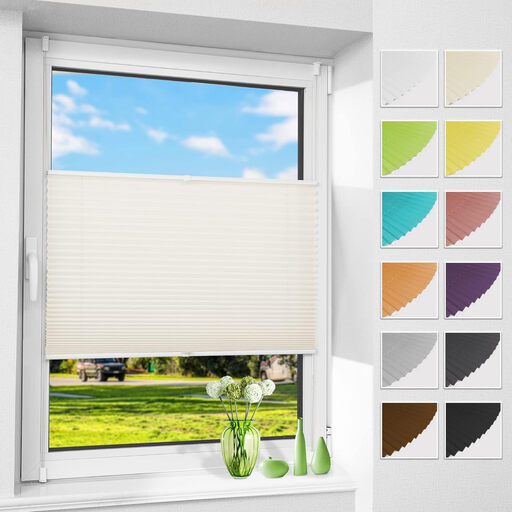
Why it suits this type of buyer: This beige pleated blind is designed for rectangular tilt-and-turn windows in living rooms, kitchens and bathrooms. The top and bottom handles make it easy to position.
The specified frame thickness of 10 to 23 mm, along with the advice that it’s unsuitable for roof, wooden and sliding windows, makes it easy to see whether this model is right for you.
Polyester fabric with an aluminium rod, wipe-clean care and a no-drill fitting.
We’ve put together a complete, regularly updated list of products that meet these strict selection criteria and fully comply with the safety regulations in force in the EU.
If you have children at home, keep cords and controls out of their reach. Also follow the manufacturer’s safety instructions.
Depending on the model, it’s fitted using clamp brackets, adhesive holders or suction cups. Klemmfix pleated blinds are hooked or clamped onto the window frame. Suction-cup models need a smooth surface, such as glass or tiles. Before buying, check the thickness of your frame and the type of surface you’ll be fitting the blind to.
How long it lasts depends on the material, exposure to sunlight, how often it’s adjusted and how securely it’s fitted. Regularly checking the clamp brackets, adhesive holders and cords can help you spot any movement early. It’s not possible to give a general lifespan without specific product and usage information.
Many polyester fabrics are water-resistant and can be used in kitchens or bathrooms. However, they’re usually not waterproof. Avoid direct contact with water, prolonged exposure to heavy moisture and poor ventilation. For a bathroom, you should also check that the surface is smooth enough for adhesive holders or suction cups.