
Lieferung heute & morgen

Qualitätsgarantie

Willkommens-Angebote freischalten: KOSTENLOSE Lieferung | Bis zu 80 % RABATT | Kostenlose 30-Tage-JoyPlus-Testphase
App herunterladen
A pleated blind without drilling is a practical choice for rented homes, refurbished rooms and quick window dressing. They are usually fitted using clamp brackets, Klemmfix holders, adhesive elements or suction cups. This leaves window frames and walls largely undamaged.
However, easy installation does not automatically guarantee the right purchase. Common problems arise from incorrectly measured windows, unsuitable frame thicknesses or choosing a fabric that does not provide the desired level of light control.
For many products, the stated overall width is greater than the actual fabric width. Brackets and profiles require additional space. With a pleated blind for windows, the fabric may therefore be narrower than the external dimensions.
Before ordering, check the following:
A light-filtering pleated blind reduces visibility from outside and harsh sunlight, while still allowing daylight into the room. This is suitable for living rooms, kitchens or home offices. Bedrooms, on the other hand, usually require a blackout pleated blind with an opaque fabric.
Terms such as “sun protection”, “dimming” or “opaque” should be read carefully. They do not necessarily mean that a room will be completely darkened.
A pleated blind with clamp brackets is only stable when the holder matches the thickness of the window frame. For some styles, for example, the suitable range is between 10 and 23 mm, while for others it is between 13 and 23 mm. A frame that is too thin or too thick can cause the blind to slip or make it difficult to operate.
With adhesive or suction-cup systems, the surface is also crucial. Smooth, clean and dry surfaces provide better conditions than textured or heavily soiled surfaces.
A Klemmfix pleated blind is attached directly to the window sash. This solution is particularly suitable for rented homes, provided the window frame and operating elements leave enough space. For balcony or patio doors, the controls should be easy to reach and the pleated blind must not catch on the door handle.
Suction-cup models are a flexible alternative for smooth glass surfaces. They may be suitable for temporary solutions, certain doors or windows, but are not designed for every wall or frame surface.
Roof windows with an incline require special systems. According to the product description, several of the Klemmfix models mentioned here are not suitable for sloping roof windows. This information should always be taken into account before buying.
The material specification 100% polyester is common for many indoor roller blinds and pleated blinds. However, the properties of the fabric are more important than the fibre composition alone:
A honeycomb or cellular construction can create additional layers of material. The WOLTU model combines an opaque polyester fabric with a metal frame. According to the product description, it is intended for indoor spaces such as bedrooms, living rooms, offices and bathrooms.
For a well-fitting pleated blind, measure the width and height at several points. If the measurements differ, using the smaller figure is generally safer for installation. You should also check whether the fabric extends beyond the window handle.
For some Dream-seeker models, it is recommended that you choose an order width approximately 4 cm wider than the glass width. Other products may follow different rules. The measurements specified for the individual item therefore take priority.
For doors, the available movement space is especially important. A pleated blind for windows and doors should be able to move fully without rubbing against the handle, seals or frame.
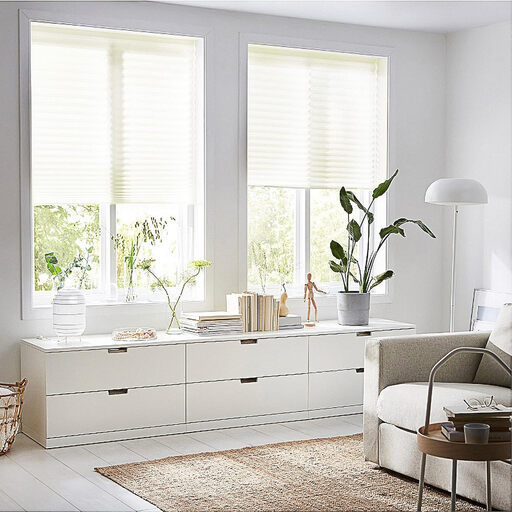
Why this product suits this profile: The no-drill Klemmfix installation and choice of sizes and colours make it easier to dress windows in living rooms, home offices or kitchens.
The product description highlights the required measurements and states that the design is not suitable for sloping roof windows. The fabric is moisture-resistant but not waterproof.
Polyester fabric, adjustable height and no-drill installation with clamp brackets.

Why this product suits this profile: The combination of opaque polyester fabric, a honeycomb structure and a metal frame is designed for shoppers who want to consider both light control and a clearly defined construction.
The suitable frame thickness of 10–23 mm is specified. According to the product information, the frame width is recommended as the order width for improved blackout performance.
Opaque polyester fabric, honeycomb structure, moisture resistance and cleaning with a damp cloth.
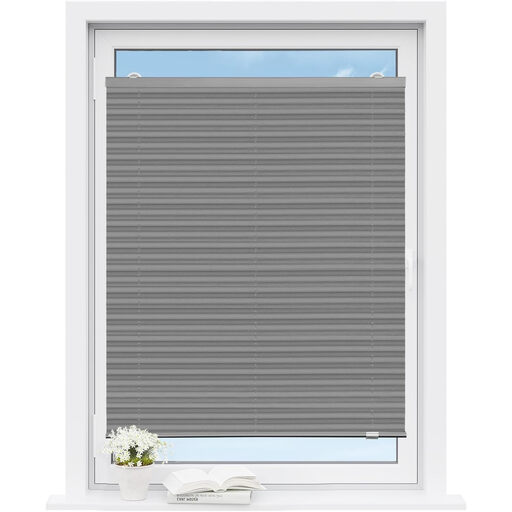
Why this product suits this profile: The suction-cup fitting is designed for smooth surfaces such as glass or tiles and can provide a flexible solution for certain windows, doors or temporary installations.
Compatibility with smooth surfaces is explicitly stated. Textured walls or unsuitable surfaces should not be used as the installation location.
Specified size of 50 × 130 cm, wipe-clean polyester fabric and flexible use on smooth surfaces.
We have put together a complete, regularly updated list of products that fully meet these strict selection criteria and the safety regulations applicable in the EU.
Before installation, the window frame should be clean, dry and free from dust or grease. Attach the clamp brackets according to the instructions. For cord-operated blinds, remember to use the pleated blind only in the intended position and do not pull with excessive force.
For the polyester fabrics mentioned, a soft, slightly damp cloth is generally all that is needed for cleaning. Abrasive products, harsh cleaners and excessive moisture can damage the fabric, coating or fittings.
Cords and chains must be kept out of the reach of young children. Check that the blind is securely fitted before first use and after repeated adjustment.
Depending on the model, installation is carried out using clamp brackets, adhesive holders or suction cups. Klemmfix systems are usually hooked onto the window sash and do not require a drill. The specified frame thickness and a clear area free from obstructing handles are crucial.
Durability depends on the fit of the frame, the materials, how the blind is operated and the room climate. A correctly fitted clamp bracket can be suitable for regular indoor use. The pleated blind should not be overloaded and must not rub against the window handle when the window is opened or closed.
A pleated blind does not require electricity. Running costs are therefore essentially limited to cleaning and, where necessary, replacing brackets or wearing parts. A thermal pleated blind can also affect the amount of light and heat entering the room; however, specific savings cannot be guaranteed across the board.