
Lieferung heute & morgen

Qualitätsgarantie

Willkommens-Angebote freischalten: KOSTENLOSE Lieferung | Bis zu 80 % RABATT | Kostenlose 30-Tage-JoyPlus-Testphase
App herunterladen
A pleated blind without drilling is a practical solution for rented homes, freshly renovated rooms and windows with delicate frames. Depending on the model, it can be fitted using clamp brackets, Klemmfix brackets or adhesive brackets instead of wall plugs and screws. This means you can usually install your sunshade without leaving visible drill holes.
However, easy installation doesn’t automatically mean you’ll choose the right blind. Three common buying mistakes can leave you with a pleated blind that doesn’t fit properly or doesn’t create the light effect you want.
Pleated blind sizes are generally given as width × height. The width needs to suit the glass and window frame. Several models in our selection recommend ordering a blind around 4 cm wider than the window pane. For a pane that’s 51 cm wide, for example, a 55 cm-wide blind would be recommended.
The height should cover the full height of the window, including the frame. If you measure only the glass, the blind may be too short. Before ordering, make a note of these three measurements:
An opaque pleated blind can help to keep out prying eyes, but depending on the fabric, it may still let daylight through. Terms such as blackout pleated blind, ‘opaque’ or ‘light-blocking’ don’t necessarily mean that every product will make a room completely dark according to a standardised rating.
A light-blocking fabric can be a good choice for a bedroom. In a living room, office or bathroom, a light-filtering pleated blind is often enough to reduce visibility from outside while letting in diffused daylight. So check the specific product description rather than relying on the wording in the title alone.
A clamp-fit pleated blind attaches to the window sash and needs to suit the thickness of the frame. An Allesin model specifies an adjustable range of 10 to 23 mm. Adhesive brackets, on the other hand, need a clean, dry and preferably smooth surface. They may not stick as well to rough, uneven or dusty surfaces.
‘No drilling or adhesive’ doesn’t mean the same fitting method is used for every product. Some models combine clamp brackets with additional adhesive fittings. Before you buy, check which type of fixing the product actually uses and whether it’s suitable for your window frame.
A Klemmfix pleated blind attaches to the window frame without tools. It’s particularly suitable for renters, provided the frame is thick enough and the window sash can still open and close freely. Suitable brackets can help reduce the blind swinging when the window is tilted open.
If you’re fitting a pleated blind with clamp brackets, check that it’s secure once installed. The brackets need to sit straight and shouldn’t slip when you open or tilt the window. For adhesive fittings, clean the frame thoroughly first. There’s no universal guarantee that the fittings can be removed without leaving a trace; adhesive residue and possible changes to the surface depend on the material and how the fittings are removed.
Pleated blinds that can be moved up and down are useful in rooms where your needs change throughout the day. For example, on a ground-floor window, you can keep the lower section closed while still letting light in at the top.
Look out for these features:
Most of the models mentioned are made from polyester or woven polyester. Some versions are described as moisture-resistant, but specifically not waterproof. They may therefore be suitable for kitchens or bathrooms, but shouldn’t be in constant contact with water.
According to the product details, a soft, slightly damp cloth is usually all you need for cleaning. Harsh cleaning products, vigorous rubbing and sharp objects can damage the fabric. If the product has cords, also follow the safety guidance on keeping them out of children’s reach.

Why this product suits this type of buyer: At 60 × 120 cm, this white blind is a good fit for smaller interior windows. The product details mention both Klemmfix and adhesive brackets, as well as simple height adjustment.
The fitting method and measurements are clearly stated. You should still check before buying that your frame width is compatible with the brackets.
Polyester fabric, adjustable positioning and cleaning with a damp cloth, according to the product description.
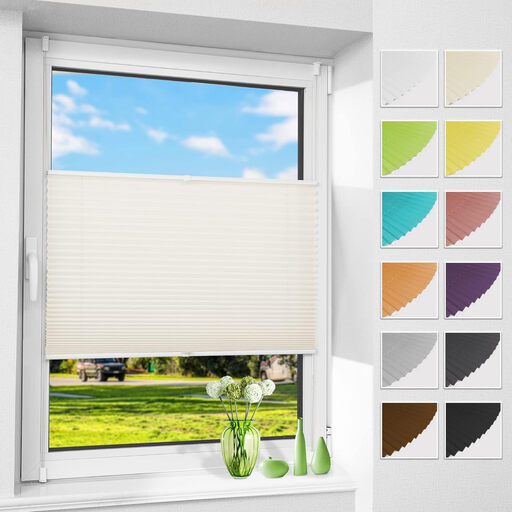
Why this product suits this type of buyer: According to the product details, this model has aluminium rails, double tension and adjustable brackets for frames 10 to 23 mm thick.
The stated frame range helps you avoid an unsuitable clamp fitting. The pleated blind cannot be cut to size.
Moisture-resistant polyester, an aluminium rail and drill-free installation; suitable for rectangular tilt-and-turn windows.
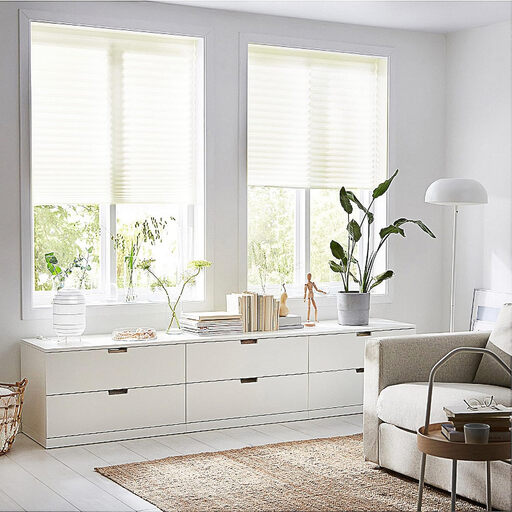
Why this product suits this type of buyer: At 200 cm high, this blind is worth considering for larger windows or doors. The fabric is described as opaque while allowing diffused light through.
The description distinguishes privacy from complete darkness. If you want to darken a room significantly, check how the fabric performs before buying.
Klemmfix fitting, adjustable height and moisture-resistant polyester fabric; not waterproof and not designed for sloping roof windows.
We’ve put together a complete, regularly updated list of products that meet these strict selection criteria and fully comply with the safety regulations in force in the EU.
Not every pleated blind for windows and doors is suitable for sliding doors, wooden windows or sloping roof windows. Check these restrictions against the relevant product description before buying.
How long it lasts depends on the fitting method, frame, how often it’s used and how it’s cleaned. Check regularly that clamp brackets are secure. For adhesive brackets, a clean surface and following the manufacturer’s instructions are essential. The product details don’t provide enough information to give a general estimate of how long a blind will last.
It depends on the design. Models with suitable brackets may stay more stable when the window is tilted open. Before buying, check the type of window, frame thickness and fitting instructions. Some of the models mentioned are specifically not suitable for sloping roof windows.
According to the product descriptions, moisture-resistant polyester fabrics may be suitable for bathrooms or kitchens. However, they aren’t automatically waterproof. Avoid direct and prolonged contact with water, such as in a shower area.