
Lieferung heute & morgen

Qualitätsgarantie

Willkommens-Angebote freischalten: KOSTENLOSE Lieferung | Bis zu 80 % RABATT | Kostenlose 30-Tage-JoyPlus-Testphase
App herunterladen
A pleated blind without drilling is especially suitable for rented homes, offices and rooms where you don’t want to make permanent changes to the window frames or walls. The choice may seem straightforward at first: a clamp-fit pleated blind, adhesive fitting, light-filtering fabric or blackout blind. In practice, however, incorrect measurements, unsuitable frames and unclear product information often lead to the wrong purchase.
As Joybuy Product Recommendation Officer, I filter the key buying criteria and organise them according to how you plan to use the blind. This makes it easier to decide whether a pleated blind with clamp brackets, a roller blind without drilling or a day-and-night blind is better suited to your home.
For many clamp-fit models, the stated width includes the entire product, including the brackets. This means the fabric itself may cover a narrower area. For effective privacy at the window, measure the glass width precisely.
As a practical guide for several products, the width to order is approximately glass width plus 4 cm, provided the window handle and frame allow for this. However, this recommendation depends on the model and should be checked against the relevant product description.
A light-filtering pleated blind softens daylight and can help reduce unwanted views from outside. However, it won’t necessarily darken a room. A model described as opaque or room-darkening lets less light through, but its actual performance also depends on light gaps at the sides.
A blackout blind is more suitable for bedrooms or rooms exposed to direct sunlight. In a living room, kitchen or home office, light-filtering fabric may be enough if you still want natural light.
A clamp-fit pleated blind attaches to the inner window frame. The key considerations are the frame thickness, seals, window handle and opening direction. Some blinds are designed to fit only frames within a specific thickness range. In addition, according to their product descriptions, many models aren’t suitable for roof windows, timber windows, sliding windows or fixed-glazed windows.
For adhesive fitting, the surface must be smooth, clean, dry and flat. Rough or uneven surfaces can affect how well the adhesive holds.
Clamp fitting is often more practical in a rented home. Even so, check regularly that the brackets are secure.
An opaque pleated blind can reduce views from outside without completely darkening the room. Day-and-night blinds, with alternating transparent and opaque stripes, let you adjust the light in stages. Bear in mind that blinds with a chain control have additional safety requirements for where the chain is positioned.
Models operated with a handle don’t have a freely hanging control chain. This can make them more practical for everyday use in homes with children or pets. Always follow the manufacturer’s safety instructions.
Measure the width and height at several points:
A 90 x 200 cm pleated blind may suit a tall window or balcony door, provided the frame and glass measurements match. If you need unusual dimensions, look specifically for a made-to-measure pleated blind. The models featured here, however, are available in set sizes.
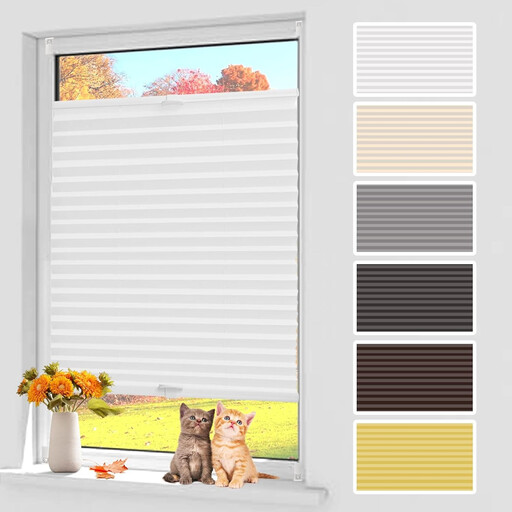
Why it suits this profile: Its compact size is suitable for smaller standard windows in living rooms, bedrooms or home offices. According to the product description, it can be fitted using either clamps or adhesive, with no drill holes required.
The product description specifically mentions light filtering and privacy, rather than claiming complete blackout. This gives you a more realistic idea of how the fabric performs.
Fixed size of 65 x 100 cm, polyester fabric and easy cleaning with a damp cloth.

Why it suits this profile: This model combines clamp-fit installation with a handle-operated, cordless design. According to the product description, it fits frames between 16 and 22 mm thick.
The specified frame thickness and limited suitability for certain window types mean you’ll need to check the fitting requirements before buying.
200 g/m² polyester according to the product description, a coated reverse side and operation using the bottom rail.
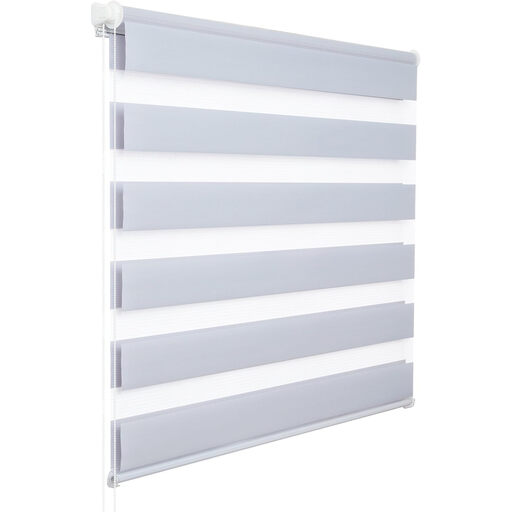
Why it suits this profile: Alternating transparent and opaque stripes let you adjust light and privacy as needed in living rooms, kitchens, bathrooms or offices.
Rather than making a blanket claim about blackout performance, the product description explains how the striped design and chain control work. Check beforehand that the 1 to 10 mm frame thickness specified for clamp fitting is suitable.
100% polyester according to the product information, a choice of left- or right-hand chain position, and cleaning with a soft brush or damp cloth.
We’ve put together a complete, regularly updated list of products that meet these strict selection criteria and the safety regulations in force in the EU.
Before fitting, make sure the frame and any adhesive surfaces are clean, dry and free of grease. Clamp brackets shouldn’t sit on a seal or directly against the moving window handle. Once the blind is attached, check that the window can still open fully and tilt.
For many models, care is as simple as using a soft, dry cloth, a soft brush or a slightly damp cloth. Harsh cleaning products, scouring agents and vigorous rubbing can damage polyester fabric or coatings. Keep control chains and small parts out of the reach of young children.
How long it lasts depends on the frame shape, fitting method, material and how often it’s used. Clamp brackets must fit the frame thickness correctly and should be checked regularly. Adhesive brackets need a smooth, sound surface. It’s therefore not possible to give a general lifespan that applies to every model.
Yes, some models are designed for doors or balcony doors, according to their product descriptions. However, check the height, width, door handle and clearance before buying. The blind shouldn’t hit the handle or wall when the door opens or closes.
An opaque pleated blind reduces views from outside, but may still let daylight through. A blackout blind is designed to reduce light more significantly. The actual effect depends on the fabric, coating, fit and any light gaps at the sides.