
Lieferung heute & morgen

Qualitätsgarantie

Willkommens-Angebote freischalten: KOSTENLOSE Lieferung | Bis zu 80 % RABATT | Kostenlose 30-Tage-JoyPlus-Testphase
App herunterladen
A pleated blind without drilling is practical for rented homes, modern window frames and quick renovations. Depending on the design, it can be installed using clamp brackets, adhesive or a combination of both methods. However, easy installation does not automatically guarantee the right result. Incorrectly measured widths, unsuitable frames or unclear information about light transmission can make your purchase unnecessarily expensive.
This Joybuy shopping guide from the Product Recommendation Officer explains which details are important before buying and which models are suitable for different living situations.
A pleated blind with clamp brackets is attached to the window sash using adjustable clamp brackets. This normally creates no drill holes. With a pleated blind with adhesive mounting, however, brackets or adhesive strips are attached directly to the frame. This method can be suitable for smooth, clean and dry surfaces. With delicate paint finishes, rough surfaces or older frames, there is a greater risk of adhesive residue or damage.
If you are planning pleated blind installation in a rented home, you should therefore check whether clamp brackets, adhesive strips or both systems are provided. The manufacturer’s information on frame thickness and surface condition is crucial.
Pleated blind dimensions are usually given as width × height. A model measuring 60 × 120 cm is therefore 60 cm wide and 120 cm high. For many Dream-seeker designs, it is recommended that you choose a width approximately 4 cm wider than the glass pane. The height should correspond to the entire window height, including the frame.
Before ordering, measure:
A pleated blind for windows and doors that is too wide may catch on the handle. A model that is too narrow will allow light and views through at the sides.
A light-filtering pleated blind reduces outside visibility and glare while still allowing daylight into the room. This makes it suitable for living rooms, kitchens or offices, for example. A model described as a blackout pleated blind is designed to reduce light more significantly. However, side gaps may still allow light through when pleated blinds are fitted inside the recess.
Pay attention to the specific product description: terms such as “light filtering”, “translucent”, “opaque” or “blackout” may be used differently depending on the design. For a bedroom, you should also consider the side gaps and the installation position.
A pleated blind with clamp brackets is hooked onto or clamped directly to the window sash. This solution is particularly useful if you do not want to make permanent changes to the frame. The products listed specify frame thicknesses of 10 to 23 mm in some cases. Check this information before buying.
Adhesive installation requires a grease-free, dry and preferably smooth surface. The frame should be cleaned before attaching the blind. After installation, check that the brackets are securely fixed. For balcony and patio doors, it is also important that the pleated blind does not catch on handles or seals when the door is opened and closed.
The models listed are predominantly made from polyester or woven polyester. This material can generally be cleaned with a soft, dry or slightly damp cloth. Some designs are moisture-resistant but not waterproof. Such a model may be suitable for indoor use in a bathroom, but it should not be exposed to direct water on a permanent basis.
Sharp objects, forceful pulling and abrasive cleaning products can damage the pleated fabric and coating. For products with cords, the safety instructions must be followed; cords should be kept out of children’s reach.
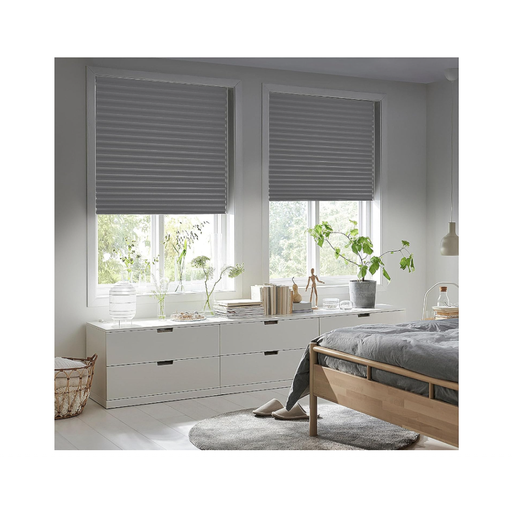
Why this product suits this profile: The compact size is suitable for many standard windows. The light grey, light-filtering polyester fabric combines privacy with plenty of daylight in the room.
The dimensions are clearly stated as 60 × 120 cm. Before ordering, you must still compare them with the glass width and the total frame height.
Clamp-bracket installation without drilling, an adjustable position and moisture-resistant, though not waterproof, fabric.

Why this product suits this profile: The double honeycomb structure and metal frame are designed to provide light protection and secure, stable attachment.
The stated frame thickness of 10–23 mm clearly defines where the blind can be used. This prevents installation on unsuitable frames.
100% polyester, upper and lower operating handles, clamp-bracket attachment and cleaning with a damp cloth.
Why this product suits this profile: With a height of 200 cm, this version is designed for tall windows or doors. The translucent fabric allows daylight in while helping to provide privacy and reduce glare.
Use on windows and doors, as well as installation on the upper frame, are explicitly described. Beforehand, you must check the handle position and available frame surface.
200 cm height, a clamp-bracket system without drilling and continuously adjustable positioning using the lower rail.

Why this product suits this profile: The product description specifically identifies this version as a blackout pleated blind with adhesive installation for windows and doors. It may therefore be a good choice for rooms where you want greater privacy and reduced brightness.
The description expressly states that it is limited to smooth, suitable surfaces. The frame should therefore be thoroughly cleaned and checked for uneven areas before applying the adhesive.
65 × 120 cm size, white polyester design and installation without drilling using adhesive brackets.
We have put together a complete, regularly updated list of products that fully meet these strict selection criteria and the safety regulations applicable in the EU.
A pleated blind with clamp brackets is usually hooked onto or clamped to the upper window sash. With a pleated blind with adhesive mounting, the brackets are stuck to a prepared, smooth surface. The exact installation method depends on the contents supplied with the product.
Its durability depends on the frame thickness, materials, correct installation and handling. The attachment should be checked regularly to make sure it remains secure. Excessive pulling, moisture and sharp objects can shorten the service life of the fabric and brackets.
A folding blind without drilling is a general term for a folding window covering. A pleated blind typically consists of permanently folded fabric and, depending on its design, can be adjusted from the top, bottom or using an operating rail. It is not just the name that matters: the dimensions, installation method, light transmission and suitability for the specific window frame are all important.