
Lieferung heute & morgen

Qualitätsgarantie

Willkommens-Angebote freischalten: KOSTENLOSE Lieferung | Bis zu 80 % RABATT | Kostenlose 30-Tage-JoyPlus-Testphase
App herunterladen
A pleated blind without drilling is a good choice for rented homes, frequent moves or windows whose frames you don’t want to alter permanently. However, fitting methods, fabric properties and measurements can vary considerably. If you choose based only on colour or price, you risk ending up with a blind that doesn’t stay securely in place, offers too little privacy or can’t be moved fully because of the window handle.
The Joybuy Product Recommendation Officer picks out the key details from product descriptions and compares them in an easy-to-understand way. This makes it easier to choose the right clamp-fit pleated blind, pleated blind without drilling or blackout pleated blind.
Terms such as “blackout”, “opaque” and “light-filtering” describe different properties. A light-filtering pleated blind diffuses daylight and can reduce visibility from outside, but it won’t normally make a room completely dark. Even an opaque fabric can let light in at the sides if the measurements aren’t right for the glass or window frame.
So, if you’re buying for a bedroom, check the fabric description carefully. For a living room, kitchen or office, a privacy pleated blind that filters light gently may be more practical than a fully blackout fabric.
A pleated blind with clamp brackets is usually attached to the window sash. You’ll need to take the frame thickness, seals and existing fittings into account. Clamp brackets aren’t automatically suitable for every window. Adhesive brackets, on the other hand, need a smooth, clean and dry surface. They may not stick as well to textured, dusty or uneven surfaces.
Suction cups are intended mainly for smooth surfaces such as glass or tiles. The WOLTU model with suction cups is specifically stated to be unsuitable for textured walls.
For the products listed, width and height are given as W × H. Before ordering, check at least the following:
For several Dream-seeker models, a width of around 4 cm more than the glass width is recommended. Other versions specify an extra 2 to 4 cm. Always follow the measurements given for the specific product.
A clamp-fit pleated blind attaches to the window frame without drilling holes and can often be removed when you move. However, you’ll still need to check the specified suitable frame thickness. For example, the WOLTU honeycomb pleated blind is designed for frame thicknesses of 10 to 23 mm.
For adhesive fitting, the surface must be free from grease, dust and moisture. After fitting, check that the brackets are secure before moving the blind several times. A suction cup system is an alternative for smooth glass surfaces, such as on balcony or patio doors.
A sun-screening pleated blind can reduce incoming light and glare. How well it works depends on the fabric, colour, window size and fitting. Light-coloured, semi-transparent fabrics usually still let daylight into the room. Opaque or blackout fabrics reduce light more effectively, but narrow strips of light may still come through at the edges.
For bathrooms and kitchens, also check whether the fabric is merely moisture-resistant or actually waterproof. Several of the listed models are moisture-resistant but not waterproof, so they aren’t designed for direct use in a shower area.
Polyester is the most common fabric used for the pleated blinds listed here. They can usually be cleaned with a slightly damp cloth. Harsh cleaning products, vigorous rubbing and prolonged exposure to water can damage the pleats, coating or colour.
Follow the manufacturer’s safety instructions for cords and operating mechanisms. Fit the blind out of children’s reach. Check regularly that the brackets and fixing points are secure.
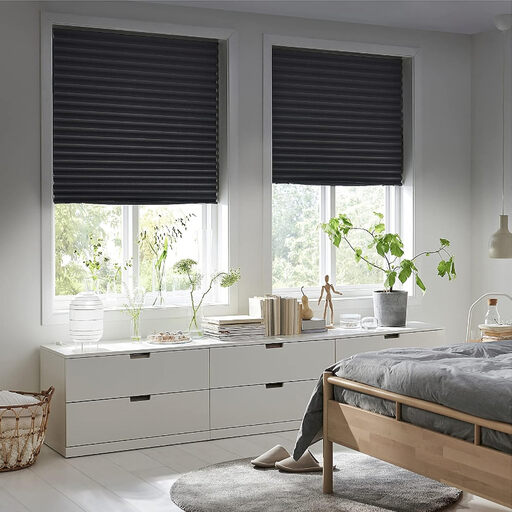
Why it suits this type of buyer: Its compact size and stated clamp or adhesive fitting options make it suitable for a standard window when you don’t want a permanent fixture.
The product description specifies light filtering rather than full blackout, helping you set realistic expectations about how much light it will block.
Measures 75 × 100 cm, with anthracite polyester fabric; according to the product description, it can be used on windows or doors.

Why it suits this type of buyer: The honeycomb structure, metal frame and specified frame thickness will appeal to buyers who want to compare technical details about fitting and construction.
The suitable frame thickness of 10–23 mm is clearly stated. The description also warns that window handles may get in the way.
Made from 100% polyester according to the product description, with clamp-fit installation and adjustable operating handles at the top and bottom.
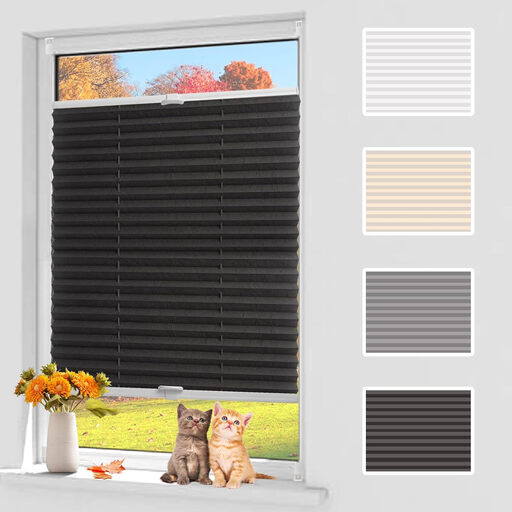
Why it suits this type of buyer: Its long format could work well for tall windows, doors or balcony areas, provided the frame shape and fitting instructions are suitable.
The description explains that the fabric doesn’t block out all light and that the model isn’t suitable for sloping roof windows.
Measures 90 × 200 cm, has an adjustable height and can be fitted without drilling using adjustable brackets.
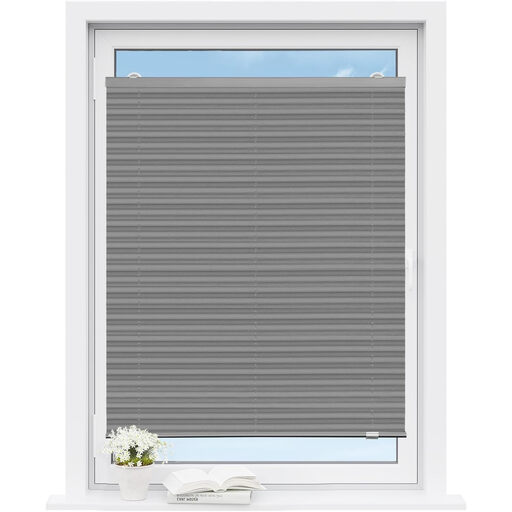
Why it suits this type of buyer: The suction cup fitting is designed for smooth glass or tiled surfaces and can be handy for temporary solutions.
The product description limits use to smooth surfaces and specifies semi-transparent light filtering rather than full blackout.
Adjustable width according to the description, polyester fabric and fitting to glass or tiles without drilling.
We’ve put together a complete, regularly updated list of products that meet these strict selection criteria and the safety regulations in force in the EU.
Depending on the model, it’s fitted using clamp brackets, adhesive brackets or suction cups. The window frame or glass surface must be clean and dry. Before buying, check the frame thickness, seals and window handle. Once fitted, move the blind carefully and check that the brackets are secure.
There’s no single answer, as its lifespan depends on factors such as the material, sunlight, how often it’s used, humidity in the room and how well the fittings stay in place. Adhesive brackets can lose their grip and should be replaced if they become loose. It’s a good idea to check them regularly.
The blind itself doesn’t need electricity. It’s a manually operated window covering. Light-filtering or blackout fabric can reduce glare and incoming light, but this doesn’t allow you to make a general claim about a specific amount of energy saved.