
Lieferung heute & morgen

Qualitätsgarantie

Willkommens-Angebote freischalten: KOSTENLOSE Lieferung | Bis zu 80 % RABATT | Kostenlose 30-Tage-JoyPlus-Testphase
App herunterladen
A pleated blind without drilling is a practical choice for rented homes, renovated rooms and spaces where the furnishings change frequently. Depending on the model, it can be fitted with clamp brackets, adhesive holders or suction cups. This helps keep walls and window frames largely undamaged.
However, inaccurate measurements and unclear product claims often lead to the wrong purchase. For example, a “light-blocking” fabric may still let daylight through, while a roller blind described as “blackout” may leave bright gaps at the sides. The fitting method may not suit every window either.
With a clamp-fit pleated blind, the visible fabric width is not always the key measurement. For several models, the stated overall width includes the brackets or rails, so the fabric may be a few centimetres narrower.
Before you buy, check:
As a general guide, for many models the ordered width should be about 3 to 4 cm wider than the glass. However, the measurements given for the specific product take precedence.
A light-filtering pleated blind filters daylight and can reduce glare and visibility from outside. However, it usually won’t make a room completely dark. For bedrooms, children’s rooms or spaces where you use screens that are sensitive to light, a blackout roller blind without drilling is a better choice.
A double roller blind without drilling has alternating transparent and opaque fabric stripes. Sliding the stripes lets you adjust how much light comes in. This gives you flexibility, but it does not automatically provide blackout coverage at the sides.
Clamp brackets need a suitable area of window frame to attach to. Depending on the product, the frame may need to be 13 to 23 mm or 10 to 23 mm thick, for example. Fitting may not be possible on wooden windows, roof windows, sliding windows or frames with pronounced profiles.
Also check whether there is a continuous seal around the frame and whether the window can still be tilted open. A secure fit is more important than a quick installation.
A clamp-fit pleated blind attaches to the top and bottom of the window frame. This option suits many tilt-and-turn windows and can be removed when you move home. The frame must be within the specified thickness range.
Adhesive holders stick directly to a suitable, clean, smooth surface. They’re better suited to temporary installations, but shouldn’t be used on rough or damaged surfaces. According to product details, suction cups work on smooth surfaces such as glass or tiles, but not on textured walls.
Many pleated blinds are made from polyester, with aluminium rails or metal brackets. For everyday care, a soft cloth or gentle brush is usually enough. Harsh cleaning products, vigorous rubbing and excessive moisture can damage the fabric or coating.
A thermal pleated blind or a roller blind with a coated backing can affect the amount of light and heat coming through. The actual effect depends on the window area, fitting distance, colour and room ventilation. Treat general claims about energy savings or room temperature with caution.
In family homes, cords, chains and small parts should also be fitted out of children’s reach. Always follow the safety instructions supplied with the product.
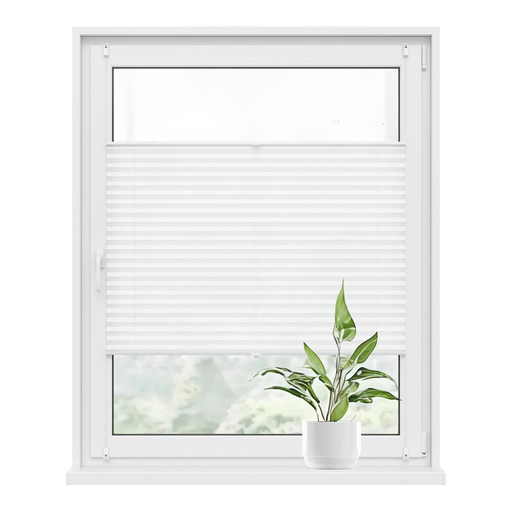
Why this product suits this type of buyer: The light-filtering design is suitable for living rooms, kitchens or offices where you want to retain daylight. The clamp brackets allow you to fit it without drilling.
The product details clearly distinguish between dimming and complete blackout, so you can get a more realistic idea of how it affects the light.
100% polyester, aluminium rail, 20 mm pleats and an adjustable width range of 45 to 120 cm, according to the product description.

Why this product suits this type of buyer: The double-layer honeycomb structure is designed for rooms where light control, privacy and coated fabric are important.
The suitable frame thickness of 10 to 23 mm and the restriction for roof windows are clearly stated. This makes it easier to check compatibility before you buy.
Opaque polyester fabric, metal frame, top and bottom operating handles, and cleaning with a damp cloth, according to the product description.
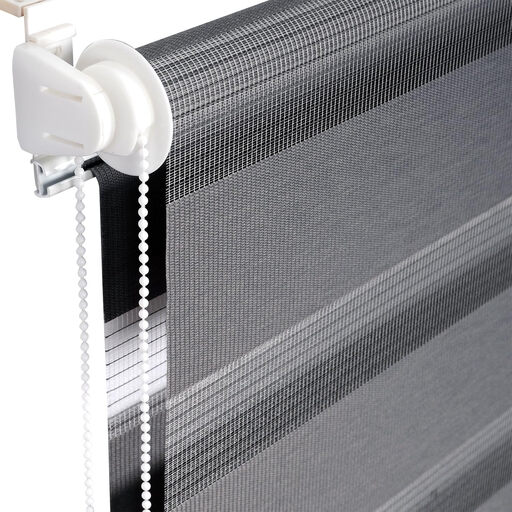
Why this product suits this type of buyer: Alternating transparent and opaque stripes let you adjust daylight and privacy in stages in living rooms, bedrooms or damp rooms.
The product description specifies a frame thickness of 13 to 23 mm and says that the blind is not suitable for roof or wooden windows.
Polyester fabric with heat-cut edges, a chain control that can be fitted on the left or right, and cleaning with a soft brush or damp cloth.

Why this product suits this type of buyer: The handle-operated, cordless design may appeal to households looking to avoid freely hanging operating chains.
The details specify a suitable frame thickness of 16 to 22 mm and note that the product is not designed for roof windows.
Cordless operation, aluminium rails, coated polyester fabric and tool-free clamp fitting, according to the product description.
First, measure the glass width and the height of the entire window frame. Then check the frame thickness, seals, handle and opening direction. Clean adhesive or suction-cup surfaces before fitting and let them dry.
Once fitted, the pleated blind should not slip, hang crookedly or block the handle. For products with a cord or chain, fit the supplied safety devices. Clean the fabric gently with a soft cloth; ironing or wringing it out forcefully is not recommended.
We’ve put together a complete, regularly updated list of products that meet these strict selection criteria and fully comply with the safety regulations in force in the EU.
Depending on the model, it can be attached with clamp brackets on the window frame, adhesive holders on smooth surfaces or suction cups. The manufacturer’s guidance on frame thickness and window suitability is key.
Its lifespan depends on the fabric quality, how often it is used, exposure to sunlight and whether it is fitted correctly. Pulling too hard, incorrectly adjusted cords and an unsuitable frame can all shorten its lifespan.
The pleated blind itself does not need electricity. It can affect the amount of light coming in and direct sunlight. Whether this reduces heating or cooling costs depends on the window, room, season and ventilation habits.