
Lieferung heute & morgen

Qualitätsgarantie

Willkommens-Angebote freischalten: KOSTENLOSE Lieferung | Bis zu 80 % RABATT | Kostenlose 30-Tage-JoyPlus-Testphase
App herunterladen
A pleated blind without drilling is a good choice for rented homes, newly renovated rooms and windows whose frames you don’t want to alter permanently. But choosing one involves more than colour and price. The fitting method, measurements and level of light filtering are all important.
Clamp brackets can usually be attached to the window sash without tools. A pleated blind with adhesive fittings, on the other hand, uses adhesive brackets fixed to the frame. This option requires a smooth, dry and grease-free surface. Removing the brackets from delicate paintwork, textured surfaces or porous frames may leave marks or affect adhesion.
Before buying, check whether the blind is designed for clamp brackets, adhesive fitting or both. For rented homes, a clamp-fit pleated blind is often the more flexible option, provided the rebate depth is suitable for the brackets.
A light-filtering pleated blind softens sunlight and reduces visibility from outside, but it won’t make the room completely dark. A model described as opaque or blackout can reduce the amount of light coming in more significantly. How much light enters at the sides or through the fabric also depends on the fitting method and the gap between the blind and the window.
A blackout pleated blind may be a good choice for bedrooms or rooms with computer workstations. In a living room, kitchen or office, a light-filtering pleated blind that lets daylight in is often enough.
Measurements are usually given as width × height. So a pleated blind measuring 70 × 120 cm is 70 cm wide and 120 cm high. Before ordering, measure the glass width, frame height and, if you’re using clamp brackets, the depth of the window rebate.
For several Dream-Seeker models, it’s recommended that you choose a blind around 2 to 4 cm wider than the glass. This recommendation depends on the product and doesn’t replace checking the relevant fitting instructions.
A pleated blind with clamp brackets attaches to the movable window sash. This is especially practical if you still want to tilt the window and don’t want a permanent fixing. Check the stated frame-thickness range. For example, the Allesin model has adjustable brackets designed for frame thicknesses of 10 to 23 mm.
A pleated blind with adhesive fittings needs a smooth, sturdy surface. Clean the frame before fitting and let it dry completely. Press the brackets into place as instructed, then check that the blind is secure before using it. A stable fixing is particularly important on doors and frequently opened windows.
Windows and doors have different requirements. A balcony or patio door will usually need a greater height and a fixing that won’t shift when the door is opened and closed. Compact sizes are suitable for small kitchen or bathroom windows.
Many of the models available are made from polyester. This lightweight material can be cleaned with a damp cloth. However, moisture-resistant doesn’t mean waterproof. Avoid direct contact with water, such as in a shower area. Some models are also unsuitable for sloping roof windows, wooden windows or sliding windows.
Know the difference between:
A sliding handle lets you position the blind flexibly from the top or bottom. If the model has a cord, keep it out of children’s reach. Check regularly that the brackets and tension are still secure.
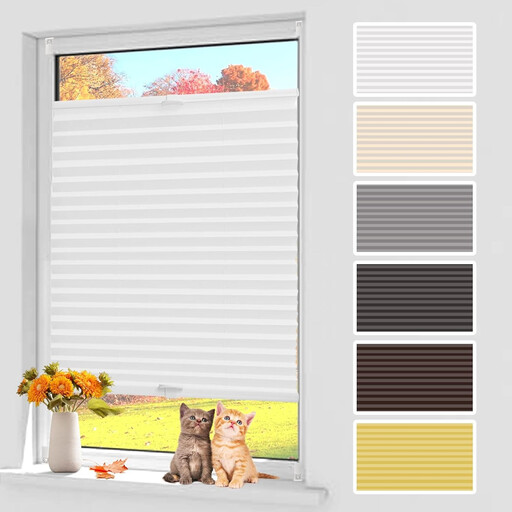
Why this product suits this profile: Its compact size makes it suitable for smaller indoor windows in bedrooms, living rooms or offices. According to the product description, it can be fitted without drilling using clamp or adhesive brackets.
The light-control rating isn’t presented as meaning the room will be completely dark. Check the window measurements and surface condition before buying.
65 × 100 cm, white polyester fabric and adjustable height; designed for indoor windows and doors.
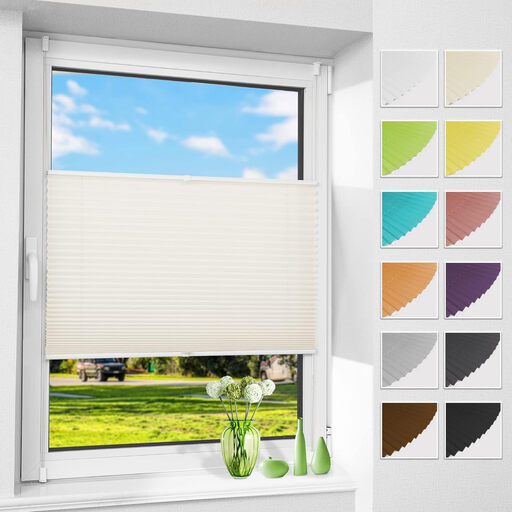
Why this product suits this profile: According to the product details, the adjustable brackets fit frames 10 to 23 mm thick. The model is designed for rectangular tilt-and-turn windows in kitchens, bathrooms, living rooms or offices.
The frame compatibility is specified within a clear range. It’s also made clear that the model isn’t designed for roof windows, wooden windows or sliding windows.
100% polyester with an aluminium rod, no-drill fitting and top and bottom handles for operation.
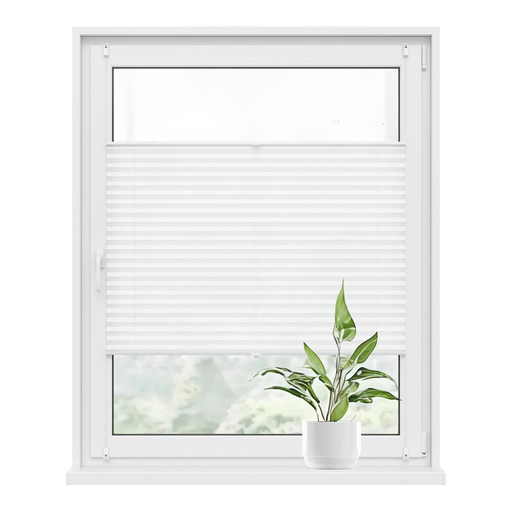
Why this product suits this profile: This pleated blind is designed for windows and doors and comes in widths from 45 to 120 cm. It’s suitable if you need an adjustable solution for several rooms.
The product details clarify what it does: the fabric dims the room but doesn’t make it completely dark. The rebate depth must also be between 1.5 and 2.3 cm.
100% polyester, 20 mm pleat width and supplied clamp brackets; according to the product description, the width can be trimmed to a limited extent.

Why this product suits this profile: At 200 cm high, it’s a good option for tall windows, balcony doors or patio doors. The product description classifies this model as offering blackout and privacy.
The fitting surface needs to be smooth and clean. Before buying, also check that the stated width of 70 cm is suitable for your glass and frame measurements.
70 × 200 cm, white polyester fabric and no-drill fitting using the specified adhesive or clamp method.
We’ve put together a comprehensive, regularly updated list of products that meet these strict selection criteria and fully comply with the safety regulations in force in the EU.
Clamp-fit pleated blinds are practical for rented homes because they don’t leave drill holes in the window frame. Whether adhesive fittings can be removed without leaving marks depends on the surface and the adhesive used. Check the manufacturer’s instructions and, where possible, test delicate surfaces carefully.
Its lifespan depends on the material, how often it’s used, exposure to sunlight and how securely it’s fitted. Secure installation, careful adjustment and regular checks of the brackets can help keep it in good working order. Replace adhesive brackets if they start to lose their grip.
Pleated blinds don’t normally need electricity, so there are no ongoing energy costs to use them. You may need to pay for replacement brackets or a new blind if the fittings are damaged or the fabric is affected by unsuitable cleaning.