
Lieferung heute & morgen

Qualitätsgarantie

Willkommens-Angebote freischalten: KOSTENLOSE Lieferung | Bis zu 80 % RABATT | Kostenlose 30-Tage-JoyPlus-Testphase
App herunterladen
A pleated blind without drilling is a practical choice for rented homes, frequently changing interiors or delicate window frames. Depending on the model, it can be fitted using clamp brackets, adhesive fittings or suction cups instead of wall plugs and screws. But the fitting method alone won’t determine whether a pleated blind performs reliably day to day.
Common buying mistakes come down to three things:
Check these points before you buy to reduce the risk of loose fittings, inadequate privacy or ordering the wrong size.
For many clamp-fit and adhesive models, the measurements are given in the order width × height. So measure:
For several Dream-seeker models, it’s recommended that you choose a blind about 4 cm wider than the glass. This can improve privacy at the sides. Other designs, such as WOLTU models, have their own requirements for frame thickness and possible width adjustment. Always check the product description for the model you’re considering.
Height also matters for doors and larger windows. For example, 200 cm-high options are generally better suited to balcony or patio doors than 100 cm-high models.
These terms describe different features:
So don’t assume that a model described as “Blackout” will automatically make the room completely dark. Check whether the fabric is described as light-blocking and how wide the blind is in relation to the window pane.
A clamp-fit pleated blind is usually attached directly to the opening window sash. This makes it a good option for rented homes, as it doesn’t leave drill holes. Check the permitted frame thickness. For example, the WOLTU honeycomb model is listed as suitable for frames measuring 10 to 23 mm thick.
A pleated blind with adhesive fittings needs a surface free from grease, dust and moisture. Clean and dry the inside of the window frame thoroughly before fitting. Rough, uneven or heavily textured surfaces are generally unsuitable for adhesive fittings.
Suction-cup models can be an alternative for smooth glass or tiled surfaces. However, they aren’t designed for textured walls, and you should check regularly that they’re still secure.
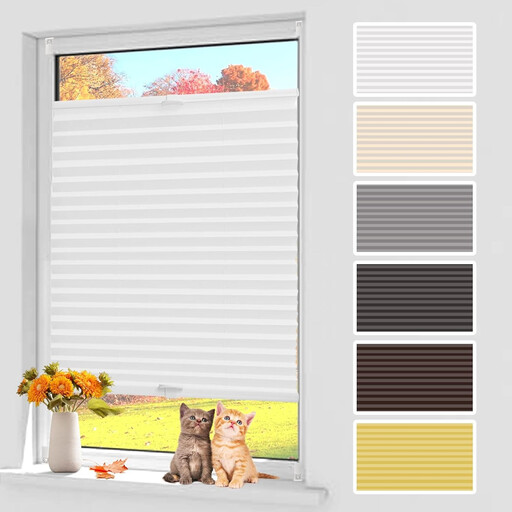
Why this product suits these needs: Its compact size and choice of clamp-fit or adhesive installation make it a good fit for smaller standard windows in rented homes, bedrooms or home offices.
The stated measurements make it easier to choose the right size. Clean the mounting surface before fitting, and make sure the brackets are secure before use.
Polyester fabric, white finish, inside-mount installation, light filtering and privacy, according to the product description.

Why this product suits these needs: Its honeycomb structure, metal frame and adjustable clamp-fit brackets will appeal to buyers looking for specific design features.
The required frame thickness of 10–23 mm is clearly stated. According to the description, this model isn’t suitable for roof windows.
100% polyester, clamp-fit installation, top and bottom operating handles, and moisture-resistant fabric, according to the supplier.
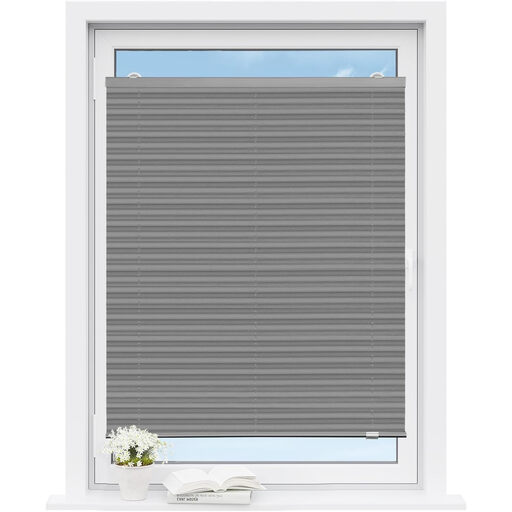
Why this product suits these needs: Suction-cup fitting is a useful option for smooth glass or tiled surfaces, such as balcony doors or areas where you need a removable sun shade.
It’s specifically described as suitable for smooth surfaces. Don’t use the suction cups on textured walls.
Adjustable suction cups, grey semi-transparent polyester fabric and 70% UV filtering, according to the supplier.
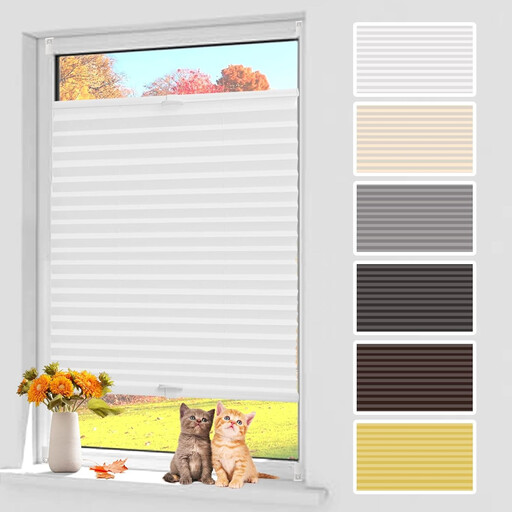
Why this product suits these needs: The white, light-blocking design is intended for smaller bedrooms, children’s rooms or home offices where you need greater privacy and sun protection.
Its light-control function is described as “Blackout” or light-blocking. Before buying, check your frame measurements and whether the available clamp or adhesive fittings are suitable.
Measures 80 × 100 cm, polyester fabric, no-drill installation and suitable for indoor use on windows and doors, according to the product details.
We’ve put together a complete, regularly updated list of products that meet these strict selection criteria and the safety regulations in force in the EU.
Before fitting, make sure the window frame is dry and free from dust, grease and cleaning-product residue. Adhesive fittings usually need time to bond before you put the blind under strain. With clamp-fit models, the frame must not exceed the stated thickness.
In many cases, all you need to clean the blind is a soft, slightly damp cloth. Harsh cleaning products, scouring pads and pulling hard on handles or cords can damage the fabric and fittings. Check the fixings regularly. Keep cords and operating mechanisms out of reach of young children.
How long it lasts depends on the fitting method, surface, frame thickness and how it’s used. Clean, smooth surfaces help adhesive fittings and suction cups stay in place. Choose a clamp-fit system that suits your window frame and check regularly that it’s secure.
Yes, several models are described as suitable for windows and doors. For balcony or patio doors, though, check the width, height, handle position and clearance when the door opens. A blind that’s too wide may catch on the door handle or seal.
A clamp-fit pleated blind is a good choice if your window frame is the right thickness and you want a mechanical fixing. Adhesive fittings suit smooth frames and can be particularly discreet. Neither option is ideal for textured, damp or very dirty surfaces.