
Lieferung heute & morgen

Qualitätsgarantie

Willkommens-Angebote freischalten: KOSTENLOSE Lieferung | Bis zu 80 % RABATT | Kostenlose 30-Tage-JoyPlus-Testphase
App herunterladen
Dressing balcony doors and adjacent windows in a rented apartment often presents a distinct dilemma. Landlords strictly forbid drilling into plastic or aluminium frames, while intense afternoon sun and evening footfall compromise both indoor climate and privacy. Traditional curtains frequently obstruct the swing of inward-opening balcony doors, while fixed roller blinds can prevent handles from turning cleanly. Drill-free pleated blinds offer an elegant compromise, tensioning directly onto the opening sash so that doors remain fully operational.
Selecting the right drill-free blind requires balancing frame mechanics with thermal demands. Standard clamp brackets work effortlessly on modern uPVC casements with rubber seals, but alternative adhesive or bracket styles are necessary for non-opening glass sections or wooden profiles. Understanding fabric performance, cellular heat barriers and precise handle-clearance measurements ensures your installation remains secure, neat and fully functional across everyday domestic use.
A frequent miscalculation involves measuring the entire width of the door sash rather than the glass width plus a small, safe margin. If the fabric extends too far across the frame profile, it will catch beneath the balcony door handle every time you turn it to tilt or open. Ensure the blind fabric clears the base of the handle by at least one centimetre on the operating side.
Standard clamp fixings rely on clamping over the top and bottom rebate edges of an inward-opening sash. Fixed window panes, flush wooden frames without a rebate lip, or sliding balcony doors cannot physically accommodate clamp brackets. For fixed glass sections or narrow wooden rebates, look for models that supply secondary adhesive pads or frame-groove mounting options.
Translucent pleated polyester shields against street-level glances while diffusing harsh glare, but it does not trap heat or fully darken a room. South-facing balcony doors turn living rooms into greenhouses during peak summer months. If heat mitigation or bedroom-level light exclusion is the priority, opting for a dual-layer honeycomb structure with internal aluminium lining is essential.
The profile of your balcony door dictates the necessary fixing method. Verify frame depth and sash clearance before committing to a clamp setup.
Different fabric weaves provide tailored balances between daylight ingress, ambient sound dampening and indoor temperature regulation.
Balcony doors undergo frequent movement, meaning tension cords must hold the blind taut against the glass during drafty breezes or tilt operations.
These drill-free pleated blinds provide practical solutions for varying window widths, light requirements and frame profiles across modern homes.
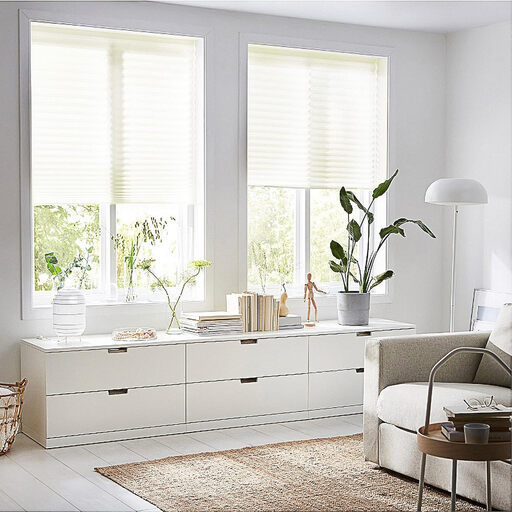
Why This Fits Their Persona: This 60 x 120 cm pleated blind provides an ideal footprint for slender sidelights or standard apartment window casements next to balcony access doors. The warm beige polyester softly tempers incoming daylight without plunging small rooms into darkness, making everyday living areas feel welcoming yet private.
Supplied with both clamp and adhesive mounting options, it spares you the frustration of discovering that a window sash lacks the rebate lip needed for ordinary clamps. Renters can mount the tension shoes cleanly without marring pristine uPVC or painted frames.
Its dual-mounting flexibility makes it exceptionally versatile across changing rental properties, allowing immediate repositioning from clamping to adhesive baseplates whenever your window styles differ.

Why This Fits Their Persona: Designed specifically for demanding sun-facing balcony doors and tall glazed elements, this 50 x 130 cm cellular blind combines complete light exclusion with active thermal management. The dual-layer honeycomb structure forms an insulative air buffer, helping to keep living rooms and bedrooms cool during long summer afternoons.
Unlike standard single-pleat fabrics that let solar radiation penetrate into the room, the cellular barrier actively reflects thermal energy while providing effective acoustic muffling against exterior street noise.
The double-pleated cellular construction keeps cord guide holes hidden inside the internal chambers, preventing light pinpricks and delivering an uncluttered, modern appearance.
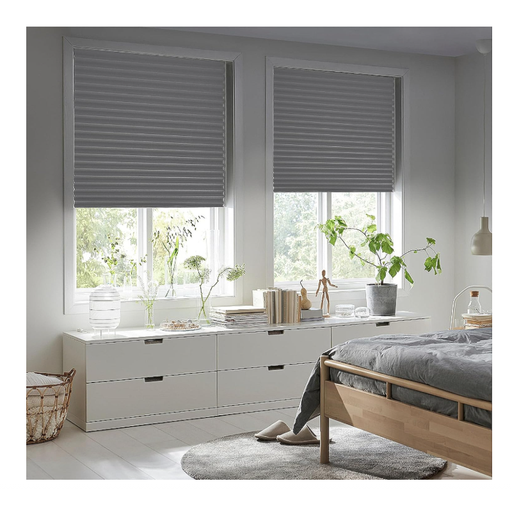
Why This Fits Their Persona: Tailored for wide tilt-and-turn sashes and broad window sections, this 85 x 120 cm light grey blind covers larger glass spans smoothly without sagging in the middle. The durable polyester fabric filters direct glare into a neutral, balanced ambience suitable for home offices and open-plan lounges.
Broad blinds frequently risk colliding with door fixtures, but the customisable cord system allows precise tension balancing so the rail glides true without twisting towards the handle mechanism.
The neutral light grey tone effortlessly complements contemporary urban interiors, hiding everyday airborne dust while resisting UV-induced fabric discolouration over years of sun exposure.
If your home features extra-tall patio openings, sliding glass systems or external balustrades requiring outdoor-rated weather protection, consider expanding your search across the broader catalogue.
Clamp brackets work securely on wooden frames as long as the opening sash features a pronounced rebate lip measuring between 10 mm and 25 mm deep, accompanied by a flexible seal. On older wooden doors with squared, non-rebated edges or very tight clearances against the wall reveal, adhesive mounting plates applied directly to the frame offer a much more reliable, drill-free alternative.
Single-layer light-filtering fabrics diffuse harsh direct sunlight while keeping rooms naturally bright and preventing outside visibility during daylight and evening hours. Cellular honeycomb blinds feature a twin-layered hexagonal structure that traps air to provide measurable thermal insulation against summer heat and winter drafts, alongside comprehensive room darkening.
Measure the width of the visible glass pane and add approximately 2 cm on each side to prevent light gaps around the edges. Before ordering, verify that this calculated width leaves at least 1 cm to 1.5 cm of clearance from the base of the door handle, allowing the lever to rotate fully into the tilt and open positions without catching the textile.