
Lieferung heute & morgen

Qualitätsgarantie

Willkommens-Angebote freischalten: KOSTENLOSE Lieferung | Bis zu 80 % RABATT | Kostenlose 30-Tage-JoyPlus-Testphase
App herunterladen
Whether for repairs, assembly, electrical installation, automotive work, or garden projects: pliers for DIYers and professionals vary considerably in grip shape, cutting performance, leverage, and intended use. Combination pliers can handle many tasks, but they cannot replace water pump pliers or a cable cutter.
Those who focus solely on inexpensive sets, eye-catching material claims, or the largest possible number of pieces often end up buying tools that do not match their actual needs. The following criteria help you assess marketing claims objectively and select the right hand tool for specific jobs.
Combination pliers are suitable for gripping, bending, and cutting certain types of wire. However, their jaw shape is not always appropriate for round components, hoses, or large fittings. Water pump pliers offer greater adaptability for round, flat, or hexagonal workpieces thanks to their adjustable jaw width.
Snap rings, cables, wire rope, and hose clamps each have their own requirements. The key consideration is therefore not the number of functions, but whether the pliers are designed for the specific workpiece.
Claims such as “for metal” or “for hard wire” are of limited value without information on diameter and material. For example, a bolt cutter with a stated maximum cutting capacity of 2.3 mm is not automatically suitable for every thicker or hardened metal.
Before buying, check the following:
Do not exceed the stated capacity. Doing so can damage the cutting edges and increase the risk of injury.
Ergonomic TPR, PP, or plastic handles can make pliers more comfortable to use. However, this does not automatically mean that the tool is suitable for work on live wires. For electrical work, look for clearly specified VDE insulation and the appropriate certification.
An uninsulated handle, as found on many general-purpose pliers, is no substitute for insulated electrician’s tools. Always follow the applicable safety regulations before working on electrical systems; work on live components should be carried out by appropriately qualified professionals.
Length affects leverage and access to confined areas. A 180 mm pair of combination pliers is easy to handle for many general repairs. A 250 mm pair of water pump pliers provides greater reach and a wider jaw opening, but requires more working space.
Also pay attention to:
With snap-ring pliers, the combination of straight and angled tips, as well as suitability for internal and external rings, is also important.
The models presented here specify materials including chrome vanadium steel, CR-MO steel, and carbon steel. These material descriptions indicate how the tools are constructed, but they do not replace a specific statement of permissible load.
The following points are useful when making your selection:
After use, wipe metal surfaces dry and apply a light coat of oil before extended storage. Moisture, particularly outdoors, can shorten the service life of hand tools.
A cable cutter is designed for electrical conductors and specific cable types. A wire-rope cutter, by contrast, has cutting edges designed to grip and cut wire-rope ends as cleanly and controllably as possible. A wire stripper removes insulation, while a crimping tool compresses cable lugs or connectors. These functions should not be replaced with a standard pair of combination pliers unless explicitly approved.
For gardening and craft projects, scissors or another sharp cutting tool may also be useful. According to the product description, a 50 m length of garden and craft twine made from jute fibre, with a diameter of 2 mm, is suitable for tying plants, packaging, decorating, and DIY projects. The twine should be stored dry after outdoor use.
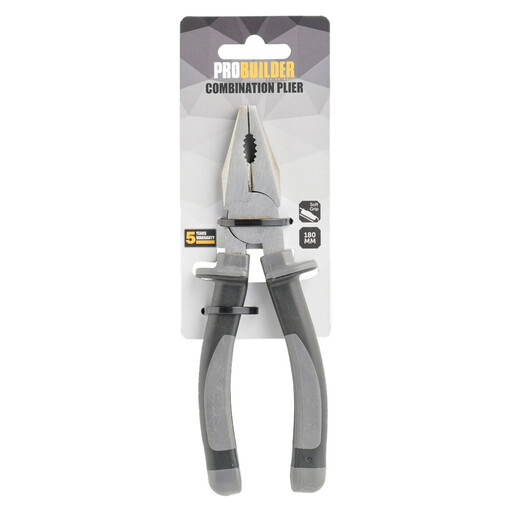
Why they suit this profile: For household tasks, workshop projects, and occasional repairs, these 180 mm pliers combine gripping, bending, and cutting functions in a single hand tool.
The product specifications mention flat and round gripping areas, along with cutters for nails and various types of wire. However, the pliers are not specified as electrically insulated.
180 mm length, steel construction, PP/TPR handle, and a weight of approximately 233 g.
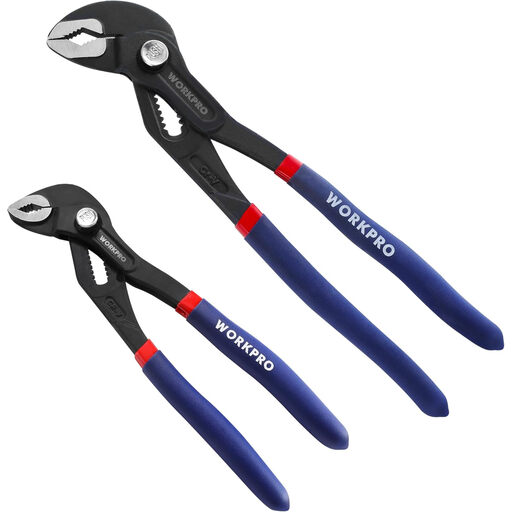
Why they suit this profile: Two sizes provide different jaw widths and are suitable for assembly, plumbing work, and general repairs.
Rather than giving a vague size description, the specifications state maximum openings of 33 mm and 43 mm. This makes it easier to check compatibility with the workpiece.
Chrome vanadium steel, push-button adjustment, serrated gripping surfaces, and 180 mm and 250 mm pliers.
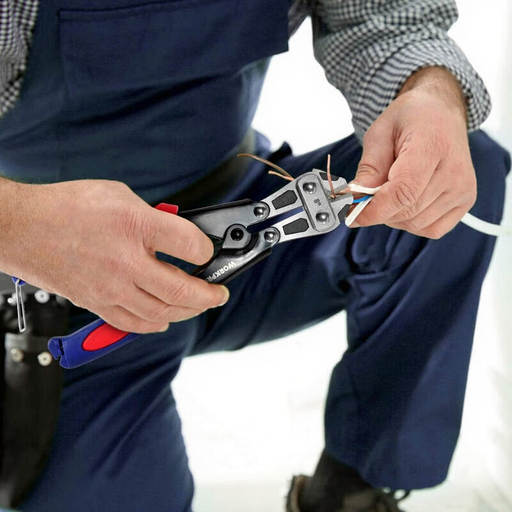
Why it suits this profile: Its compact design is intended for tool bags and cutting wires, chains, and similar metal components.
The maximum cutting capacity is specified as 2.3 mm. This makes it easier to assess suitability before attempting to cut harder or larger materials.
210 mm length, CR-MO steel, TPR/PP handles, integrated lock, and a product weight of approximately 280 g.
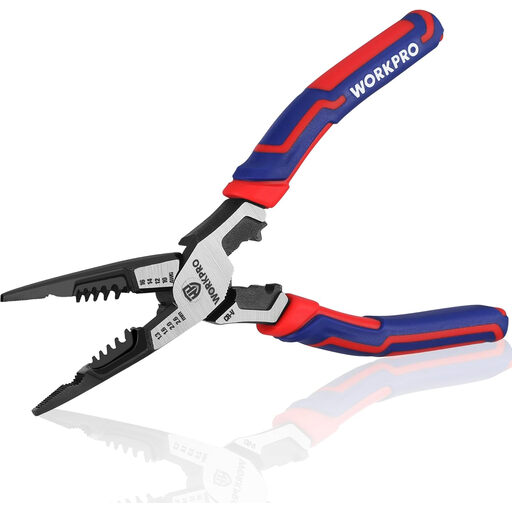
Why they suit this profile: The combination of needle-nose pliers, cable cutter, wire stripper, crimping tool, and wrench appeals to users who want to complete multiple steps with a single tool.
The functions are specified with concrete ranges: wire stripping from 1.3–2.6 mm and cutting steel up to 1.6 mm. The handle is not specified as VDE-insulated.
200 mm length, chrome vanadium steel, TPR handles, and an eccentric joint design.
Our current selection includes additional products for wire-rope, gardening, repair, and assembly work. Before buying, always check the dimensions, materials, and package contents.
For automotive work, hose-clamp pliers with a 67 cm flexible cable can be useful when spring clamps on fuel, oil, or coolant hoses are difficult to reach. The WORKPRO model mentioned features a clamping range of 10 to 50 mm and a locking function.
For bicycle repairs and assembly work, a wire-rope cutter measuring 190 mm in length is designed for the job. According to the product specifications, the model is made from chrome vanadium steel and features a safety lock. Anyone who regularly fits snap rings can use a snap-ring pliers set in four configurations: straight and 90° angled, each for internal and external rings. The ValueMax set is specified as 180 mm long, with 1.6 mm tips and a storage pouch.
For many household and repair tasks, 180 mm combination pliers, water pump pliers, and diagonal cutters or a cable cutter are useful essentials. Depending on the work involved, you may also need wire strippers, crimping pliers, snap-ring pliers, or hose-clamp pliers.
Remove dirt and moisture after use, lightly oil the joint and metal surfaces when necessary, and store the tools in a dry place. A pliers set with a storage pouch makes organised storage easier and reduces the risk of individual pieces being misplaced.
A bolt cutter is designed for higher cutting forces and specific metal materials. The manufacturer’s specifications for diameter and material remain decisive. For cables, wire rope, and small wires, use the appropriate cutting tool for each application, as the cutting edges are designed specifically for those tasks.