
Lieferung heute & morgen

Qualitätsgarantie

Willkommens-Angebote freischalten: KOSTENLOSE Lieferung | Bis zu 80 % RABATT | Kostenlose 30-Tage-JoyPlus-Testphase
App herunterladen
A high-quality pliers set is the foundation for countless projects, whether for professional tradespeople or ambitious DIY enthusiasts. But the market is flooded with offers that promise more than they deliver. Too often, what seems like a bargain quickly reveals itself to be a poor investment. Before you decide on a new set, it's crucial to understand the common pitfalls that lead to frustration and unnecessary expenses.
Many buyers fall into the trap of oversized sets with questionable quality or are dazzled by marketing buzzwords that say nothing about actual performance. This guide will help you separate the wheat from the chaff and make an informed decision.
Purchasing tools should be a long-term investment. Pay attention to these three widespread problems to avoid having to buy again after just a few months:
To avoid the problems mentioned above, you should check three core aspects. These parameters determine the durability, functionality, and safety of your tools.
The foundation of any good pair of pliers is the steel. Chrome Vanadium Steel (Cr-V) is a common and reliable choice for professional use. This alloy is characterized by high hardness and toughness, making it resistant to wear and deformation. An additional heat treatment of the cutting edges and gripping surfaces ensures maximum resilience. Also, pay attention to the surface finish: a nickel plating or black oxide coating provides effective corrosion protection and significantly extends the tool's lifespan.
The joint is the heart of every pair of pliers. A precisely manufactured, zero-play joint ensures smooth movement and direct power transfer. For tools like diagonal cutters or cable cutters, a high-leverage design is advantageous. This allows you to cut through even thicker materials with significantly less effort. This not only saves your hands but also enables cleaner cuts.
The handles are the interface between you and the tool. Simple plastic grips often offer little hold and comfort. Ergonomically shaped dual-component grips, usually a combination of hard polypropylene (PP) for stability and soft thermoplastic rubber (TPR) for grip, are far superior. A non-slip surface is a critical safety feature, especially when working with electrician's tools, as it maximizes control over the tool.
Instead of making a one-size-fits-all recommendation, we have selected products for specific user profiles. This way, you can find the tool that truly matches your requirements.
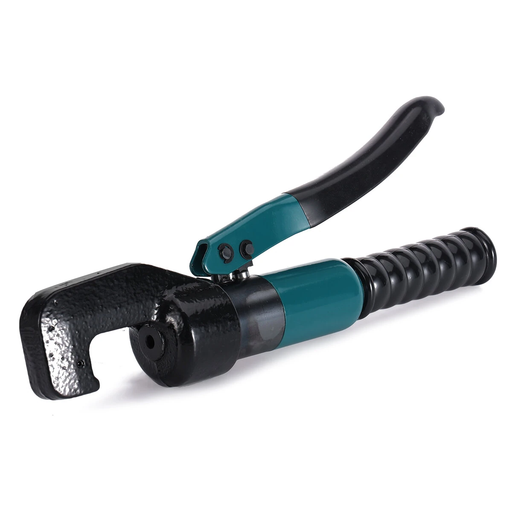
Why This Fits Their Persona: Ideal for electricians and technicians who regularly work with large-gauge cables. The hydraulic mechanism makes crimping cable lugs fast, consistent, and requires minimal manual effort.
This is a highly specialized hydraulic crimping tool that completely solves the problem of poor power transfer. Instead of a weak all-rounder, you get a tool optimized for a demanding task.
Delivers a crimping force of up to 80 kN for cable cross-sections from 4-70 mm? (12AWG to 2/0AWG). Comes as a complete kit in a sturdy plastic case.
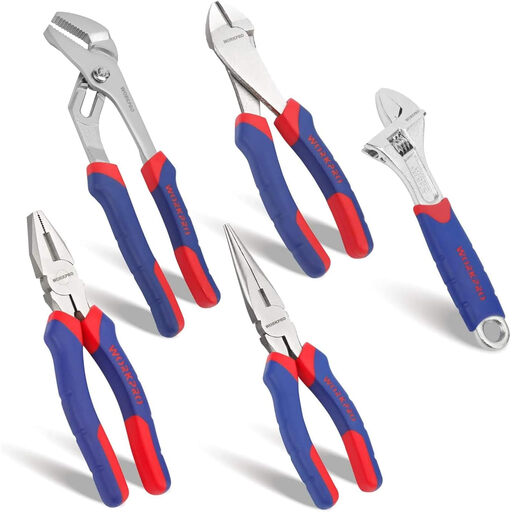
Why This Fits Their Persona: This tool set provides a solid foundation for anyone who regularly performs repair and maintenance tasks. It covers the most important applications, from plumbing to electrical work.
Instead of quantity, this set focuses on quality. It includes five essential, high-quality pliers (water pump pliers, combination pliers, diagonal cutters, needle-nose pliers, adjustable wrench), thus avoiding the trap of useless filler tools.
Made from heat-treated alloy steel with a nickel finish for durability and corrosion resistance. Ergonomic TPR+PP grips reduce hand fatigue.
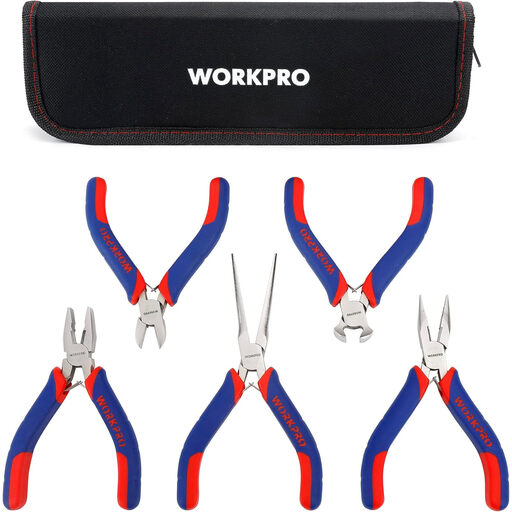
Why This Fits Their Persona: Perfect for delicate work in electronics, model making, or jewelry making. Where standard pliers are too clumsy, this set allows for precise gripping, bending, and cutting in the smallest of spaces.
These precision pliers are specifically designed for fine applications, bypassing the "one-size-fits-all" trap. The machined jaws and double-leaf spring mechanism are tailored to the ergonomic demands of detailed work.
A comprehensive 5-piece set made of carbon steel with a Ni-Fe coating for durability. It comes in a convenient nylon pouch for organized storage.
We have compiled a complete, up-to-date list of products that fully meet these strict selection criteria and German safety regulations.
Chrome Vanadium steel is an alloy known for its high hardness, wear resistance, and toughness. Compared to simple carbon steel, pliers made from Cr-V retain their sharpness longer, are more resistant to deformation under load, and offer better baseline protection against corrosion due to the alloy additives. This results in a significantly longer tool lifespan under professional use.
Proper care is simple but effective. Clean your pliers with a dry cloth after each use to remove dirt and moisture. Store the set in a dry place, ideally in a toolbox or bag. An occasional drop of oil on the joints will ensure they continue to function smoothly and provides additional protection against rust.
No. Only pliers explicitly marked as VDE-certified (Verband der Elektrotechnik, Elektronik und Informationstechnik) offer certified protection when working on live parts up to 1,000 volts AC. Standard plastic or TPR grips provide a good hold but do not guarantee electrical insulation. For work on electrical systems, you should exclusively use VDE-insulated electrician's tools.