
Lieferung heute & morgen

Qualitätsgarantie

Willkommens-Angebote freischalten: KOSTENLOSE Lieferung | Bis zu 80 % RABATT | Kostenlose 30-Tage-JoyPlus-Testphase
App herunterladen
The right pliers set can handle a wide range of jobs: gripping, bending, cutting, stripping wires and loosening pipe connections. However, pliers sets vary considerably in their materials, joints, handles and intended uses. A larger number of tools does not automatically mean a better choice.
Common buying mistakes tend to come down to three things:
Choose a set to suit the jobs you plan to tackle, rather than focusing only on the number of tools it contains.
Combination pliers combine gripping surfaces and cutting edges. They are suitable for holding, bending and cutting appropriate wires or small fasteners. Flat and rounded gripping areas make them more versatile. If you regularly carry out electrical work, check whether you also need specifically insulated pliers.
Long-nose pliers reach into narrow gaps and allow you to handle small components. They are suitable for precise positioning, bending and holding. However, their narrow jaws are not designed for heavy-duty tasks such as loosening seized pipes.
Diagonal cutters cut suitable cables, wire and soft fasteners. Check the stated cutting capacity before buying. Cutting hardened wire or bolts can damage the cutting edges if the tool is not designed for the job.
Water pump pliers have adjustable, serrated jaws for gripping round, flat or multi-sided workpieces. Depending on the design, they can be used for jobs such as working on pipe connections, nuts and fittings. Pipe wrenches are similarly designed for a strong grip, but can leave marks on delicate surfaces. When working on visible fittings, use a suitable protective layer.
For recurring jobs, wire strippers, crimping pliers, hose clamp pliers or oil filter pliers may be a better choice than a very large general-purpose set. Choose electrician’s pliers according to the conductor cross-section, insulation and intended function. For plumbing, jaw opening, the adjustment mechanism and jaw shape are key considerations. Automotive technicians working with hard-to-reach lines may benefit from long-reach or flexible designs.
Drop-forged or forged steel is used in many pliers to provide a durable basic construction. Details such as chrome vanadium steel, heat treatment and hardened cutting edges give you useful information about the build. However, they do not replace checking the tool’s permitted load.
The joint should move smoothly, without any sideways play. A joint that is too loose makes precise gripping harder; one that is stiff requires more effort. After use, wipe metal surfaces dry and lightly oil moving parts if needed.
Longer handles can provide more leverage for suitable tasks, but they need more room. Compact pliers are often more practical for electrical work or assembly in tight spaces. With water pump pliers, the maximum jaw opening also matters; some models, for example, open to 50 to 52 mm.
For cutting pliers, the tool must be suitable for both the material and its diameter. A stated capacity for steel wire does not apply to hardened screws or bolts. If you regularly work with cables, consider a dedicated wire stripper or crimping tool.
Non-slip PP and TPR handles can make tools easier to handle. They are not the same as tested electrical insulation. Before working on electrical installations, make sure the circuit has been properly isolated. Use tools that meet the relevant standards and are designed for the task.
Safety glasses are advisable when cutting, as wire ends can fly off. Do not continue using damaged pliers, loose joints or chipped cutting edges.
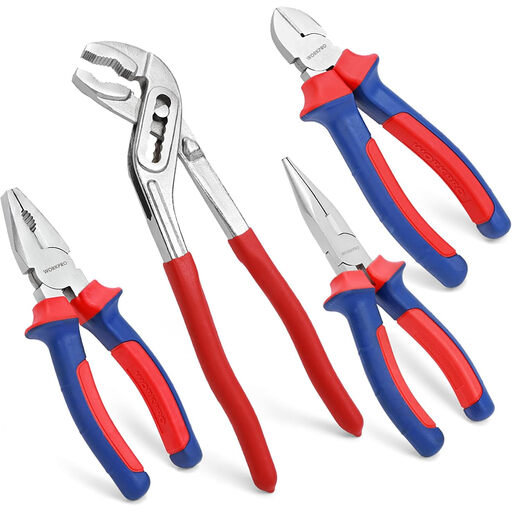
Why this product suits you: According to WORKPRO’s product details, the set includes combination pliers, long-nose pliers, diagonal cutters and water pump pliers for typical household, DIY and maintenance jobs.
The four clearly named types of pliers make it easier to choose the right shape for the job. The stated lengths of 160 mm and 244 mm also give you a clearer idea of their intended uses.
Heat-treated alloy steel, PP and TPR handles, and four different functions in one set.
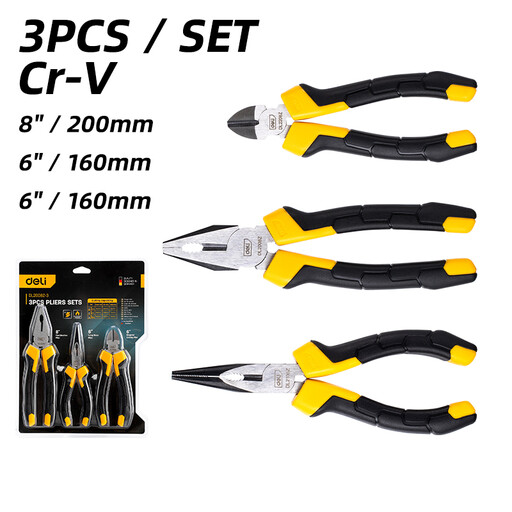
Why this product suits you: This three-piece set focuses on combination pliers, long-nose pliers and diagonal cutters. According to the product details, it can be stored in an insert compatible with L-BOXX cases.
The product description gives specific details about the materials, functions and storage, rather than simply highlighting a high tool count.
Chrome vanadium steel, hardened cutting edges and an organised insert for mobile technicians.
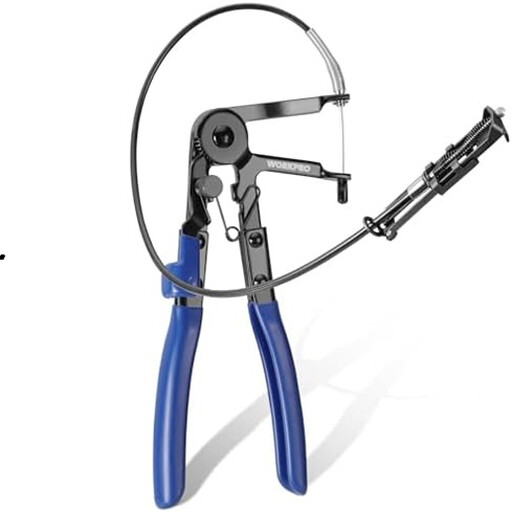
Why this product suits you: Designed for automotive technicians and mechanics working on spring hose clamps on fuel, oil or coolant hoses in hard-to-reach places.
The 67 cm flexible shaft and stated opening range of 10 to 50 mm clearly indicate the tool’s intended working range.
Ratchet locking, flexible reach and a PVC-coated handle for working on hose clamps.
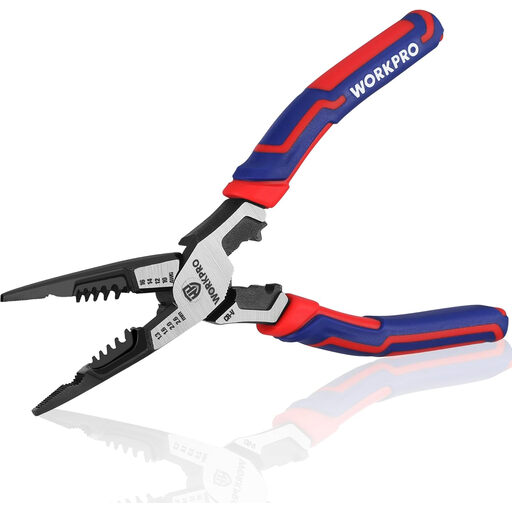
Why this product suits you: According to WORKPRO’s product details, these pliers combine gripping, wire stripping, crimping, cutting and screwdriving in one tool.
The wire-stripping range of 1.3 to 2.6 mm and maximum stated cutting capacity of 1.6 mm steel wire make it easier to judge the tool’s limits.
A 200 mm design, chrome vanadium steel and several built-in functions for assembly and wiring jobs.
We’ve put together a complete, regularly updated list of products that meet these strict selection criteria and fully comply with the safety regulations in force in the EU.
For general household jobs, a set with combination pliers, long-nose pliers, diagonal cutters and water pump pliers is often enough. Before buying, check the lengths, materials and cutting capacities. For specialist jobs such as crimping or wire stripping, it’s worth adding a dedicated tool.
Its lifespan depends on how heavily it is used, the materials it is made from, and how well it is maintained and stored. Keep pliers dry, clean them after contact with moisture and apply a little oil to the joint occasionally. Overloading them, striking them with a hammer or cutting unsuitable materials can cause premature damage to the cutting edges and joint.
Yes. When working on electrical installations, you need suitable tools that meet the relevant standards and are designed for the task. A plastic or TPR handle does not automatically mean the tool is electrically insulated. Never use standard combination pliers on live wires.