
Lieferung heute & morgen

Qualitätsgarantie

Willkommens-Angebote freischalten: KOSTENLOSE Lieferung | Bis zu 80 % RABATT | Kostenlose 30-Tage-JoyPlus-Testphase
App herunterladen
A pliers set can cover a wide range of repairs, but it won’t necessarily suit every job. Water pump pliers, combination pliers and circlip pliers differ significantly in their gripping surfaces, jaw opening and load capacity. If you focus only on the number of tools included or big promises about durability, you could end up paying for features you’ll rarely use.
For DIYers, tradespeople, plumbers, mechanics, electricians and car enthusiasts, three common buying mistakes are worth bearing in mind:
Before you buy, think about the jobs you regularly do. Water pump pliers, also known as pipe pliers, are suitable for gripping and turning pipes, nuts and fittings. However, their serrated jaws can damage delicate surfaces if you apply too much pressure.
Combination pliers have both gripping surfaces and cutting edges, making them suitable for general assembly, bending and cutting jobs. Long-nose pliers are more practical for reaching into narrow gaps, while side cutters are designed for cutting suitable wires and cables. Check that the stated cutting capacity is right for the material you’re working with.
There are also other types for specialist jobs:
For frequent use, heat-treated chrome vanadium steel or suitable carbon steel are useful material specifications to look for. Heat treatment can affect the hardness and load capacity of the jaws. A coating or black finish can help protect against corrosion, but it doesn’t replace cleaning and dry storage.
Also look for:
Plastic handles aren’t automatically electrically insulated. Ordinary combination pliers must not be used on live wires. For electrical work, follow the relevant safety requirements and check the tool’s markings.
Longer pliers can provide greater leverage, but they need enough room to move. Compact tools are often easier to control in tight engine bays or when working on small components. For many general jobs, water pump pliers measuring 180 to 250 mm are a practical choice; larger models can be useful for bigger fittings.
Always compare the specifications with the workpiece you need to handle:
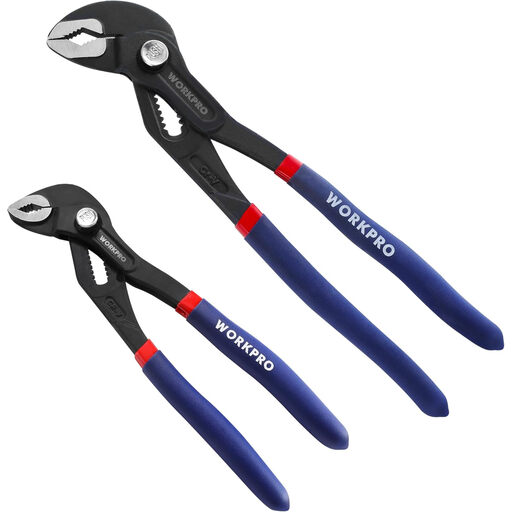
Why this product suits this user: Two sizes cover different jobs involving pipes, nuts and fittings, without the need for a large pliers set.
The stated sizes of 180 and 250 mm make it clearer what the pliers are suited to than a simple parts count would.
Chrome vanadium steel, push-button adjustment and maximum openings of 33 and 43 mm.
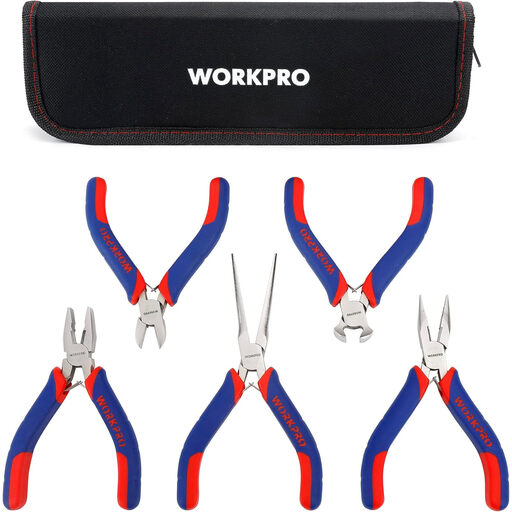
Why this product suits this user: A selection of compact pliers is on hand for electronics, model-making, jewellery work and fine assembly jobs.
The five functions are clearly listed: side cutters, combination pliers, end cutters, flat-nose pliers and long-nose pliers.
Compact lengths from 108 to 165 mm, rubber grips and a nylon storage pouch.
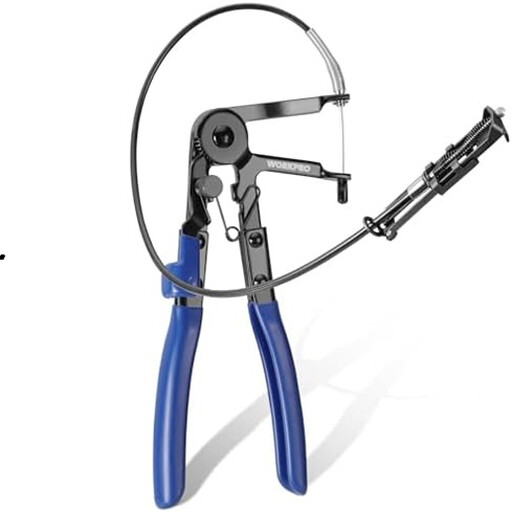
Why this product suits this user: Car enthusiasts and workshop owners can use these pliers to reach spring clamps on fuel, oil, coolant and heater hoses in tight spaces.
The 67 cm flexible shaft is designed for hard-to-reach spots, and the clamp opens from 10 to 50 mm.
Ratchet function to hold the clamp in place, an adjustable range of 10–50 mm and a non-slip PVC grip.
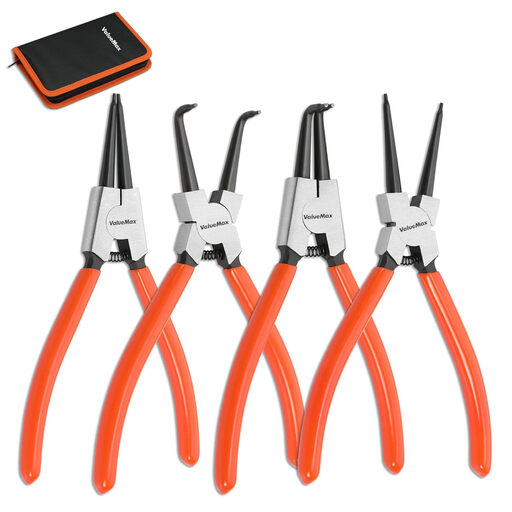
Why this product suits this user: This set is designed for anyone who regularly works with internal and external circlips, whether they’re fitted straight or at an angle.
Straight and 90° angled pliers for internal and external circlips mean you won’t need to make do with general-purpose pliers.
Four types, 1.6 mm tips, openings up to 33 and 36 mm, and a storage pouch.
We’ve put together a complete, regularly updated list of products that meet these strict selection criteria and fully comply with the safety regulations in force in the EU.
Even a carefully chosen pliers set needs regular care. Wipe the tools dry after use and remove any oil, dust or moisture. Apply a small amount of suitable oil to the joints as needed. Store the pliers somewhere dry, making sure the cutting edges and tips don’t knock against each other.
When cutting wire or nails, it’s a good idea to wear safety glasses and keep a steady stance. Don’t use pliers as a hammer, and don’t exceed the stated cutting or gripping capacity. Damaged handles, loose joints or chipped cutting edges are all signs that the tool should no longer be used.
For household and DIY jobs, a combination of combination pliers, water pump pliers and side cutters is usually a practical starting point. For electrical work, the pliers must be suitable for the specific job and must not be used on live wires.
Adjustable oil filter pliers with a suitable jaw opening are a good choice. According to the product specifications, the WORKPRO model covers a range of 60 to 102 mm. Check the diameter of your existing filter before buying.
There’s no reliable way to give a fixed lifespan. It depends on the materials, load, corrosion, frequency of use and whether the tools are used correctly. Dry storage, cleaning and using the pliers within their stated capacity can help keep them in good condition.