
Lieferung heute & morgen

Qualitätsgarantie

Willkommens-Angebote freischalten: KOSTENLOSE Lieferung | Bis zu 80 % RABATT | Kostenlose 30-Tage-JoyPlus-Testphase
App herunterladen
A pliers set may seem straightforward at first: a few different handle shapes, a case or insert, and what looks like a good overall price. In practice, though, choosing the right pliers makes all the difference to getting a secure grip, making clean cuts and minimising damage to the workpiece. This matters to DIYers as much as it does to automotive mechanics, maintenance technicians, plumbers and heating engineers.
A set with lots of tools is not automatically versatile. It often lacks the very pliers you need for the job. A general-purpose set with combination pliers, long-nose pliers, side cutters and water pump pliers covers everyday tasks. But for spring clamps, flexible fuel lines or coolant hoses, you’ll need specialist hose clamp pliers.
Descriptions such as “for various sizes” aren’t much help without specific opening ranges. Pipe pliers that are too small won’t grip securely, while an oversized tool can be difficult to handle in tight spaces. Before buying, compare the jaw opening, pliers length and adjustment range with the workpieces you typically handle.
The word “steel” alone tells you little about the actual quality of the tool. More useful details include chrome vanadium steel, heat treatment, forging method and surface protection. With plastic pliers, you should also check whether they’re suitable for flexible hoses, as well as the jaw design and temperature resistance. For example, plastic hose clamp pliers must not be used on hard, reinforced or high-pressure hoses if the manufacturer rules this out.
Combination pliers are suitable for general gripping and holding tasks. Long-nose pliers make precision work in tight spaces easier. Side cutters are designed for cables and wires, but you’ll need to check the stated cutting capacity and suitability for the material in question.
A set of water pump pliers is designed for workpieces in various shapes, including round, flat, square and hexagonal components. Its serrated jaws can damage surfaces, so don’t use it on visible fittings or delicate nuts without suitable protection. Pipe pliers provide a firm grip for pipe and fitting work, but aren’t suitable for every surface either.
When repairing a vehicle, the maximum jaw opening isn’t the only thing that matters. Flexible hose clamp pliers with a long Bowden cable can operate spring clamps in hard-to-reach areas. This is useful around the engine bay, radiator and oil lines. Straight or angled hose pliers, on the other hand, are suited to specific gripping angles directly at the hose.
When choosing hose pliers for your car, look out for:
Heat-treated chrome vanadium steel is listed as the material for several WORKPRO pliers. It’s designed for mechanical gripping and adjustment work, and some products have a corrosion-resistant finish. Non-slip plastic handles can make tools easier to use, but they’re no substitute for suitable protective gloves or safety glasses.
When cutting, always check that the pliers are designed for the type of wire or cable you’re working with. Pliers without explicit approval for work on live electrical cables must not be used on them. Before each use, check the jaws, joint, handles and locking mechanism for damage.
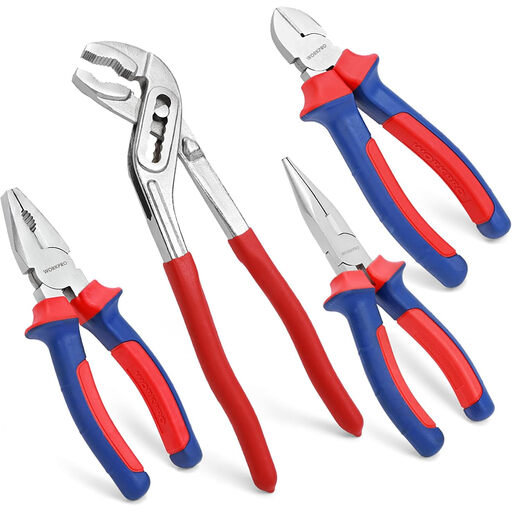
Why this product suits this profile: This set combines combination pliers, long-nose pliers, side cutters and water pump pliers for everyday household repairs, DIY projects and basic plumbing jobs.
The four clearly named types of pliers make it easier to choose the right tool and help you avoid a set made up of similar gripping tools.
Heat-treated alloy steel, PP and TPR handles, and four different tool functions.
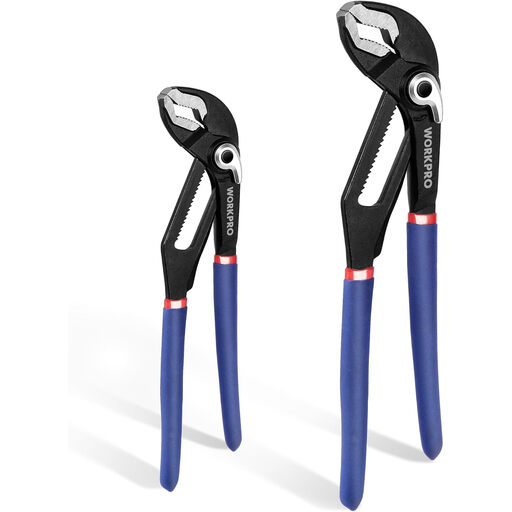
Why this product suits this profile: Two sizes, measuring 200 and 250 mm in length, are designed for regular work on pipes, nuts and fittings.
The product details specify the lengths, jaw shape and maximum opening of up to 52 mm, rather than making vague claims about size.
Heat-treated chrome vanadium steel and adjustable, serrated jaws for round, flat, square and hexagonal shapes.
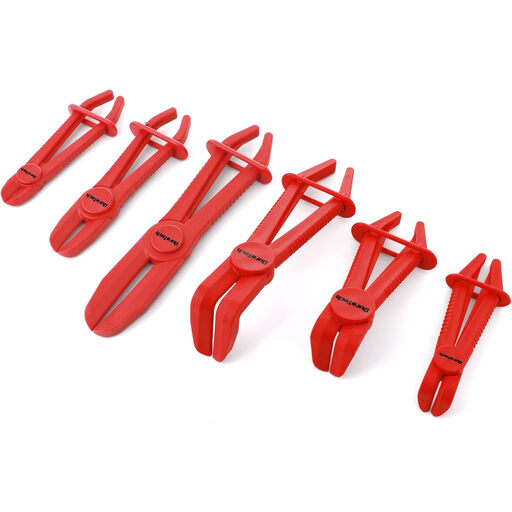
Why this product suits this profile: Six straight and 90° angled hose clamp pliers cover different opening ranges for flexible brake, fuel, gas and coolant hoses.
The six sizes are listed with specific ranges from 0 to 64 mm. The manufacturer excludes hard, reinforced and high-pressure hoses.
PA6 nylon construction, non-conductive material, rounded jaw edges and a safety lock to hold the pliers in position.
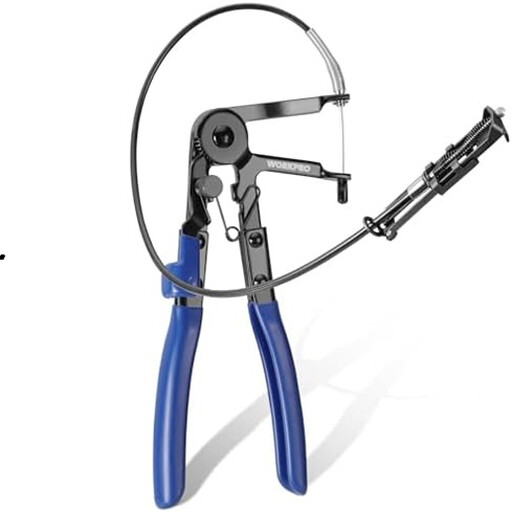
Why this product suits this profile: The 67 cm flexible cable is designed for spring clamps and hoses in vehicles where direct access is restricted.
The reach and opening range of 10 to 50 mm are clearly specified. This makes it easy to check whether the tool is suitable for your existing clamp before you buy.
Ratchet mechanism to hold the clamp in position, heat-treated carbon steel and a PVC-coated handle.
For more solutions for pipework, hoses and installation jobs, take a look at our range of water pipe press tools.
We’ve put together a complete, regularly updated list of products that meet these strict selection criteria and the safety regulations applicable in the EU.
For general tasks, combination pliers, long-nose pliers, side cutters and water pump pliers make a practical starting point. If you regularly work on vehicles, you’ll also need automotive hose pliers or flexible hose clamp pliers. For plumbing jobs, a second pair of water pump pliers with a wider jaw opening may be useful.
Lifespan depends on how heavily the tools are used, their material, storage and care. Clean your pliers after use, store them somewhere dry and apply a little oil to the joint when needed. Damaged cutting edges, loose joints or deformed jaws are all reasons to stop using a tool.
The price depends on the number of pieces, steel quality, adjustment mechanism and specialisation. A four-piece set can be more cost-effective for general tasks than buying several tools individually. For automotive or hose repairs, however, one suitable specialist tool is often a better choice than a large set of tools you won’t use.