
Lieferung heute & morgen

Qualitätsgarantie

Willkommens-Angebote freischalten: KOSTENLOSE Lieferung | Bis zu 80 % RABATT | Kostenlose 30-Tage-JoyPlus-Testphase
App herunterladen
A pliers set can cover a wide range of repair tasks—provided the tools included are suited to the jobs you plan to tackle. However, buyers often focus solely on the number of pieces or a low price. This can result in essential pliers being missing, cutting edges becoming damaged quickly or handles failing to provide a secure grip when greater force is required.
This buying guide explains what DIY enthusiasts, electricians, installers, mechanics and automotive repairers should look for when choosing a pliers set. The product selection is based on objectively stated specifications such as plier type, material, dimensions, adjustment range and intended application.
A set with a large number of tools can be impractical if several pliers serve essentially the same purpose. For general repairs, combination pliers, diagonal cutters, long-nose pliers and water-pump pliers are often more useful than several specialist pliers that are rarely needed.
For specific tasks, however, you need exactly the right tool: circlip pliers are designed for internal and external retaining rings, while hose-clamp pliers are specifically made for spring clamps. Standard combination pliers can only handle these jobs to a limited extent.
A plastic or rubber handle is not automatically suitable for working on live wires. Many DIY pliers feature only non-slip handle sleeves. The product specifications should therefore explicitly state that the tool has suitable electrical insulation.
Electrical work must always comply with the requirements applicable to the relevant working environment. Before working on any wiring, the circuit must be properly disconnected and secured against being switched on again. Pliers without clearly stated insulation must not be used on live circuits.
Mini and precision pliers are intended for small components, electronics, jewellery work or confined spaces. They are not a substitute for robust pliers when working on pipe connections, seized nuts or thicker wires. Conversely, a long-handled pair of pliers may offer insufficient control for delicate work.
Pay close attention to length, jaw design and the cutting or opening capacity specified by the supplier. Longer pliers can provide greater leverage, but they also require sufficient working space.
First, match the planned task to the appropriate tool type:
Many models specify carbon steel, alloy steel, chrome vanadium steel or heat-treated steels. These details describe the material base, but they do not replace a specific load limit.
Also important are:
The WORKPRO W001305 Mini Series, for example, is specified as using carbon steel with a nickel-iron coating and jaws hardened to HRC 55–65. According to the product details, the set includes five mini pliers and a 600D nylon storage pouch. Nevertheless, this type of precision set is not intended for thick or particularly hard materials.
Compare the length of the pliers with the available working space. According to the product specifications, the WORKPRO oil-filter pliers are 30.48 cm long and offer three adjustment positions for an opening range of 60 to 102 mm. This can be relevant for vehicle maintenance and work on filters or fittings.
With water-pump pliers, the maximum jaw opening is usually the decisive factor. The 305 mm WORKPRO water-pump pliers are specified with a maximum opening of 50 mm. Before purchasing, check that this size is compatible with the pipes and fittings involved in your application.
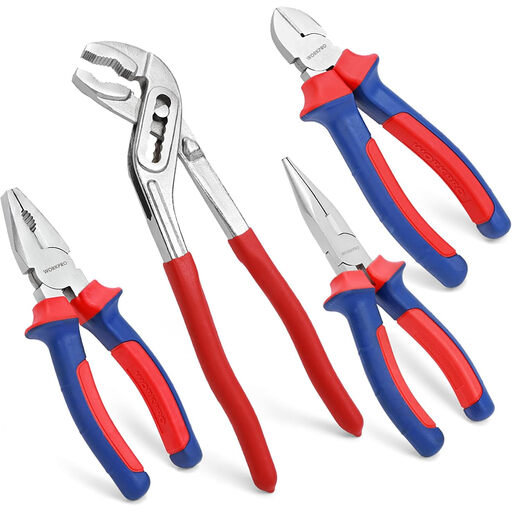
Why it fits: This set covers typical household jobs involving cables, small fasteners and pipe connections. It includes combination pliers, long-nose pliers, diagonal cutters and water-pump pliers.
The four plier types have clearly distinct functions. According to the product details, the tools are made from heat-treated alloy steel and feature textured handles.
Four tools, lengths ranging from 160 to 244 mm and PP/TPR handles for a variety of gripping and cutting tasks.
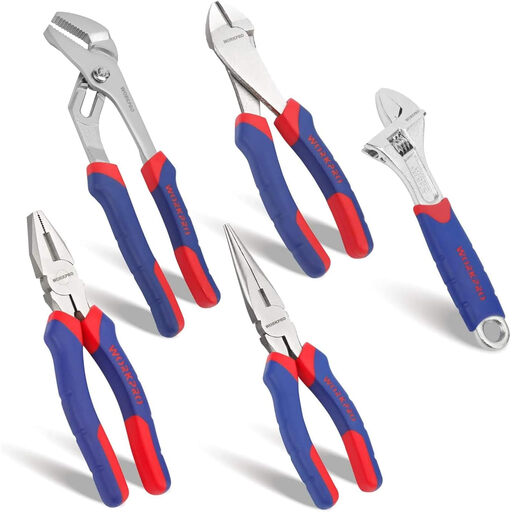
Why it fits: Designed for workshop owners and tradespeople who need several standard functions in one set. The set also includes an adjustable wrench.
The product configuration identifies each included plier type and its length: water-pump pliers 250 mm, combination pliers 200 mm, diagonal cutters 190 mm and long-nose pliers 200 mm.
Heat-treated alloy steel, nickel coating and soft TPR and PP handles, according to the product specifications.
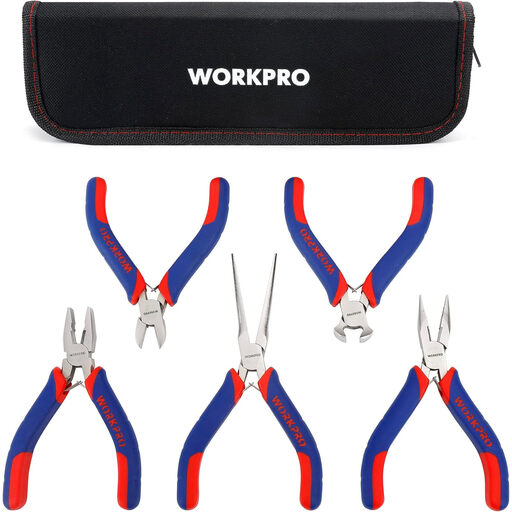
Why it fits: This precision pliers set is aimed at model makers, electronics hobbyists and users who need to grip, bend or cut small components in confined spaces.
The compact design is clearly presented as an application feature. The set is not intended for oversized workpieces or hard bolts.
Five plier types, a storage pouch and machined jaws with a hardness rating of HRC 55–65, according to the product specifications.
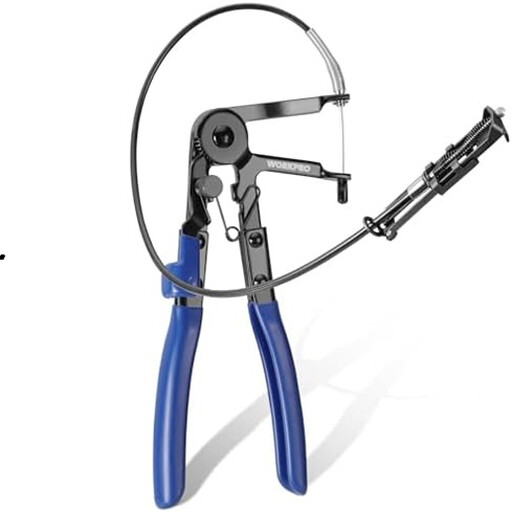
Why it fits: Designed for automotive repairers who need to reach spring clamps in difficult-to-access areas. The flexible design is intended for work in engine compartments.
Rather than repurposing standard pliers, this specialist tool offers a 67 cm flexible shaft, a locking function and a specified opening range of 10 to 50 mm.
Heat-treated carbon steel, PVC-coated handles and one-handed operation, according to the product description.
The category includes additional leverage tools for assembly, repairs, vehicle maintenance and general DIY work. Before purchasing, always check the plier type, dimensions and application limits.
For vehicle maintenance, oil-filter pliers with the right adjustment range may be more practical than a complete pliers set. According to the product specifications, the WORKPRO oil-filter pliers feature a serrated gripping surface and are 30.48 cm long. However, excessive force should not be applied when dealing with heavily corroded filters.
For mechanical repairs involving retaining rings, circlip pliers with straight and angled tips are a practical choice. According to the product description, the ValueMax set includes four versions for internal and external rings, as well as a storage pouch. The specified tip diameter is 1.6 mm.
For general jobs, combination pliers, diagonal cutters, long-nose pliers and water-pump pliers provide a practical basic selection. An additional pair of wire strippers can be useful for electrical work. The key consideration is that the cutting capacity and jaw opening match the task at hand.
Specialist pliers are worthwhile when a particular task occurs regularly or access is especially difficult. Examples include oil-filter pliers, hose-clamp pliers and circlip pliers. They eliminate the need to use standard pliers incorrectly or apply excessive force.
There is no universal service-life figure. Longevity depends on the material, workload, storage conditions and whether the specified capacity limits are respected. Regular cleaning, light lubrication of the joints and avoiding excessive force can extend the practical service life.