
Lieferung heute & morgen

Qualitätsgarantie

Willkommens-Angebote freischalten: KOSTENLOSE Lieferung | Bis zu 80 % RABATT | Kostenlose 30-Tage-JoyPlus-Testphase
App herunterladen
A pliers set can cover a wide range of repair tasks – provided the tools included are suitable for the jobs you have planned. Plumbing work requires a different type of pliers than handling cables, nails or oil filters. A set with lots of pieces is therefore not automatically more useful than a carefully selected range.
Some sets contain several pliers of similar sizes while omitting important functions. If you want to grip pipes, cut cables and reach components in confined spaces, look for different types of pliers: water pump pliers, combination pliers, long-nose pliers and diagonal cutters each perform different tasks.
Descriptions such as “robust” or “Heavy Duty” do not tell you much on their own. Specific details about chrome vanadium steel, heat treatment, dimensions, jaw opening and permitted cutting capacity are far more informative. Without this information, it is difficult to assess whether the tools are suitable for regular use.
Pipe pliers or water pump pliers grip workpieces with serrated jaws. On smooth, delicate surfaces, this can leave marks. A strap wrench, on the other hand, uses a strap and distributes force differently. An oil filter wrench or oil filter pliers is also designed for a particular filter diameter and cannot replace a universal pair of pliers.
For frequent use, chrome vanadium steel is a meaningful material specification. Depending on the design, heat-treated steel may offer greater hardness and load capacity. The jaws should close evenly and move without noticeable play around the joint.
A black oxide coating or other surface treatment can help protect against corrosion. However, it does not replace proper storage: tools should be kept dry, and moving joints should occasionally be lightly oiled.
Length affects leverage and accessibility. Shorter pliers are easier to handle, while longer models can provide more leverage for loosening seized connections. You should also check:
A wide jaw opening is not automatically an advantage if the jaws cannot establish secure contact with small nuts.
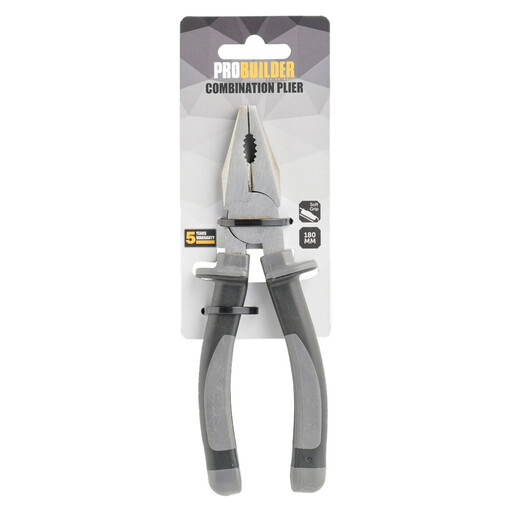
Why this product suits this profile: The 180 mm combination pliers cover typical household, assembly and DIY tasks without requiring several specialist tools.
The flat and round gripping zones, together with the integrated cutters, are clearly described. This makes the range of functions easier to assess than with vague advertising claims.
180 mm length, steel construction and PP/TPR handles; suitable for gripping, bending and cutting appropriate materials.
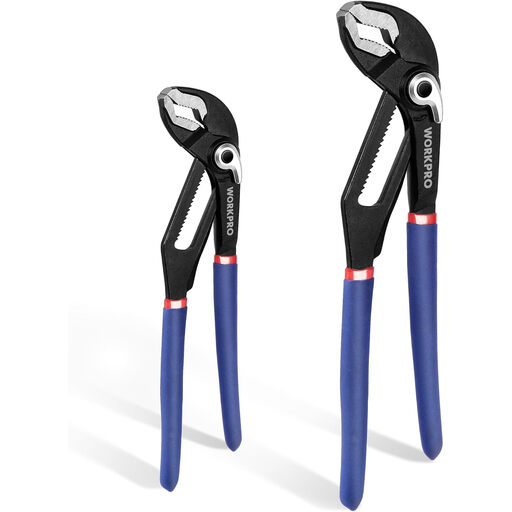
Why this product suits this profile: Two lengths and an adjustable jaw design provide options for different pipe, fitting and assembly jobs.
The maximum opening of up to 52 mm and the specific chrome vanadium steel are stated. This makes it easier to compare the tool with the dimensions of your own workpieces.
Two sizes, serrated jaws and quick adjustment; designed for round, flat, square and hexagonal shapes.
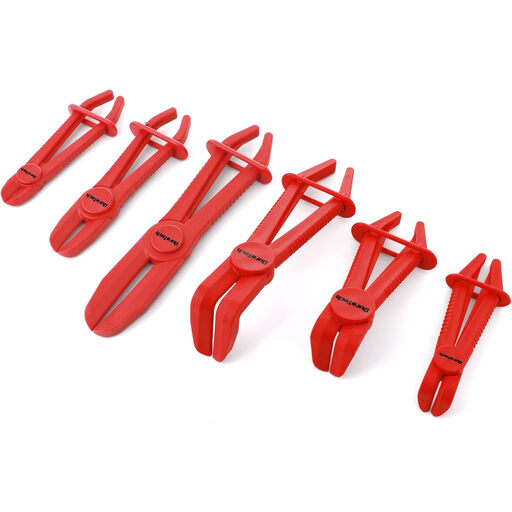
Why this product suits this profile: This set is aimed at mechanics, maintenance technicians and installers who regularly clamp or secure flexible hoses.
The six versions with straight and 90° angled jaws cover defined clamping areas. According to the product description, they are not intended for rigid, reinforced or high-pressure lines.
PA6 construction, non-conductive material, locking bar and sizes from 0–64 mm depending on the version.
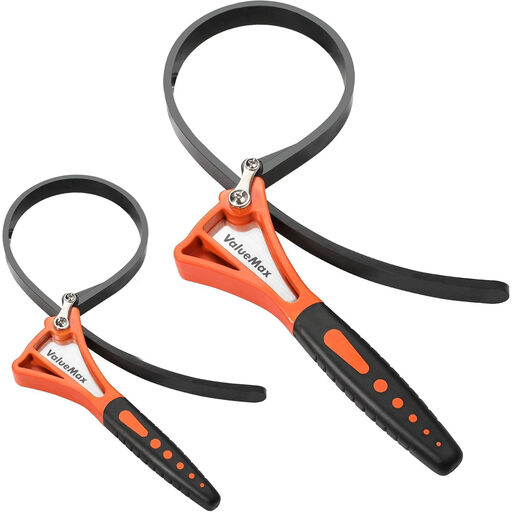
Why this product suits this profile: Two strap wrenches are suitable for oil filters, smooth fittings, showerheads or containers where serrated jaws could damage the surface.
The strap lengths, application diameters and stated torque limits are specified clearly. Check the strap for wear before use.
Two sizes, rubber straps for surface-friendly gripping and stated torque values of 90 and 180 Nm respectively.
We have put together a complete, regularly updated list of products that fully meet these strict selection criteria and the safety regulations applicable in the EU.
Only use pliers for the materials and sizes they are designed for. Combination pliers are not a substitute for a spanner, and water pump pliers should not be used to cut hardened wire. When cutting, safety goggles and suitable workwear protect you from flying wire ends.
Plastic handles are not automatically electrically insulated. Work on live cables should be carried out by qualified professionals using suitable, clearly marked tools. After use, wipe pliers dry, lightly oil the joints and check the cutters for nicks or damage.
For general repairs, combination pliers, long-nose pliers, diagonal cutters and water pump pliers are a practical foundation. For automotive work, oil filter pliers, an oil filter wrench or hose clamp pliers may also be useful. For plumbing work, the jaw opening should match the size of the pipe and fitting.
Service life depends on the material, load, maintenance and storage conditions. Rust, damaged joints and chipped cutters reduce how long the tools remain usable. Do not load tools beyond their stated capacity or misuse them as hammers or levers.
A strap wrench is a suitable option for smooth or delicate round surfaces such as oil filters, showerheads or painted fittings. The strap width and permitted torque range must match the workpiece. For heavily seized, angular or dirty components, a serrated pipe wrench or water pump pliers may be more suitable – although there is a greater risk of leaving pressure marks.