
Lieferung heute & morgen

Qualitätsgarantie

Willkommens-Angebote freischalten: KOSTENLOSE Lieferung | Bis zu 80 % RABATT | Kostenlose 30-Tage-JoyPlus-Testphase
App herunterladen
A pleated blind without drilling is particularly useful for rented homes, frequent moves and windows whose frames must not be damaged. However, not every no-drill blind will fit every window. The key factors are frame thickness, window shape, the level of light transmission you want and the actual width of the fabric.
If you focus only on colour or price, you risk an unstable fit, gaps that let light in at the sides or a blind that gets in the way of the window handle. The following points will help you choose a suitable roller blind without drilling for living rooms, bedrooms, kitchens and bathrooms, as well as balcony and patio doors.
With no-drill blinds, the product width may refer to the entire assembly, including the brackets. This means the fabric itself may be narrower. For example, according to the product description, the fabric on the WOLTU blackout blind is around 4 cm narrower than the stated overall width.
Before you buy, check:
A light-filtering pleated blind softens daylight and reduces visibility from outside, but it won’t make a room completely dark. A blackout pleated blind, on the other hand, usually has opaque fabric or a coated backing. However, light can still get through gaps between the fabric and the frame.
Opaque fabrics are a good choice for bedrooms and children’s rooms. In a living room, home office or bathroom, a light-filtering privacy pleated blind may be more comfortable if you want to keep the room bright.
A pleated blind with brackets needs a suitable window rebate. The requirements vary by model. Some WOLTU pleated blinds are designed for frame thicknesses of around 10 to 23 mm, while other versions need 16 to 22 mm or 1 to 10 mm.
Some fitting methods are also unsuitable for:
Measure the width and height at several points. For a blind fitted inside the recess, use the narrowest width you measure, unless the manufacturer’s instructions say otherwise. If fitting the blind in front of the glass, an overlap at the sides can help reduce the amount of light coming through the edges.
Follow the measuring instructions for your chosen model. Some require the ordered width to be around 3 to 4 cm wider than the glass. Others use the width of the window frame as their reference. A made-to-measure pleated blind is an option if standard sizes aren’t suitable; with ready-made models, it’s especially important to compare measurements carefully.
Polyester is common in many indoor blinds and can be cleaned with a soft cloth. In rooms with high humidity, check the product’s moisture-resistance information. For households with children and pets, cordless models or blinds with properly secured operating chains are preferable. Cords and chains must not hang within easy reach; always follow the manufacturer’s fitting and safety instructions.
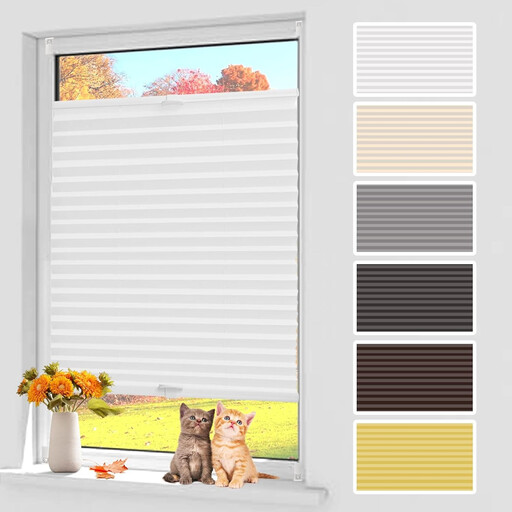
Why this product suits this profile: Its compact size and bracket or adhesive fitting make it a good choice for smaller standard windows in rented homes or home offices.
The 65 × 100 cm measurements are clearly stated. Even so, check before buying that the brackets or adhesive surface are suitable for your frame.
Polyester fabric, white finish, privacy and light filtering, according to the product description.

Why this product suits this profile: Its honeycomb structure and opaque polyester fabric are designed for bedrooms, offices and areas where you need greater control over light and privacy.
The specified frame thickness is 10 to 23 mm, so you can check whether the brackets will fit before ordering.
Measures 50 × 130 cm, metal frame, top and bottom operating handles, and wipe-clean fabric, according to the product description.
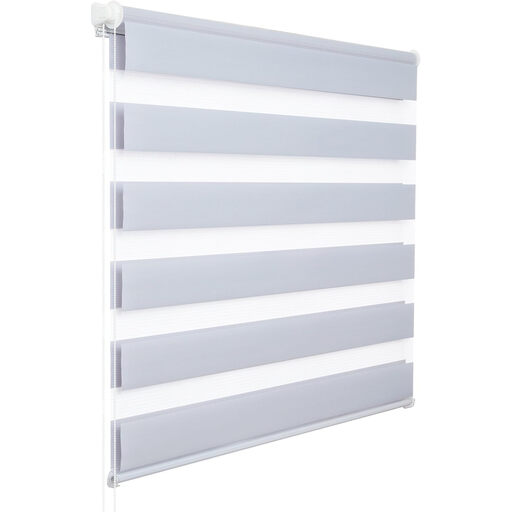
Why this product suits this profile: Alternating transparent and opaque fabric panels let you adjust daylight and privacy in stages, making it suitable for a living room, bedroom or office.
The suitable frame thickness of 1 to 10 mm is clearly stated. According to the description, this model is not designed for wooden, sliding or roof windows, or certain fixed windows.
100% polyester, no-drill bracket fitting, operating chain that can be positioned on the left or right, and adjustable light control, according to the product description.

Why this product suits this profile: It’s operated using a bottom grip rail, so there’s no loose operating chain. This could make it a good option for households with children or pets.
The product description states both the frame thickness of 16 to 22 mm and that the fabric is narrower than the overall width.
Cordless grip operation, bracket or screw fitting, polyester fabric and a wipe-clean surface, according to the product description.
We’ve put together a complete, regularly updated list of products that meet these strict selection criteria and fully comply with the safety regulations in force in the EU.
A pleated blind for windows and doors should be fitted especially securely on moving balcony or patio doors. If the door is opened and closed frequently, it’s also worth choosing a model that doesn’t protrude beyond the frame.
How securely it stays in place depends on the frame shape, weight, fitting surface and how well it’s installed. Brackets must suit the frame thickness. Adhesive fittings need a smooth, clean surface. If the blind feels loose, don’t continue using it; reposition it or secure it using a different method.
Yes, opaque and coated versions are available. A blackout pleated blind significantly reduces the amount of light coming in, but gaps at the sides may still let some light through. For minimal residual light, it’s important to choose the right measurements and ensure the blind covers enough of the glass.
There are no ongoing energy costs during normal use, as manual models don’t need electricity. Possible additional costs include replacement parts, new brackets or a replacement blind if the fabric is damaged. Regular cleaning with a soft cloth can make upkeep easier; avoid harsh cleaning products.