For a single plum cake, a hand mixer may be enough if your ingredients are already prepared and you don’t need both hands free while mixing: the Dr. Oetker Germany recipe referenced here uses beaters. A stand mixer is particularly useful if you want to get on with other tasks while adding ingredients gradually, or if you regularly make larger quantities. Choose based on the right mixing attachment, the permitted batter quantity and the space available on your worktop. For a specific mains-powered appliance, also check that it carries the required CE marking.
Which option is right for you?
Bakers who want their hands free
If you add butter, sugar, eggs and flour one after another, and want to prepare other things while mixing, look for the right mixing attachment and easy-to-control speed settings. The Dr. Oetker Germany recipe describes briefly mixing in the flour and baking powder at the end.
Bakers with limited kitchen space
For the occasional cake, choose an appliance that fits your worktop and storage space. Also check the cake batter quantity specified for the particular model. For example, Kenwood gives the Go KZM35.000GY a 4-l bowl and a maximum cake batter capacity of 1.8 kg.
Bakers making larger quantities
If you regularly make larger batches, compare your recipe quantity with the model’s stated maximum batter capacity. Bosch gives the MUMS6ZS13D a maximum processing capacity of 3.5 kg of dough; this figure applies to this model.
What to look for when choosing
Hand mixer
A good fit if: you occasionally bake a single cake and don’t need both hands free while mixing.
The trade-off: You hold the appliance yourself, and it doesn’t come with a fixed mixing bowl.
Compact stand mixer
A good fit if: you often mix small to medium quantities and have limited worktop or storage space.
The trade-off: The batter quantity specified for the model limits the size of the cake batch you can make.
Larger stand mixer
A good fit if: you regularly mix larger quantities and keep within the manufacturer’s stated batter capacity.
The trade-off: Bosch gives the MUMS6ZS13D a 5.5 l bowl and dimensions of 330 × 320 × 380 mm. Check that it will fit in the space available on your worktop.
If your ingredients are already prepared, the right attachment for cake batter matters more than extra features. Before you buy, check whether beaters or a flat beater are included, and how much batter the specific model is rated to handle.
| What matters |
What to check before buying |
Who will find it most important |
| Mixing attachments and speed settings |
Check whether beaters or a flat beater are included, and whether you can adjust the speed to suit each recipe step. |
If I’m adding ingredients gradually, I want the right attachment and a speed setting that’s easy to control. Around 31% of consumers say controlled mixing is their main concern. |
| Worktop space |
Check the appliance dimensions and allow room to raise the mixing arm. Also bear in mind the batter capacity. |
With limited worktop or storage space, I want an appliance that fits in my kitchen without losing sight of the recipe quantity. Around 25% of consumers put space requirements first. |
| Cake batter capacity |
Compare the weight of your batter with the model-specific cake batter capacity, not just the bowl volume. |
If I make larger cakes, I need a suitable batter capacity, not just a large bowl. Around 19% of consumers prioritise the quantity they can process. |
| Cleaning |
Check the cleaning instructions for the specific bowl and attachments you plan to use. |
After baking, I want to be able to clean the parts I’ve used as easily as possible. Cleaning is the main concern for around 13% of consumers. |
| Features you need |
Compare what’s included and consider whether you’ll use a scale or extra attachments in future. |
If the ingredients are already weighed out, I mainly want a suitable mixing attachment rather than unnecessary features. Around 12% of consumers focus first on the features that matter to them. |
Common buying mistakes
-
Choosing by wattage or bowl volume alone
Bowl volume alone doesn’t tell you how much cake batter a particular appliance can handle. Manufacturers specify separate capacity limits for each model.
Compare the weight of your recipe with the stated cake batter capacity, and measure the available worktop space before you buy.
-
Prioritising a scale when your ingredients are already weighed out
For the mixing step described, an integrated scale doesn’t address the main task of mixing in the ingredients.
Choose a scale if you plan to weigh ingredients directly in the appliance in future. Otherwise, check the mixing attachments and speed control first.
-
Assuming a good result with cake batter means it will handle heavy dough
In its tests of the stand mixers, IMTEST distinguishes between mixing results and the limitations or extra work involved with heavy dough. A good result with cake batter therefore doesn’t automatically mean an appliance is suitable for bread or yeasted dough.
If you also want to make these types of dough, check the manufacturer’s limits and relevant test results separately.
-
Confusing CE marking with an independent safety mark
Appliances covered by the relevant harmonised EU legislation must carry the required CE marking. The German Federal Institute for Occupational Safety and Health (BAuA) points out that CE is not an independent safety test mark; the GS mark indicates a voluntary safety test.
Check the marking on the specific appliance, and don’t treat either a CE mark or a test result as a substitute for checking the product itself.
Brands to consider
Bosch
The MUM range includes models with different bowl sizes and features. The manufacturer’s specifications for the models mentioned here provide useful points of comparison.
- Bosch gives the MUMS2EW001 a 3.8 l bowl and a capacity of up to 2.4 kg of cake batter.
- According to Bosch, the larger MUMS6ZS13D has a 5.5-l bowl and an integrated scale. This feature may not be necessary if your ingredients are already weighed out.
Kenwood
The Go KZM35.000GY is a compact model option. IMTEST reported on the tested Smart Touch KHC40.080BK’s performance.
- Kenwood gives the Go KZM35.000GY a 4 l bowl and a maximum cake batter capacity of 1.8 kg.
- IMTEST reported that the tested Smart Touch model needed extra work with heavy bread dough. This result doesn’t automatically apply to other Kenwood models.
KitchenAid
KitchenAid’s German product page for the Artisan 5KSM125EER lists a 4.7-l bowl and several mixing attachments for this model.
- The Artisan 5KSM125EER comes with a whisk, dough hook and flat beater.
- The listed attachments don’t prove that the model performs better when making plum cake, and the specification doesn’t automatically apply to every Artisan variant.
Severin
According to Severin’s German product page, the KM 3898 combines mixing attachments with a scale and timer.
- Severin gives the KM 3898 a 5.5-l bowl and a capacity of up to 3 kg of cake batter.
- If your ingredients are already weighed out, the scale is an optional extra for this task. These specifications apply to the KM 3898.
Silvercrest
The SKM 600 F1 is specified for mixing, whisking and kneading, and comes with a 5-l bowl.
- IMTEST reported good mixing results for the model it tested.
- The test report also notes limitations with heavy dough. Bowl volume alone doesn’t establish the permitted cake batter capacity.
Joybuy products
This selection includes hand mixers as a possible alternative for single cakes, as well as compact and larger stand mixers for cake batter. For a specific mains-powered appliance covered by the relevant harmonised EU legislation, check that it carries the required CE marking; this is not an independent safety test mark.
 No image available
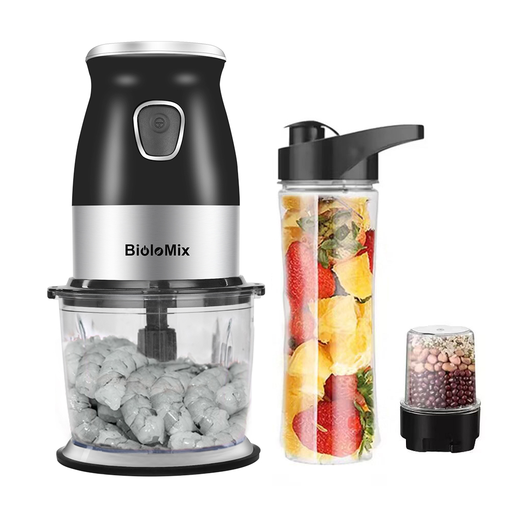
BioloMix BM816 stand mixer
For cake batter with adjustable speed control; the product description lists a flat beater and stainless steel bowl.
500 W; the product name specifies stainless steel parts and one-button operation.
View at Joybuy
 No image available
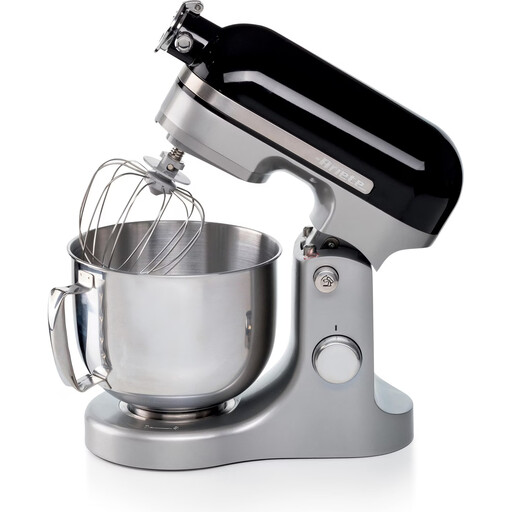
Ariete 1589 Moderna
The product name lists a flat beater and 11 speed settings for gradually mixing in ingredients.
5.5-l stainless steel bowl; also specified with a dough capacity of 1.4 kg and a splash guard.
View at Joybuy
 No image available
Kenwood Go KZM35000GY
A compact stand mixer for smaller cake batches; this model is specified for a maximum cake batter quantity of 1.8 kg.
4-l bowl and six speed settings. Dimensions: 33.5 × 18 × 30 cm.
View at Joybuy
 No image available
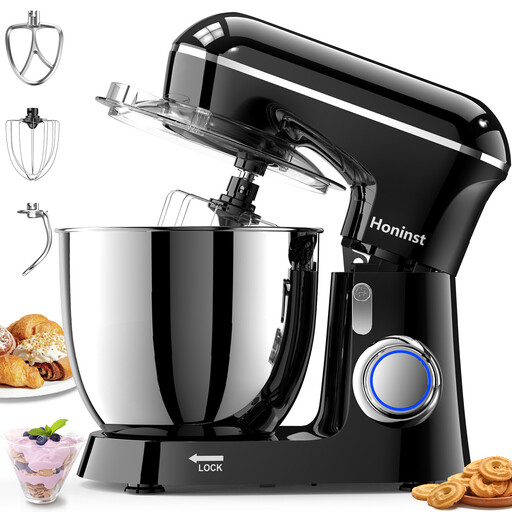
Honinst tilt-head stand mixer
The description lists a beater and speed control for gradually mixing ingredients.
6.5-qt bowl and 10 speed settings; includes a beater, whisk and dough hook.
View at Joybuy
 No image available
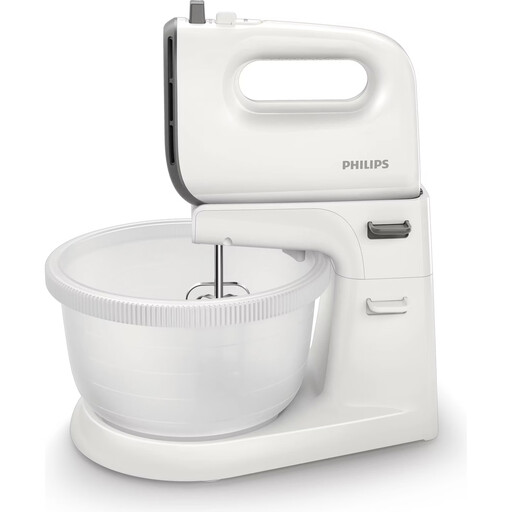
Philips 5000 Series HR3745/00
A possible hand mixer alternative for single cakes, if you’re happy to hold the appliance while mixing.
The description lists beaters, variable speed and a rotating 3-l bowl.
View at Joybuy
Frequently asked questions
Which attachment do I need for plum cake batter?
The Dr. Oetker Germany recipe referenced here calls for beaters. If you’re using a stand mixer, check whether the specific model comes with a suitable whisk or flat beater. A dough hook isn’t automatically the right choice just because the recipe uses the word ‘dough’.
Do I need to add all the prepared ingredients to the bowl at once?
No. The Dr. Oetker Germany recipe gives an order for adding the ingredients and says to briefly mix in the flour and baking powder at the end. If you’re following a different recipe, use its instructions instead.
What should I check before assembling and cleaning the appliance?
Check the instructions for your specific model to see how to fit the bowl and attachments, and which parts are dishwasher-safe. Kenwood’s instructions for adjusting the attachments on its model say to do this only when the appliance is switched off and unplugged. Don’t assume the same instructions apply to other machines.
Who should I contact about a fault after buying in Germany?
The seller is generally responsible for your statutory rights, as explained by the Verbraucherzentrale (German consumer advice centre). This is separate from any additional manufacturer’s warranty.
Does a mains-powered stand mixer in Germany need CE or GS marking?
Appliances covered by the relevant harmonised EU legislation must carry the required CE marking. The German Federal Institute for Occupational Safety and Health (BAuA) describes GS as a voluntary test mark; CE is not an independent safety test mark. Check the marking on the specific appliance.


