Making compote for staggered mealtimes
If you prepare the compote ahead of time and serve it later, look for heat settings you can adjust precisely. The appliance’s setting doesn’t replace checking the food’s temperature while keeping it hot.


Choose a hob based on whether your pan is suitable for its heating technology, how much space you have and whether you need a second pan alongside the compote. For simmering, you need to be able to turn the heat down appropriately. A timer or keep-warm function doesn’t tell you what temperature the compote has reached. If you plan to keep it hot for longer, the German Federal Institute for Risk Assessment recommends at least 60 °C throughout; alternatively, you can cool the compote quickly.
If you prepare the compote ahead of time and serve it later, look for heat settings you can adjust precisely. The appliance’s setting doesn’t replace checking the food’s temperature while keeping it hot.
If you only need space for the compote pan, a portable single hob may be enough. To use a second pan at the same time, you’ll need another cooking zone.
If you want to keep using your pan, check the heating technology, the pan base and the recommended cooking zone size before choosing a hob. Induction requires compatible cookware.
For plum compote, the key considerations are how easily you can control the heat while simmering, how you’ll manage the wait before serving, whether your pan is compatible and how much space you have.
| Priority | What to check before buying | Who is it important to? |
|---|---|---|
| Controlling the simmer | Check the controls and low power settings of the specific model. Keep an eye on the heat while cooking and stir the compote. | If I want to turn the heat down after bringing it to the boil, I look for suitable controls. Around 33% of consumers prioritise being able to adjust the simmer. |
| Serving later | Check the difference between a shut-off timer and a keep-warm function. If keeping food hot, check its temperature; the German Federal Institute for Risk Assessment recommends at least 60 °C throughout. | If there’s a long gap between cooking and eating, I need to plan to keep the food hot or cool it quickly. Around 27% of consumers prioritise serving food at different times. |
| Using a pan you already own | For induction, check that the pan base matches the recommended cooking zone size. Rommelsbacher states that the CT 2010/IN induction hob requires a ferromagnetic pan base. | If I want to keep using my existing pan, I first check that it’s compatible with the heating technology. Around 20% of consumers prioritise cookware compatibility. |
| Space and connection | Check that the number of cooking zones, appliance dimensions, cut-out dimensions and connection type are suitable for the space available. | If I have limited worktop space or want a built-in hob, I need to check the appliance type and connection requirements in advance. Around 20% of consumers prioritise space and connection requirements. |
The setting you choose on the hob doesn’t tell you what temperature the compote has reached throughout.
If you want to keep it hot for longer, check the temperature of the food. Otherwise, plan to cool it quickly.
Glass ceramic describes the surface of the hob; different heating technologies can sit beneath it. Induction requires compatible cookware.
Check the appliance’s heating technology. For induction, compare the pan base and cooking zone with the manufacturer’s guidance. If your existing pan isn’t compatible, you may need suitable cookware.
For the CASO S-Line 3500, the manufacturer’s stated maximum of 3500 W is the total power output, which is shared between the two zones.
Before cooking on both zones at once, check the specific model’s details to see how its power is distributed.
A built-in appliance needs a suitably sized cut-out and an appropriate electrical connection.
Check the installation dimensions and connection requirements before buying. Where work on the fixed electrical installation is covered by § 13 NAV, it may generally only be carried out by an installation company registered in a network operator’s installers’ register.
Installation may involve professional work and any necessary modifications.
Portable single hobs with induction or radiant-heated HiLight glass ceramic.
Portable induction hobs for one or two pans, including the S-Line 3500 double hob and the single-zone ProAdvanced E1.
Built-in induction hobs, including the four-zone PIE61RBB5E model.
Built-in induction hobs, including the independent TO64IC0CXB model.
This selection includes hobs and cooktops with two or four zones, including portable appliances and built-in models. Check that the appliance type, pan base and connection suit where you plan to use it.
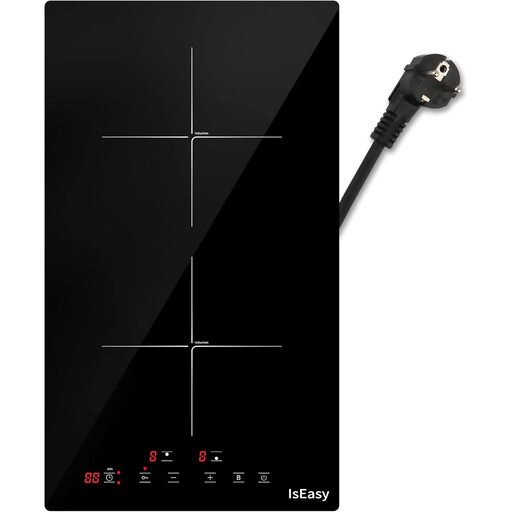 No image available
Listed as a Domino built-in hob; check that its design and connection suit your kitchen.
Features listed in the product title: 2 zones, 3400 W, 29.5 cm, 9 heat settings, timer and child lock.
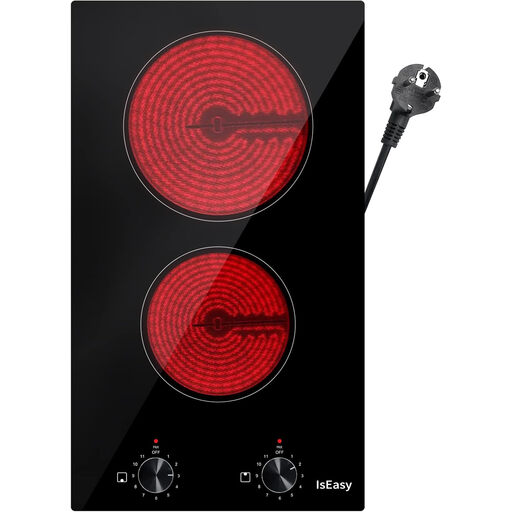 No image available
The product title describes a glass-ceramic surface with two heating zones; check the details of the heating technology and whether your cookware is compatible.
Features listed in the product title: 11 power levels, 3200 W, 29.5 cm and rotary controls.
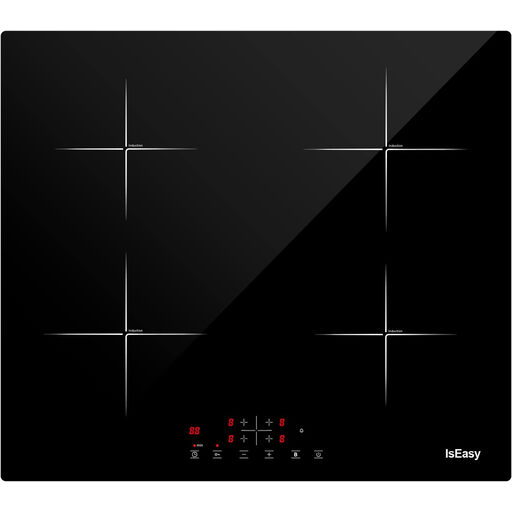 No image available
Designed for a kitchen with a suitable space for a built-in hob; check the cut-out dimensions and connection requirements in advance.
Features listed in the product title: 60 cm, 6800 W, 9 power levels, timer from 1 to 99 minutes and Boost function.
 No image available
The product title lists simmering and keep-warm settings; a setting doesn’t tell you the temperature the compote actually reaches.
Features listed in the product title: 2 cooking zones and 5 temperature settings.
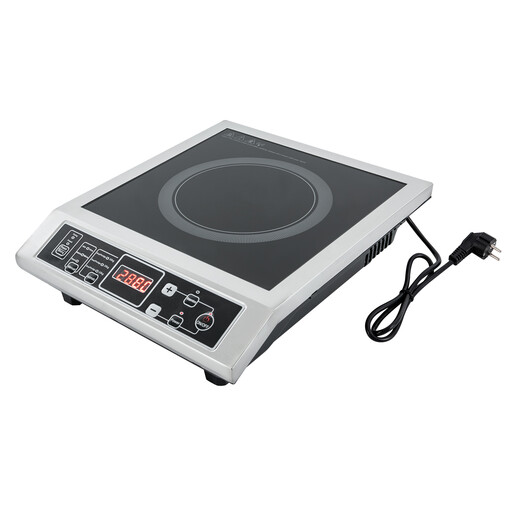 No image available
Listed as a countertop appliance; check that your cookware is induction-compatible and that the connection is suitable for your intended location.
Features listed in the product title: 8 power levels, temperature setting, timer, reservation function and EU plug.
No. A shut-off timer stops heating after the set time. When keeping heated food hot, the German Federal Institute for Risk Assessment recommends at least 60 °C throughout; the hob setting doesn’t confirm that the food has reached this temperature.
Plan either to keep it hot under controlled conditions or to cool it quickly, rather than leaving it out without checking. The German Federal Institute for Risk Assessment explains why food needs to be kept at a sufficiently high temperature. The Federal Centre for Nutrition distinguishes freshly cooked food from jars preserved using a trusted method.
Check that the pan base is magnetic and suitable for the cooking zone size recommended by the appliance manufacturer. A glass-ceramic surface alone doesn’t tell you whether the hob uses induction.
Where the connection involves work on a fixed electrical installation covered by § 13 NAV, it may generally only be carried out by the network operator or an installation company registered in a network operator’s installers’ register. Plugging in a portable hob designed to be plugged in isn’t the same as carrying out this type of installation work; follow the appliance instructions.
Check the cut-out dimensions and connection requirements, and bear in mind that professional installation work or modifications may be needed. If you choose induction, also make sure your cookware is compatible with the appliance.