Compote makers using one pan
If you need a free cooking zone to bring the compote to the boil and then turn the heat down, first check that your pan is compatible with the induction hob.


For one pan of plum compote, a portable single hob is usually the obvious place to start. A double hob makes sense mainly if you regularly need to heat a second pan at the same time. First, check that the pan base is compatible with the cooking zone and that the hob can be used safely with the intended socket. Adjustable heat settings make it easier to turn the heat down, but you’ll still need to keep an eye on the compote and stir it.
If you need a free cooking zone to bring the compote to the boil and then turn the heat down, first check that your pan is compatible with the induction hob.
In a shared kitchen, the available worktop space, cable length and intended socket all need to suit the spot where you’ll actually use the hob.
If you regularly heat a second pan alongside your compote, consider a second cooking zone and weigh up the extra space and power-supply requirements.
| What matters | What to check before buying | Who will find this especially important? |
|---|---|---|
| Gentle simmering | Compare the lower power settings and how the controls work. The settings alone don’t guarantee a particular temperature in the compote. | If I want to simmer gently after bringing the compote to the boil, I need to be able to turn the heat down in a clear and predictable way. Around 28% of consumers put control when simmering first. |
| A compatible pan | Check that the base is flat and suitable for induction, and that its diameter matches the cooking zone. The Federal Office for Radiation Protection highlights the importance of the pan’s material and base, as well as choosing a suitably sized cooking zone. | If you want to keep using your existing compote pan, check its base before buying. Around 22% of consumers prioritise pan compatibility. |
| Power supply in a shared kitchen | Compare the appliance’s rated power with the specifications for the intended socket, and take account of other appliances running at the same time. ELEKTRO+ warns against overloading sockets and connecting extension leads in a series. | If I’m using the hob alongside other appliances in a shared kitchen, the intended socket needs to be suitable for how it will actually be used. Around 22% of consumers pay particular attention to the power supply and shared use. |
| Space and cleaning | Measure the available space, including room for the cable, and check whether you can put the hob away after cooking. | In a small kitchen, I want to be able to clear the worktop after cooking. Around 17% of consumers put space requirements and cleaning first. |
| A second cooking zone | Weigh up the benefits of cooking two things at once against the larger footprint and the rated power of the specific double hob. | If you regularly heat a second pan alongside the compote, an extra cooking zone could be useful. Around 11% of consumers prioritise cooking two things at once. |
Power settings and temperature presets show you what you can select, but not the temperature the contents of a full pan will actually reach.
Turn the heat down once the compote has come to the boil, keep an eye on it and stir. Compare how the controls work rather than relying on an assumed guarantee of success.
Induction requires suitable cookware. If the base of your pan is unsuitable or the wrong size, you may not be able to use your existing pan with the hob.
Check the material, flatness and base diameter against the specifications for the particular hob.
If your existing pan isn’t compatible, you may need to replace it with an induction-compatible one.
A second cooking zone is only useful if you actually plan to cook two things at once. A double hob also takes up more worktop space.
Only plan for a second zone if you’ll use it regularly, and check the requirements for the intended socket in advance.
In a shared kitchen, the extra space it takes up could leave less room for other tasks.
The S-Line 2100 is a portable single hob for buyers comparing models with several adjustable power settings and a stated pan size.
The CTS 2000/IN is a single hob for buyers considering a control system with a sensor on the pan.
The SIKP 2200 B1 is a compact single hob for a compatible pan.
The single-zone KP 1026 and double-zone DK 1033 cater for different needs when it comes to the number of cooking zones.
This selection includes portable single and double induction hobs, whether you’re heating one pan of compote or cooking something else at the same time. For mains-powered appliances, check the CE marking and product information for the specific version on offer. The CE marking is the manufacturer’s declaration of conformity, not an independent quality mark.
 No image available
Described as a portable single hob for one pan of compote; according to the product description, it’s suitable for magnetic cookware with a diameter of 12–26 cm.
The description lists 2,100 W, nine heat settings, touch controls and an 8-hour timer.
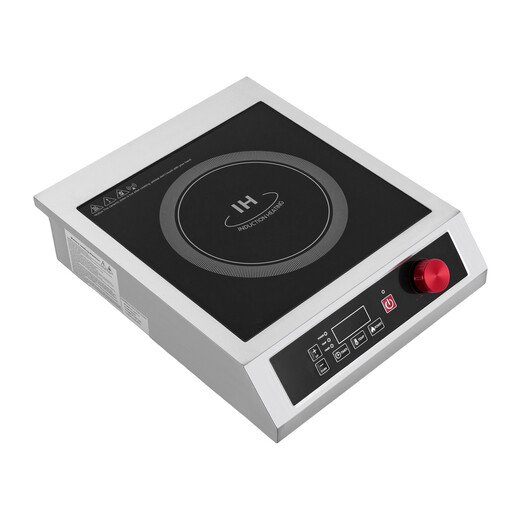 No image available
Described as a countertop induction hob for one pan; according to the product description, it’s suitable for flat-bottomed cookware up to 9.84 inches in diameter.
The description lists 10 power settings from 500–3500 W, 10 temperature settings and a timer of up to 10 hours.
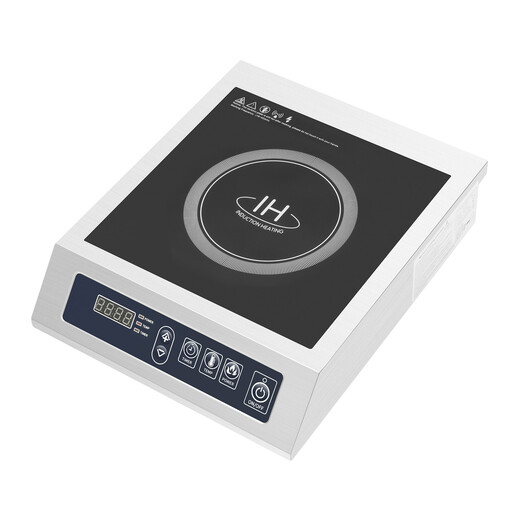 No image available
Described as a countertop induction hob for one pan; the product description lists a cookware diameter of 4.72–11.81 inches.
The description lists 11 power settings and a 24-hour timer.
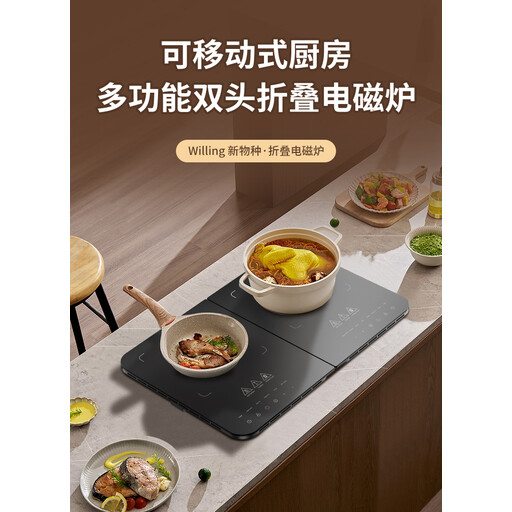 No image available
The product description lists two separately controlled cooking zones for heating two pans at once, along with a slim, foldable design.
Allow the cooking surface to cool before cleaning and putting it away.
 No image available
Described as a portable single hob for one pan of compote; the product warning says to use it only with magnetic cookware.
The description lists 2,000 W, 10 heat settings, touch controls and a glass surface. It also advises people with a pacemaker to keep at least 30 cm away while the hob is in use.
Only if the pan has a flat base that’s suitable for induction and its diameter matches the cooking zone on the specific appliance. Check the diameter of the base, not just the rim.
Don’t assume that an extension lead provides extra power-supply capacity. ELEKTRO+ warns against overloading sockets and connecting several extension leads in a series. Check the appliance and socket specifications, as well as which other appliances will be running at the same time.
No. The Federal Centre for Nutrition distinguishes between cooking and then filling jars, and preserving food in sealed jars using a tried-and-tested method. Don’t assume that using a hob alone makes the compote safe to store at room temperature. In a shared kitchen, make sure your utensils are clean too.
No. For relevant electrical appliances, the CE marking is the manufacturer’s declaration of conformity, not an independent test certificate. Check the marking and product information for the specific model on offer.