
Lieferung heute & morgen

Qualitätsgarantie

Willkommens-Angebote freischalten: KOSTENLOSE Lieferung | Bis zu 80 % RABATT | Kostenlose 30-Tage-JoyPlus-Testphase
App herunterladen
Leaking connections, incompatible threads or a shut-off valve that becomes difficult to turn after only a short time: when buying plumbing accessories, problems are often caused not by the price, but by technical specifications being misread. This applies equally to homeowners and tenants, DIY enthusiasts, installers and professional plumbing companies.
Whether you need an 1/2-inch angle valve, appliance connection valve, adapter or replacement tap part, the connection, intended use and material should all be compatible before you buy. The following criteria will help you avoid unsuitable purchases.
The designations G1/2, G3/8 and G3/4 do not automatically describe the visible outside diameter of a component. It is also important to establish whether the thread is internal or external, and which connection is required for the existing hose or pipe.
For example, an 1/2 x 3/8-inch shut-off valve is designed for a 1/2-inch wall connection and a 3/8-inch outlet. Washing machines and dishwashers, on the other hand, commonly use a 3/4-inch appliance connection. Tightening a mismatched combination more firmly will not provide a reliable solution.
A shiny surface alone says little about the material underneath. With chrome-plated brass fittings, you should therefore check whether brass is actually specified as the material and which components are made from plastic or stainless steel.
When replacing fittings in the bathroom or kitchen, seals, connection type and the space required are also important. A chrome-plated surface may be easy to care for, but it should not be treated with abrasive cleaners or tools that could scratch it.
A large handle or self-sealing design can make operation easier. However, the threads, seal and installation conditions must still be suitable. Always turn off the main water supply before installation. Once the water is turned back on, check the connection gradually for leaks.
If you are unsure, the pipes are difficult to access or the installation carries an increased risk of damage, it is advisable to have it fitted by a qualified professional.
Check the following before buying:
An G3/8 to G1/2 adapter is only suitable if the thread direction and connection sides match the existing installation. With adapters, check that any supplied sealing rings are the correct size and properly seated.
Brass is commonly used for valve bodies. Stainless steel can be an alternative for certain adapters or hose components. Plastic parts are not necessarily unsuitable, but they should clearly be intended for the application in question.
For plumbing replacement parts such as an aerator or flow regulator, the thread size and design are also crucial. A M24 tap aerator will only fit a tap with the corresponding M24 thread. The term “universal” should therefore always be checked against the actual measurements.
An appliance connection valve for a washing machine or dishwasher should match the hose connection and may include a backflow preventer, depending on the design. With a 2 m washing machine hose, check the length, connection thread and kink-resistant construction. For the shower, the key consideration with an G1/2 shower hose is whether both ends are compatible with the existing hand-shower and fitting connections.
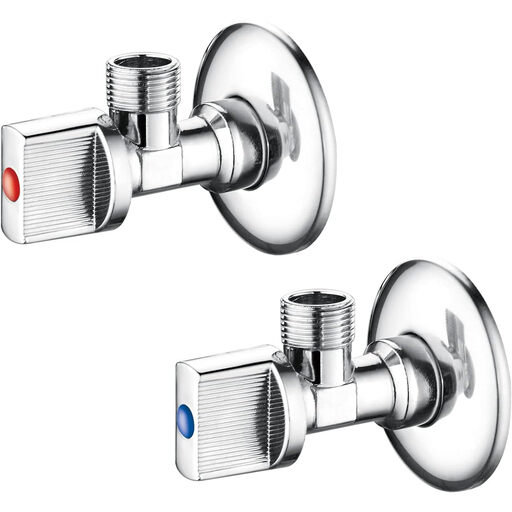
Why this product suits this profile: The 2-piece set is suitable for basin or similar installations where two separate shut-off points are required. The combination of a 1/2-inch inlet and 3/8-inch outlet is relevant for many comparable connection tasks.
The connection sizes are clearly specified. This allows you to check before ordering whether the wall and hose sides match the existing installation.
Two valves per set; according to the product specifications, a chrome-plated brass body and angled, space-saving design.
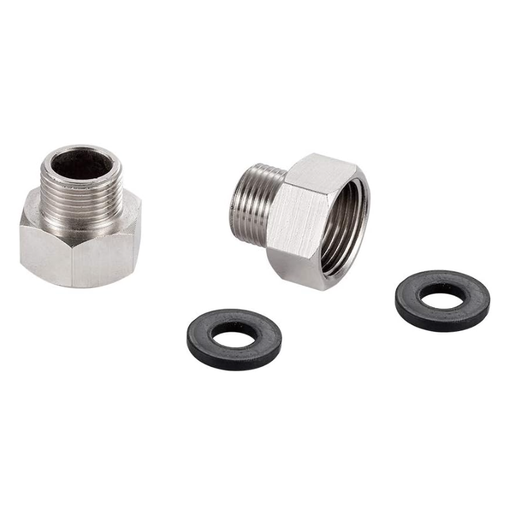
Why this product suits this profile: These adapters are suitable for users who need to connect different thread sizes on fittings, hoses or water pipes, while also paying attention to precise dimensions and additional sealing rings.
The design clearly specifies conversion from G3/8 to G1/2. The supplied sealing rings support a controlled seal, but do not replace a compatibility check.
Two adapters in the set; according to the product specifications, a metal design with chrome finish and pressure resistance up to 16 bar.
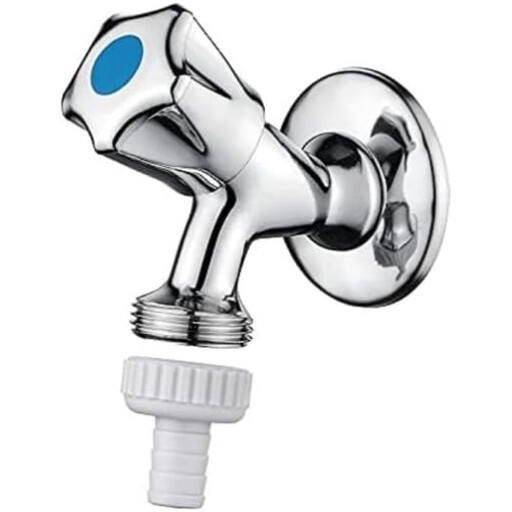
Why this product suits this profile: This design is intended for washing machine or dishwasher installations requiring a 1/2-inch wall connection and a 3/4-inch outlet.
The 3/4-inch appliance outlet is clearly specified. The integrated backflow preventer is listed as a product feature and should be checked against the specific installation before fitting.
1/2-inch wall connection and 3/4-inch outlet; according to the product description, a brass body with metal and chrome components, plus a rotary handle.
We have put together a complete, regularly updated list of products that fully meet these strict selection criteria and the safety regulations applicable in the EU.
When replacing a shower hose, you need an G1/2 shower hose with suitable union nuts. With the Grifema model mentioned, the product name indicates a length of 2 m; the actual design should be checked again in the detailed specifications before buying.
A tap flow regulator may be suitable as a replacement part if the water stream is uneven or the aerator is blocked. According to the product specifications, the Ibergrif set is designed for M24 threads and includes seals and an installation key. Before ordering, unscrew the existing aerator or at least measure its thread.
For many basin installations, an 1/2-inch angle valve is standard on the wall side. Depending on the tap or connection hose, the outlet may be 3/8 inch. Before buying, compare the thread type, outlet size and required design.
Depending on the installation, a backflow preventer is intended to stop water flowing back in an unwanted direction. Whether one is required depends on the appliance, pipe layout and applicable installation requirements. For washing machine or dishwasher connections, the specific design should be checked against the existing installation.
Check connections regularly for moisture, avoid overtightening and clean chrome surfaces with a soft, damp cloth. Seals and hoses should be replaced if you notice visible cracks, deformation or recurring leaks. When replacing the entire fitting, the compatibility of all components is more important than choosing based purely on appearance.