Choose a hob that suits the base of your pan, and make sure you can turn the heat down easily once the liquid has boiled. For poaching, the liquid should simmer gently, not continue to boil, as the NDR recipe also explains. A temperature control or timer does not confirm the temperature throughout the liquid or guarantee that food is being kept safely hot. If there’s a long wait before serving, plan to cool and chill the pears rather than keeping them warm without monitoring. The Federal Institute for Risk Assessment recommends a temperature of at least 60 °C throughout food that is being kept hot.
Which hob is right for you?
For cooks who want to poach pears gently
If you want to leave the liquid to simmer gently over a low heat after bringing it to the boil, easy-to-use settings make it simpler to adjust the heat. The NDR recipe says the liquid should not continue to boil, but a hob setting does not automatically show the temperature throughout the pan.
For households eating at different times
If you won’t be serving the pears to everyone at once, plan how you’ll serve them later or cool and chill them promptly, as well as considering the hob. When keeping cooked food hot, the Federal Institute for Risk Assessment recommends a temperature of at least 60 °C throughout.
For buyers who already have a pan
If you want to keep using your pan, first check whether its base is suitable for induction. With other types of hob, the cooking zone needs to suit the pan and its dimensions. Manufacturers such as CASO Design specify the size ranges for their individual models.
What should you look for when buying?
The NDR recipe recommends leaving the pears to simmer gently for 20–25 minutes over a low heat after bringing them to the boil, without letting the liquid continue to boil. So it’s important to choose a heating type that suits your pan, along with controls that let you monitor and adjust the heat.
| What matters |
What to check when buying |
Who is it important to? |
| Gentle heat |
Check the low heat settings, how easy the controls are to reach and, where relevant, how the manufacturer says to use a probe. |
If you want the liquid to simmer gently after boiling without continuing to boil, look for heat settings that are easy to adjust. Around 36% of consumers prioritise this. |
| Serving at different times |
Check the timer and how the appliance switches off; plan to cool and chill food if serving it later. If keeping food hot, check its temperature. |
If you’re not all eating at the same time, you’ll need a plan for later portions that avoids cooking the pears for longer than necessary. Around 29% of consumers prioritise serving at different times. |
| Existing pan |
Check the pan base and cooking zone size against the pan size specified by the manufacturer. |
If you want to keep using your existing pan, your choice will depend on whether it’s suitable for the type of hob. Around 21% of consumers put pan compatibility first. |
| Available space |
Check the appliance’s external dimensions and choose a safe place to use it. Consider whether you’ll need a second cooking zone while poaching. |
If you have limited worktop space, the appliance dimensions and the cooking process you need to follow are important. Around 14% of consumers prioritise a compact footprint. |
Common buying and usage mistakes
-
Assuming the hob’s set temperature is the temperature throughout the liquid
Manufacturers’ temperature settings describe the appliance setting; they don’t automatically show the temperature throughout the liquid. For poaching, the NDR recipe says the liquid should not boil.
Turn the heat down once the liquid has boiled and keep an eye on it. Only use a probe as directed in the instructions for your specific appliance.
-
Assuming a timer means food is being kept safely hot
A timer does not measure the temperature of the food. For cooked food that is being kept hot, the Federal Institute for Risk Assessment recommends a temperature of at least 60 °C throughout.
If there’s a long wait, plan to cool and chill the food. If you’re deliberately keeping it hot, check the food itself, not just the appliance display.
-
Assuming a glass-ceramic surface means the hob is induction
A smooth glass-ceramic surface may use radiant heat. Induction hobs, on the other hand, need compatible cookware, so the heating type and pan base must be suitable for each other.
Before choosing a model, check the stated heating type, whether your pan is suitable and whether it’s the right size for the cooking zone.
Suitable brands and model ranges
CASO Design
The portable Touch 2000 and TC 2400 Thermo Control single induction hobs are aimed at buyers whose pans are suitable for induction.
- According to the manufacturer, the Touch 2000 has ten power levels and is designed for pans measuring 12–24 cm. The listed features of the TC 2400 include a probe and an adjustable temperature range of 40–160 °C.
- Both models require induction-compatible cookware. An adjustable temperature setting or probe does not confirm that the pear-poaching liquid is at an even temperature throughout.
Rommelsbacher
The range includes the portable CT 2020/IN induction hob and the CT 2200/E radiant-heated glass-ceramic hob.
- According to the manufacturer, the CT 2020/IN has a 180-minute timer. The CT 2200/E features a switchable heating zone and a rotary control.
- The CT 2020/IN requires a pan with a ferromagnetic base. The cooking surface of the CT 2200/E heats up and retains residual heat, so remove the pan promptly when cooking is finished.
Severin
The KP 1032 is a portable induction hob, while the KP 1092 is a single cast-iron hotplate without induction.
- According to the manufacturer, the KP 1032 has a 180-minute timer with automatic switch-off. The KP 1092 offers stepless adjustment.
- The KP 1032 requires induction-compatible cookware. When poaching, bear in mind that the cast-iron hotplate itself gets hot.
Silvercrest
The portable SIKP 2200 B1 single induction hob was tested by F.A.Z. Kaufkompass.
- On 4 August 2026, F.A.Z. Kaufkompass named this specific model its test winner, highlighting its ease of use and speed of heating.
- The review also listed noise and a bulky design as drawbacks. A test to see how quickly it brings water to the boil does not show how well it controls the heat for gentle poaching.
Joybuy products for this task
The portable hobs below include induction and infrared models. The key is to choose a heating type that suits your existing pan and lets you monitor and adjust the heat while poaching.
 No image available
IsEasy induction hob, 2100 W, 28 cm, 9 heat settings, 8-hour timer
For an induction-compatible pan, if you want to adjust the heat while the pears simmer gently.
Nine heat settings; according to the product description, it’s designed for magnetic cookware measuring 12–26 cm. The timer does not confirm that food is being kept at a safe temperature.
View at Joybuy
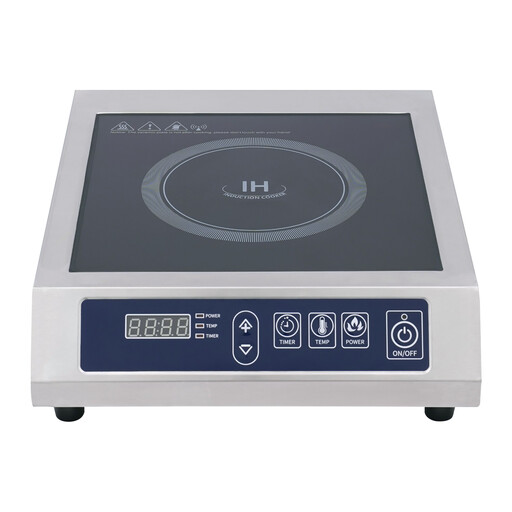 No image available
Induction hob, 3500 W, 11 power levels, 24-hour timer
An option if you’re using a suitable pan and want a choice of power levels for adjusting the heat.
The product description lists eleven power levels and a temperature setting range of 140–572 °F. It specifies a flat iron base, so check that your pan is suitable before buying.
View at Joybuy
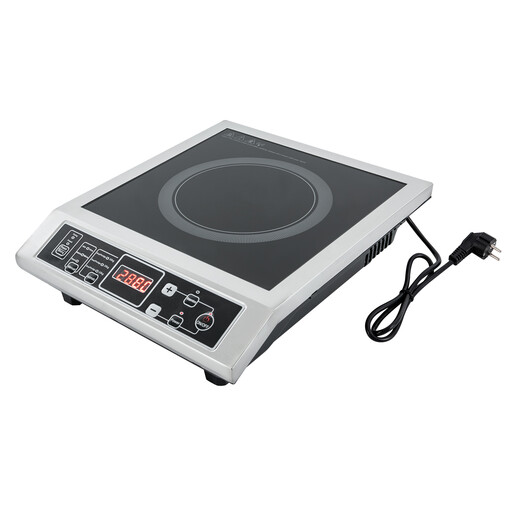 No image available
Induction hob, 3500 W, 8 power levels, timer
For households with induction-compatible cookware who want to adjust the heat while poaching.
The product description lists eight power levels, eight temperature settings and a timer of up to three hours. Iron and stainless steel cookware are listed as suitable.
View at Joybuy
 No image available
dtl06 infrared hob, 3500 W, timer, touch and rotary controls
An alternative if you’re looking for an infrared hob rather than induction and want to keep using heat-resistant cookware.
The product title lists a timer, touch controls and a rotary control. Check the instructions to make sure your specific pan is suitable.
View at Joybuy
 No image available
ochama induction hob, 2000 W, 10 power levels, 6 functions
For an induction-compatible pan, if you want to adjust the heat for the pear-poaching liquid.
The product title lists ten power levels, six functions and a safety lock. An induction-compatible pan base is required.
View at Joybuy
Frequently asked questions
Can I leave the pears on the hob until the last person is ready to eat?
Don’t rely on a keep-warm or timer display alone. For cooked food that is being kept hot, the Federal Institute for Risk Assessment recommends a temperature of at least 60 °C throughout. If you’re planning to serve the pears later, cool and chill them promptly instead. This is particularly important for perishable accompaniments.
How can I stop the liquid from boiling while I poach the pears?
The NDR recipe recommends leaving the pears to simmer gently for 20–25 minutes over a low heat after bringing them to the boil, without letting the liquid boil. Keep an eye on it, turn down the heat and remove the pan from the hob when the pears are cooked. The recipe’s timings are not a guarantee for every appliance.
Do I need a special pan for a portable induction hob?
Yes. The pan base must be suitable for induction and fit the cooking zone. For example, CASO Design specifies pans measuring 12–24 cm for the Touch 2000. If your pan isn’t suitable, you could consider a radiant-heated glass-ceramic or cast-iron hotplate instead.
What should I check before setting up and cleaning the hob?
Compare the appliance and pan dimensions with the space available, and follow the setup and safety instructions in the manual. Switch off the appliance before cleaning and take care around hot surfaces. Rommelsbacher specifically warns that the CT 2200/E retains residual heat.


