What should you look for when buying?
First, check whether your programme is available where you plan to listen. Then decide whether you’ll mainly use the speaker or prefer to listen privately with headphones.
| Consideration |
What to check before buying |
Who this matters to |
| Reception for your programme |
Check the station, broadcast method and reception where you’ll be listening. For DAB+, the DAB+ Mehr Radio programme guide and location forecast can give you an idea, but can’t guarantee reception. |
If I want to listen to a particular folk programme, it needs to be available through a supported method where I’ll be listening. Around 33% of consumers prioritise reception for the programme they want to hear. |
| Quiet, private listening |
For headphones, check that the radio has the specified socket. If you’ll be using the speaker, try out the volume controls on the specific model. |
If you share a room, you’ll want to listen without disturbing others. Around 27% of consumers prioritise quiet, private listening. |
| Pocket-sized design and use on the go |
Compare the dimensions, headphone socket and whether you want to use the speaker. |
If you want a radio that fits in a bag and can be used on the go, size and listening style are key. Around 20% of consumers prioritise portability. |
| Power and controls |
Check the battery type, what’s included and whether the specific version has separate tuning and volume controls. |
If you want to use the radio away from a mains socket, make sure you know which batteries it needs and how to adjust the tuning and volume. Around 20% of consumers place the greatest importance on power and ease of use. |
Joybuy products
This selection includes portable DAB+/FM radios and an FM option with a speaker, to suit different listening styles.
 No image available
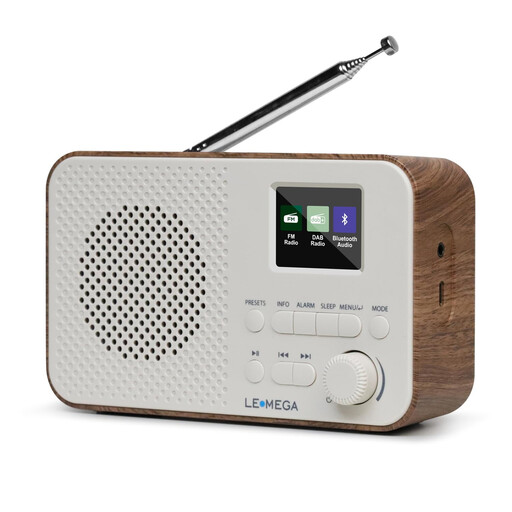
LEMEGA DAB Go DAB+/FM radio, walnut finish
A good option if you want to listen to a programme on DAB+ or FM and choose between the speaker and headphones.
DAB+/FM, Bluetooth, LCD display, rechargeable 2200mAh battery, USB-C, headphone socket and 40 station presets.
View at Joybuy
 No image available
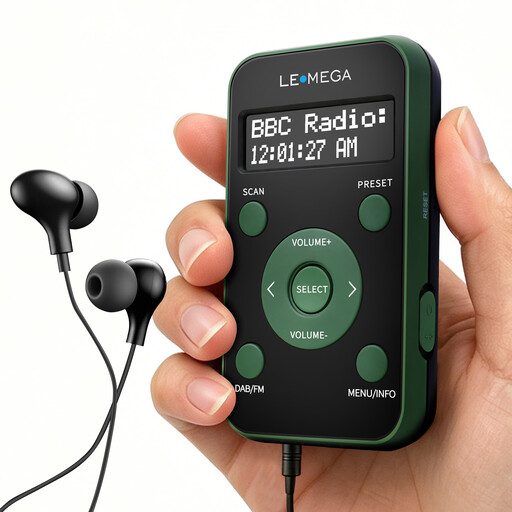
LEMEGA PR1 Pocket DAB/DAB+/FM radio, green/black
An option for private listening on the go, provided your programme is broadcast using a supported reception method.
DAB/DAB+/FM, rechargeable battery, 20 station presets, LCD display and included earphones. According to the product details, the wired earphones also serve as the aerial.
View at Joybuy
 No image available
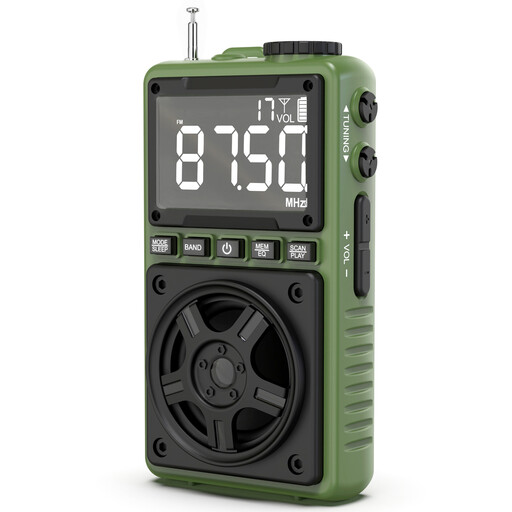
AM/FM pocket radio with Bluetooth and speaker
An FM option if you want to receive a programme on AM/FM and listen through the built-in speaker.
Bluetooth, AM/FM, speaker, LED light, rechargeable battery, USB-C charging and TF card playback.
View at Joybuy
Frequently asked questions
How can I find out whether my folk programme is available on a DAB+ pocket radio?
First, find out which station broadcasts the programme and how. The DAB+ Mehr Radio programme guide shows regional stations, while its reception forecast distinguishes between mobile and indoor reception, among other things. Actual reception where you listen may differ.
Can I listen to a pocket radio through headphones instead of its speaker?
Yes, if the specific version has a compatible headphone socket. For example, Philips lists one for the TAR1510/00. Check the socket and what’s included separately for each version.
What should I know about batteries and disposal?
Before using the radio for the first time, check which batteries it needs and whether they’re included. The manufacturer says that the AA batteries required for the Sangean DT-250 aren’t included. Germany’s Federal Environment Agency advises returning used batteries to collection points at retailers. Electrical and electronic waste shouldn’t go in household rubbish.
Does buying an extra pocket radio mean paying a separate broadcasting fee?
No. According to the information provided by the ARD ZDF Deutschlandradio Beitragsservice, buying another radio doesn’t mean you have to pay a separate fee for that device. On 1 July 2026, the Beitragsservice explained that the broadcasting fee is generally charged per home; any exceptions depend on the circumstances of the home or the individual.


