Listeners of a particular folk music programme
If you want to listen to a particular programme, first check whether you can receive it at your usual listening spot via FM or DAB+.


First, check whether you can receive your folk music programme at your listening spot via FM or DAB+. A DAB+/FM radio gives you both ways to tune in, but it doesn’t guarantee reception right next to a wall. According to the consumer advice centre, a working FM radio doesn’t need to be replaced just because of digital switchover. Also check that the radio has a built-in speaker and that you can position its aerial where you plan to use it.
If you want to listen to a particular programme, first check whether you can receive it at your usual listening spot via FM or DAB+.
If you listen near a wall without headphones, you’ll need to fit the speaker, aerial and controls into the space available.
If you sometimes take your radio with you, choose the power supply and controls to suit whether you’ll mainly use it in one place or on the go.
Start by checking the station and reception method. Then consider the speaker and space for the aerial, before choosing a power supply and controls to suit your everyday needs.
| What you need | What to check before buying | Who is this important to? |
|---|---|---|
| Programme and reception at your listening spot | Find out which station and reception method you need. For DAB+, check the indoor coverage prediction and test reception where you plan to use the radio. | I want to receive the specific folk music programme I listen to at my usual spot, so I’ll check the station and reception method. Around 36% of consumers put receiving their chosen programme first. |
| Speaker use near a wall | Check for a built-in speaker and the dimensions of the casing, and make sure there’s room to position the aerial. | If the radio is going to sit close to a wall, I need a speaker and enough space to position the aerial. Around 29% of consumers prioritise speaker playback and how the radio fits in that spot. |
| Power supply and portability | Check whether it uses a rechargeable battery, disposable batteries or mains power, and confirm the accessories and charging method for the specific version. | If I want to move between rooms or take the radio out with me, I’ll choose a power supply to suit how I plan to use it. Around 21% of consumers put portability and power supply first. |
| Finding your station again | Check whether preset buttons, station memory or an easy-to-read tuning scale will make it easiest to tune in to your chosen station. | If I regularly tune in to the same programme, quick access matters more to me than extra features. Around 14% of consumers prioritise being able to find and tune in to their station again. |
Buildings and the position of your radio can affect indoor reception. A coverage prediction can’t guarantee reception in the exact spot where you plan to use it.
Check the indoor coverage prediction for your area, then try the radio in your usual listening spot with the aerial positioned in different ways. DAB+ Mehr Radio recommends trying a spot closer to a window, among other things, if indoor reception is poor.
A headphone socket alone doesn’t confirm that the radio has a built-in speaker or a suitable connection for your existing speakers.
Check the details for the specific version and make sure it explicitly mentions your preferred way of listening.
According to Alan Electronics, the Albrecht DR 70 requires three AA batteries, which aren’t included. So check the power supply and what’s in the box for the version you’re ordering.
If you want to use the DR 70 without a mains socket, you’ll need to buy three AA batteries separately.
The DR 70 is a compact DAB+/FM radio with a speaker, preset buttons and battery or mains power.
The XDR-P1DBP is a small DAB+/FM model with a mono speaker and lithium-ion battery. The ICF-P27 is an analogue FM/MW alternative.
The DIGITRADIO 1 is a portable DAB+/FM model with a speaker, OLED display and replaceable battery.
The RF-P150D is a small analogue FM/MW radio, while the RF-D10 is a larger portable DAB+/FM model.
This selection includes portable FM and DAB+/FM radios. If you want to listen without headphones near a wall, check the speaker and aerial position for each version.
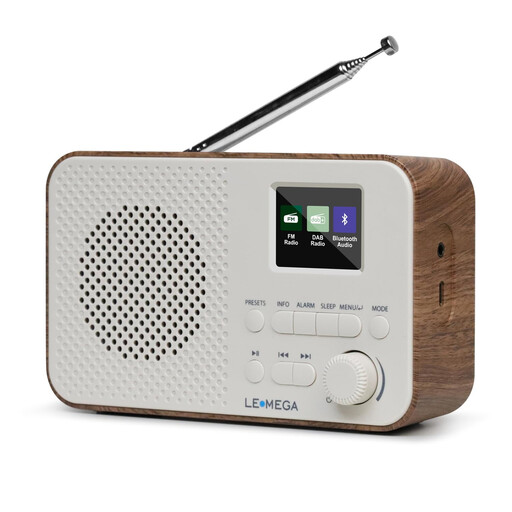 No image available
The DAB+/FM tuner and built-in speaker make it suitable for listening without headphones, provided you can receive your chosen station at your listening spot.
Features a rechargeable 2200-mAh battery, USB-C charging, Bluetooth, a headphone socket and 40 station presets.
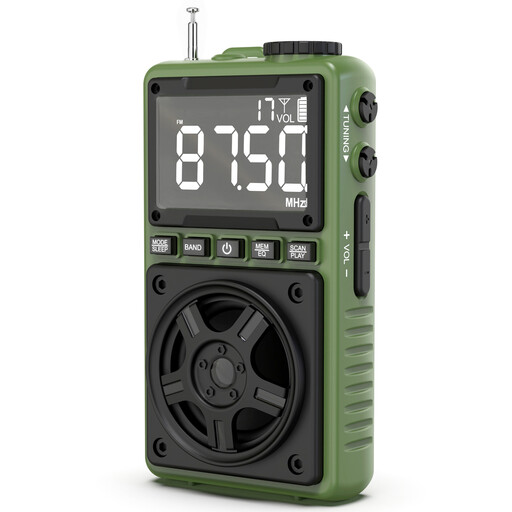 No image available
This is described as an AM/FM pocket radio with a speaker. Check whether the station for your folk music programme is available via a supported reception method.
The product details list a rechargeable battery, USB-C charging, Bluetooth and TF card playback.
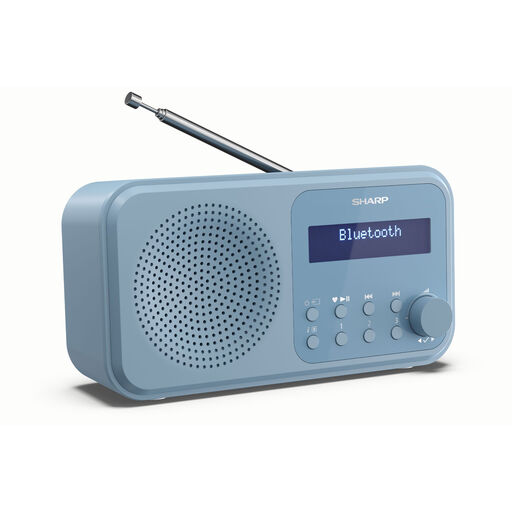 No image available
The built-in 2-W speaker listed lets you listen without headphones. To check reception close to a wall, try positioning the aerial there.
Features DAB+/FM, a telescopic aerial, 40 station presets and USB or AA battery power.
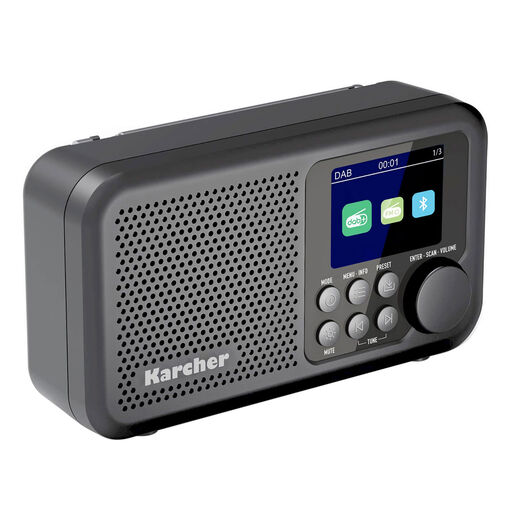 No image available
This portable DAB+/FM radio is described as having speaker playback. Whether you can receive your programme where you want to use it depends on local reception.
The product details list a 2200-mAh battery, Bluetooth, a 2,4-inch colour display, a headphone socket and an alarm function.
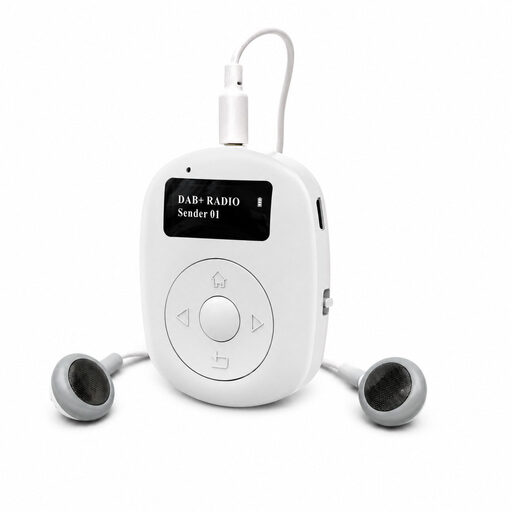 No image available
This compact radio is described as suitable for use on the move. If you want to listen through a speaker near a wall, check that the specific version has a built-in speaker before choosing it.
The details list DAB+/FM, a rechargeable battery, a clip, 60 station presets and a headphone output.
First, check the indoor coverage prediction for your area, then try moving the radio and adjusting the aerial. If indoor reception is poor, DAB+ Mehr Radio recommends trying a spot closer to a window, among other things. The prediction can’t guarantee reception in the exact spot where you want to use the radio.
Not in every case. Section 75(4) of the TKG applies to the consumer devices described there that are being made available for the first time, are primarily intended for sound broadcasting and can display programme names; the statutory exemptions still apply. According to the consumer advice centre, a working FM radio doesn’t need to be replaced for that reason alone. Whether the rule applies to a particular new model depends on its features.
For private residential use, the broadcasting fee is generally charged per home, rather than per reception device, as explained by the ARD ZDF Deutschlandradio Beitragsservice. Different rules may apply in specific living or usage situations.
Test the radio at your intended listening spot as soon as you can. According to the consumer advice centre, online orders generally come with a 14-day cancellation period from the date you receive the goods. Before ordering, also check the returns information provided by the retailer.
Look for the CE marking and any required accompanying documents, such as German-language instructions and safety information. The Bundesnetzagentur explains that CE is the manufacturer’s declaration of conformity, not an independent quality mark for sound or reception.