First, check whether the station is available on FM or DAB+ where you plan to listen. An FM radio will do if the programme is broadcast there on FM; a DAB+/FM radio gives you an additional way to tune in. For music around the room, you’ll need a built-in speaker; for private listening, check that there’s a suitable headphone socket. However, the DAB+ More Radio coverage checker doesn’t replace testing reception in the exact spot. If you’ll be listening for longer periods, it’s also worth weighing up mains power, batteries and a rechargeable battery to suit how you plan to use the radio.
Which radio is right for you?
Listeners who want a particular programme
If getting your particular folk programme at the spot where you plan to listen matters most, first check the station and how it broadcasts. Then decide whether FM is enough or whether DAB+/FM would be useful for you.
Listeners who want sound around the room
If you’d like to listen while working without wearing headphones, you’ll need a radio with a built-in speaker. Also check whether a mains adaptor, batteries or a rechargeable battery will suit your listening spot.
Listeners who prefer headphones
If you want to listen on your own and keep things compact, a headphone socket and the radio’s size are important factors. Also check whether the specific model has a speaker, in case you’d like to listen around the room later.
What should you consider when buying?
For a hobby room, reception where you’ll actually be listening comes first. Then make sure the listening options and power supply suit how you plan to use the radio.
| What matters to you |
What to look for when buying |
Who is this especially important for? |
| Reception of the programme you want |
Check the station and how it broadcasts; look at the DAB+ indoor coverage forecast and test reception where you plan to listen. |
If I want to be sure of hearing my folk programme in my usual listening spot, I’ll check reception first. Around 42% of consumers are likely to prioritise reception above all else. |
| Listening around the room |
Check that the exact model has a built-in speaker; confirm that it also has a headphone socket if you need one. |
When I’m working, I want to listen without earbuds and don’t want to do without a speaker. Around 25% of consumers are likely to prioritise listening around the room above all else. |
| Power for longer programmes |
Check whether the radio uses a mains adaptor, batteries or a charging port; compare battery life only for the same listening setup. |
If the radio will be on for a long time in one place, I want to know whether there’s mains power nearby or whether I’ll need batteries or a rechargeable battery. Around 17% of consumers are likely to prioritise power options above all else. |
| Private listening and a compact size |
Check the headphone socket and speaker function on the exact model; check the aerial requirements too. |
If I want to listen on my own and save space, headphone use matters more to me than listening around the room. Around 16% of consumers are likely to prioritise private listening above all else. |
Common buying mistakes
-
Assuming DAB+ coverage means reliable reception in your hobby room
A coverage forecast shows which stations may be available in an area, but it can’t tell you whether the signal will reach every part of the room. The radio’s position and aerial can also affect reception in your home.
Check that the station is available, then test reception separately in the exact spot where you plan to put the radio. Fully extend the aerial when scanning for DAB+ stations.
-
Choosing a headphone radio for listening around the room
A compact model with an earphone socket isn’t automatically suitable for listening without headphones. The Sangean DPR-39 has an earphone socket; if you want to listen around the room, check whether the exact model has a speaker.
Before you buy, make sure the specific version has a built-in speaker if you want to listen while working without headphones.
-
Comparing battery life without considering how you’ll listen
For the Sony ICF-P27, the manufacturer’s stated FM battery life varies depending on whether you listen through the speaker or headphones.
Compare battery life only for the same listening mode. If you’ll mainly use the radio in one place, also check whether mains power is an option for you.
Brands and model ranges to consider
TechniSat
The VIOLA 2 is an example of a DAB+/FM model with a speaker, suited to use in a hobby room and occasional trips out.
- TechniSat lists a speaker, a 3.5 mm headphone socket, a mains adaptor included in the box and optional operation with four AA batteries for the VIOLA 2.
- The manufacturer states that the model weighs 338 g and is 15.5 cm wide. You’ll need to test reception in the exact spot where you plan to use it.
Sony
The ICF-P27 is an analogue-tuned FM/AM pocket radio for programmes available on FM where you plan to listen.
- Sony Germany lists a mono speaker, a headphone socket and operation with two AA batteries.
- DAB+ isn’t listed for this model. The manufacturer’s stated battery life varies between speaker and headphone use.
Sangean
The DPR-39 is a compact DAB+/FM model for private listening; the DT-250 is a separate FM/AM option.
- Sangean lists DAB+/FM, an earphone socket and two AA batteries for the DPR-39. The DT-250 is listed with a speaker.
- The manufacturer’s specifications don’t list a speaker for the DPR-39, while DAB+ isn’t listed for the DT-250. These differences apply to the respective models.
Panasonic
The RF-P150DEG-S or RF-P150D is a compact FM/AM option that runs on batteries.
- Panasonic lists AFC tuning and dimensions of 120 × 68 × 31 mm.
- DAB+ isn’t listed for this model range, so it’s an option if FM/AM suits the station you want to listen to.
Radioddity
The RD23 is a DAB+/FM option for anyone looking for these reception options in a portable radio.
- Radioddity lists DAB/DAB+, FM and Bluetooth for the RD23.
- These are manufacturer specifications, not independent reception test results. Before choosing, check the exact version and make sure it suits how you want to listen.
Joybuy radios for your hobby room
The models below suit different listening styles: a compact DAB+/FM radio for headphones, and a portable DAB+ radio with a speaker.
 No image available
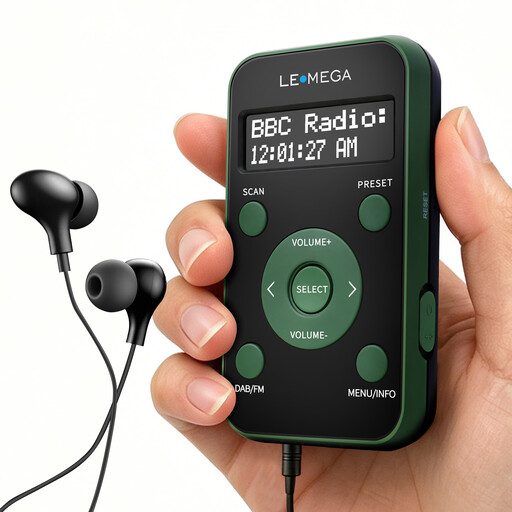
LEMEGA PR1 DAB+/FM pocket radio with rechargeable battery and earbuds
A good option if you want to listen on your own with earbuds and are looking for a compact radio with a rechargeable battery.
The model is listed for DAB/DAB+ and FM. According to the product details, it comes with a rechargeable battery, USB-C charging and earbuds; the product title also mentions 20 presets and an LCD display. The product description says the earbuds also act as the aerial.
View at Joybuy
 No image available
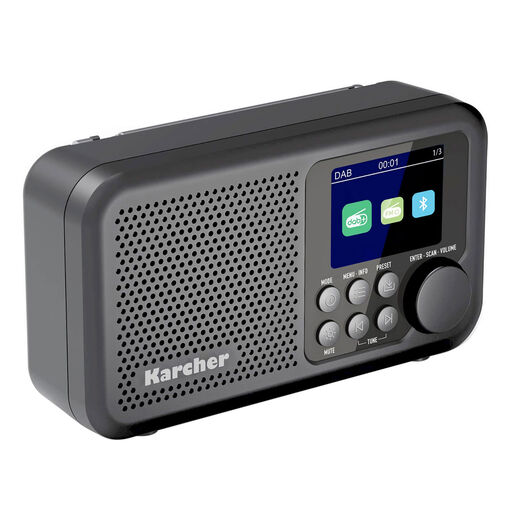
Karcher DAB 2415 portable DAB+ radio
A possible choice if you’d like to listen through a built-in speaker in your hobby room and also want the option of using headphones.
The product title lists DAB+, FM, a built-in rechargeable battery, Bluetooth, a speaker and a headphone socket. It also specifies a 2.4-inch colour display and an alarm function.
View at Joybuy
Frequently asked questions
Will an FM radio be enough for my folk music programme?
Yes, if the station broadcasts the programme on FM and you can receive it where you plan to listen. The DAB+ More Radio coverage checker can show which digital stations may be available in your area, but it doesn’t replace testing reception in the exact spot in your hobby room.
What can I do if my new DAB+ radio can’t find my station?
Fully extend the aerial and start a scan where you plan to listen. DAB+ More Radio also recommends moving the radio if you have reception problems, for example towards a window, and keeping it away from other electronic devices.
What should I check about the power supply and returns?
Before buying, check whether you’ll need a mains adaptor, batteries or charging accessories, and whether they’re included. If the product is faulty, remember that your statutory rights against the seller are separate from any voluntary guarantee. Section 438 of the German Civil Code generally sets a two-year period from delivery for ordinary claims relating to defects. The legislation is published in the German Civil Code on the Laws on the Internet website of the Federal Ministry of Justice and the Federal Office of Justice.
How should I dispose of the radio and its batteries?
Electrical waste must not be put in household rubbish. The German Environment Agency recommends removing any batteries that can be taken out and disposing of them separately at a battery collection point.


